Showing posts with label Florida. Show all posts

Friday, May 31, 2019

3 New AV State Laws - 3 Approaches

While we wait for Congress to act on automated vehicles (AVs), and AVs are probably not high on the list right now, three new state laws have recently passed and become law. These are from Florida, Iowa. and Oklahoma. Louisiana has legislation pending that is likely to pass.

Short memory and low expectations

Perhaps we are sufficiently far in time from two realities that state legislatures are again moving quickly on AVs.
1. Mar. 18, 2018 - the date of the Uber not-really-an-AV crash in Arizona; and
2. Congress failed to pass a national AV law in the last session.
At the moment, states perceive themselves to be in the driver's seat in pushing AVs forward. The  new laws uniformly assert state supremacy, preempting local regulation or restrictions on AV operations.

One trend is a change in legislative definitions is that the term "automated driving systems" has become common and has generally replaced the term "autonomous vehicles." It has also become commonplace to require that AVs be able, among other things, to achieve a "minimal risk condition." The Florida, Iowa. and Oklahoma laws include these.

Florida

Florida HB 311

Whole hog - "human operator is not required to operate a fully autonomous vehicle; authorizing a fully autonomous vehicle to operate in this state regardless of whether a human operator is physically present in the vehicle"
No human need be present when AV is in operation
Allows teleoperation of AV

Allowing operation of an AV with video or television entertainment
Allowing operation of an AV with wireless devices in use

Definitions edited from earlier AV law
Preempts local governments from in any way regulating AV ridehailing (with some exception for airport authorities)

A provision that governs partial automation technology looks like fodder for litigation:
If the autonomous vehicle is not fully autonomous, the vehicle must: (a) have a system to safely alert a licensed human operator physically present in the vehicle if an automated driving system failure is detected while the automated driving system is engaged. When an alert is given, the system must: require the licensed human operator to take control of the autonomous vehicle or must achieve a minimal risk condition. 
Vague language allowing the Florida Turnpike Enterprise to "fund, construct, and operate facilities" that "advance" AV transportation for the purpose of reducing congestion AND improving safety. Note to Florida Turnpike Enterprise: The safest modes to integrate into your AV infrastructure are walking, biking, and transit.

Addresses long-range MPO transportation plans and mandates that "Each M.P.O. is encouraged to consider strategies that integrate transportation and land use planning to provide for sustainable development and reduce greenhouse gas emissions."

Oklahoma

Oklahoma SB 365

  1. Preempts municipalities
  2. Defines terms
  3. Creates new section of vehicle law

Nothing in the Oklahoma law specifically discusses AV operation on public roads.

Iowa

Iowa SF 302

Allows for AVs to operate on public roads, but a human driver must be present in the vehicle. In fact, in the Iowa framework, it is still the human driver who is responsible, meaning the party who is potentially liable. Nothing about the possible liability of software providers or of hardware or vehicle manufacturers.

Local governments are preempted from regulating or taxing AVs, AV operations, or the business of AV ridehailing.
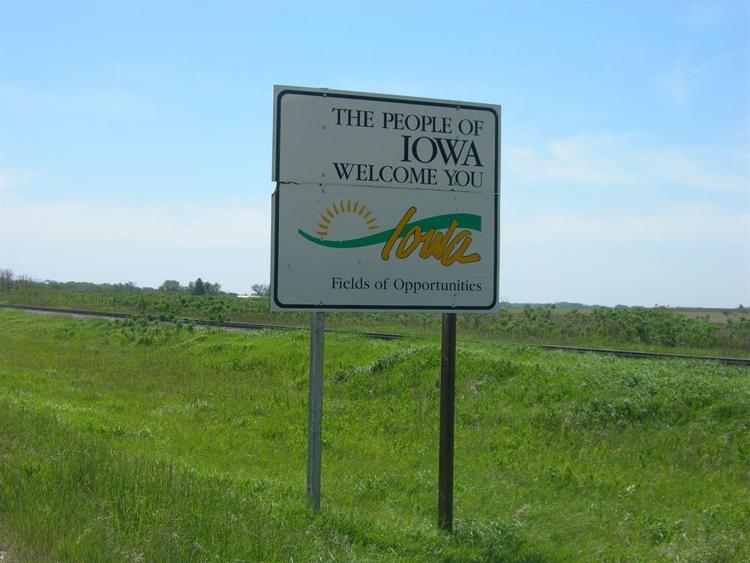
The Iowa law provides for AV ridehailing, but it does not explicitly permit an AV to operate without a human driver present. This leads one to believe that the law means that a human driver must be present when a ridehailing passenger is picked up or when a delivery is made with an AV.

Louisiana legislation pending

Louisiana HB 455 - This legislation is pending in the Louisiana Senate. It only concerns AV commercial motor vehicles and probably is geared toward attracting the trucking industry testing going on down South. [Update on July 9, 2019: The Louisiana bill passed and has become law.

Defines AV terms
Autonomous commercial motor vehicles - meaning trucks and buses - may operate in Louisiana
"Prior to commencing the operation of an autonomous commercial motor vehicle without a conventional driver present in the cab, a person or entity shall submit a written statement to the Department of Transportation and Development certifying that the vehicle meets the requirements of this Section."
Allows for teleoperation of automated commercial vehicle, but a human remote operator is considered the operator during such periods of operation.
If an AV commercial vehicle is equipped with teleoperation capability, it may operate on public roads without a human present, but only if "if a remote driver is operating the vehicle."

I'm confused, is the intention that the vehicle be automated or only partially automated. Is this really a commercial vehicle teleoperation bill? Is this a platooning bill, though that term or a description of such activity is left unmentioned?

Tuesday, January 29, 2019

Warning: Analogies Concerning AV Future

After a brief stop at low-speed shuttles, which are popping up everywhere, a few listed below, and likely more to come with the USDOT AV grants, I shift gears, so to speak, and go off on a tangent. I make an analogy, actually several, that will take time to be revealed as apt or poor.

Like raking leaves under a huge maple tree

Just from this week's newsfeed, showing that I hardly have to scroll down to find announcements related to AV shuttles:

Jacksonville, FL, plans AV network in its downtown and incorporating its Skyway
Denver about to launch AV shuttle by transit and business center.
Tokyo airport testing AV buses in preparation to serve travelers and to meet goal of providing AV transportation during the 2020 Olympics.
Manchester Airport (UK) to test AV airport shuttle that will hold four-six travelers and expected to be called Pods on Demand.
Michigan VA medical center to get AV shuttle to transport veterans and others around campus.

How bikesharing changed biking - at least in DC

Before bikeshare arrived in the Washington, DC area, the speed of biking was high - scary for pedestrians - and bikers routinely violated traffic rules. Both downtown and on the edges of DC, into Maryland, this changed when bikeshare arrived. Almost overnight, the heavy, clunky, bikeshare bikes, ridden often by people in business clothes (who did not want to get dirty or wet en route) significantly slowed the speed of biking generally and had a similar calming affect that reduced traffic-rule-violating behavior.

In those years between DC bikeshare's start and when Citibike appeared in NYC, I would be shocked when I returned to the city to see that the bike culture there was as unruly, as Wild West, as biking had been in DC prior to bikeshare. Friends and relations were afraid of those speedy bikers because they would appear out of nowhere and skirt extremely close to pedestrians. It feels like there has been a change in NYC since Citibike, but, due to the massive changes in pedestrian and bike infrastructure in the city, it is less possible to attribute any shifts there to bikesharing.

Actual topic of post - analogy warning - Will AV shuttles be like bikeshare? 

Here is where I veer off into an analogy, which is dangerous territory because my analogies do not always work for other people. Apparently some, maybe most, brains work differently from mine.

AVs are being promoted in large part due to safety. AV technology will mean robotic/machine operation according to the rules of the road. No speeding, no stop sign running, no drunk or otherwise intoxicated driving, etc. will save lives and prevent crashes and near misses. Those near misses cause anxiety at the very least. 
Off topic for a second - Hint: If we add safer road design and road design that promotes safe walking, biking, and scooter - or whatever - use, we can improve both safety and public health. Sitting in a vehicle as the only transportation option is not healthy.
If we have, I am presuming, slower-moving AVs, even as 10 percent of traffic at first, whether these are shared-use ridehailing, transit, or whatever, is it unreasonable that AVs will have a calming - law-and-order - effect on the rest of traffic, the human-driven vehicles?

Jury still out

With the AV story du jour being human attacks on robots, drones, and AVs, it is possible that AVs will not calm down any drivers. I suspect that is wrong, just as I suspect that most people will not be getting drunk all the time in AVs or having sex constantly in them. Mostly we will play mindless video games or watch poor-quality entertainment (at least from the perspective of someone whose junk TV and movie watching tends to romantic comedies or Masterpiece Theatre-type fare. Can't wait to get into the current season of Schitt's Creek.)

It is possible that if AVs are relatively slow, but traffic proceeds more smoothly, that the human drivers will become accustomed to them and slow down around them.

Warning: another analogy. After all, in my area of work and residence, drivers have become accustomed in the last 10 years to bikers sharing the road. I still hear complaints, but they are fewer, and, even with the complaints, those drivers have adjusted.
Again off-topic: Even as habits are changing, not everyone is a convert. I must admit that I gave a friend a lecture recently when he complained about his local bike lanes and traffic-calming infrastructure. Incredible how many people do not consider that speeding is unsafe and contributes greatly to very bad outcomes. This friend would not intentionally hurt a fly, but he thinks nothing of speeding and violating other traffic laws. This was not the first driving-related lecture. 
The proof will be in the pudding. We can study, we can speculate, but we will not know for a long time. I am hopeful. I'll go completely out on a limb on other unrelated topics. Not many foresaw the changes that smartphone have brought. Add to that the Amazon business model. Who in 1965 would predict the sharp reductions in smoking with education in schools and public service ads? Behavior change is possible.

Where I would differ from many - as I go way more off-topic - is that we cannot expect change to happen just because it has happened elsewhere or that it will happen because it makes sense. We can't just say something is bad, for example, operating one's own car every single day; citing public health and safety statistics whatever they might be to dissuade people. No, we have to show that something else is good, available, even fun. Look at how Uber attracted rides. I have lots to say about Uber, but people did not have to be convinced to use it. It gives them a viable, reliable option. Let's do that with AVs. 

That's it. I'm ranting here. Hope it's been food for thought and that the analogies were not awful.

Friday, January 4, 2019

AV States, Cities, and the Feds


Cities, states, and the federal government are all moving ahead to provide a governing framework, to thoughtfully consider, and/or to plan for automated vehicles (AVs). Although there is broad bipartisan agreement in Congress, safety and preemption concerns raised in 2019 prevented the passage of national legislation. 

This is not necessarily a negative development because we are witnessing what US Supreme Court Justice Brandeis once called a laboratory of democracy with various state law approaches to AVs. (New State Ice Co. v. Liebmann, 285 U.S. 262, at 311, Brandeis, J., dissenting (1932)). The Brandeis quote exactly describes the value of what states are engaging in today to learn about and plan for AVs.

There must be power in the States and the nation to remould, through experimentation, our economic practices and institutions to meet changing social and economic needs. … To stay experimentation in things social and economic is a grave responsibility. Denial of the right to experiment may be fraught with serious consequences to the nation. It is one of the happy incidents of the federal system that a single courageous State may, if its citizens choose, serve as a laboratory; and try novel social and economic experiments without risk to the rest of the country.
(Quoting 285 U.S. 311.)

More than half of US states are looking at AVs. Many aspects of US law that we take for granted began with state law experimentation, including the 2008 healthcare law, the Affordable Care Act, which was modeled on a program in Massachusetts; and workers’ compensation, first adopted in New York State. Cities throughout the country are also actively planning for AVs, some in concert with their state transportation agencies. The federal government, through the US Department of Transportation (USDOT), is also proceeding and consulting with stakeholders.

State Law Approaches - The Petri Dishes in the Laboratory of Democracy


While 42 states have in place some AV-related legal rule – be it executive order, regulation, and/or law – this number is somewhat misleading. A majority of states do not have any rule governing actual AVs driving down public roads in normal traffic. What states have mostly put in place are legal provisions:

·       Establishing an advisory committee or mandating a study of particular AV operational, business, insurance, and/or passenger transportation issues; 
·       Allowing for testing and/or pilots in limited situations and requiring collaboration with specific state agencies and/or cities where testing is requested; and/or
·       Enabling a specific, significant change to motor vehicle regulations – one which has garnered practically zero attention in the media – the permission for platooning on high-speed roads.

Platooning is generally a priority for the freight industry and platooning authorization in state laws would allow trucks with certain technology to follow a lead vehicle – whether with a human driver or an AV – at a much closer distance than is permitted for conventional vehicles.

Testing and pilots of AV ridehailing and microtransit shuttles are mostly happening in states with very little regulation and AV-friendly weather, such as Texas, Florida, Arizona, and Georgia. The exceptions are states with a substantial tech or auto industry presence. These include:
·       California, with Silicon Valley and San Francisco as the nation’s most important tech region;
·       Pennsylvania, specifically the City of Pittsburgh, due to the activities of Carnegie Melon University and the companies using technology that have grown out of CMU activities or from CMU professors or graduates; and
·       Michigan, the state with headquarters of the most prominent US auto companies.

Cities Take the Spotlight

In just the last couple of years, cities large and small have gone from ignoring the prospect of AVs to embracing and planning for them. The best examples are in states where there are good city-state partnerships, such as Massachusetts and Connecticut. Texas is also an interesting case because suburban municipalities are embracing AV and microtransit pilots, while the state has removed any roadblocks to AV pilots, including transporting people on public roads. The situation in Arizona is similar, but in that state testing and pilots have been limited to conventional cars or minivans outfitted with AV technology.

A recent report from the National League of Cities (NLC) provides a quick summary of AV developments from the perspective of cities and states. Autonomous Vehicle Pilots Across America examines the ways that states are creating frameworks for AV operations, pilots, and further study. City strategies that use whatever state frameworks have been established provide an interesting read about the spectrum of approaches and partnerships with states, with the private sector, and with universities.

State and local agency counterparts will participate in the roll out of AVs as they are being tested, piloted, and as they begin regular operations. Additional agency actors in AV-related legal rules and operations include planning departments, departments of public works, and departments of motor vehicles.

Federal Regulatory Players 

The USDOT and its surface transportation modal and safety agencies – FTA, FHWA, and NHTSA – all have a role to play in AV regulation and implementation, but so do some federal, state, and local agencies outside of the USDOT. On the national level, these include the Federal Trade Commission (FTC), the Federal Communications Commission (FCC), the Department of Homeland Security (DHS), the Department of Justice (DOJ), and the Department of Labor (DOL). These agencies work in the spheres of privacy, business regulation, consumer protection, cybersecurity, labor, and law enforcement.

Federal action is expected from NHTSA and the Federal Motor Carrier Safety Administration (FMCSA), which are planning to publish proposals for in 2019 regarding AV safety, testing, and deployment. These two USDOT modal administrations were mentioned in the Introduction to the Unified Agenda of Federal Regulatory and Deregulatory Actions – Fall 2018, 83 Fed. Reg. 57803, Nov. 16, 2018. NHTSA is seeking to reduce regulatory barriers and coordinate efforts relating to technology and innovative vehicle design. Ibid. at 57913-14. FMCSA, which regulates aspects of some transit systems that operate interstate (as well as traditional private bus service) will “continue to coordinate efforts on the development of autonomous vehicle technologies and review existing regulations to identify changes that might be needed.” Ibid. at 57913.

Otherwise for 2019?

Any more crashes involving auto-assist technology - especially any with serious injury or worse to individuals outside of the auto-assist vehicle - will prompt investigative reporting, videos, and news coverage that will sway federal legislators. Federal legislation is fertile ground and there is a good possibility for a negotiated compromise for legislation that covers AV and auto-assist regulation.

That's it. I could be wrong.