Showing posts with label Self-Driving Coalition. Show all posts

Tuesday, February 27, 2018

AV Shuttles in the Outback and US; MADD Partners

Yes, I will admit that to a native New Yorker, anything beyond Ohio, let alone Chicago, seems like the outback, but that is where AVs are taking hold first. By the way, I am simply being self-aware here and not proud of this mindset as I work with many lovely people across the US who see far prettier landscapes than I do everyday and live outside of the DC and NY bubbles.

Plus, we already have 12 mph vehicles in NYC; that's called regular traffic.

Australia

Perth has had a driverless shuttle for over a year and the Darwin Airport just had its own AV shuttle demo to ferry folks on airport grounds. This was the "EZ10 shuttle from Transdev and Easymile." However, this was only a two-day demonstration last week to show the wonders of new transportation technology and to get the conversation started.

Meanwhile, a suburb in Queensland, Australia, is planning for a totally AV system in a private area. Springfield - not the one in Illinois or Massachusetts - is a suburb of Ipswich and this week it is hosting an EasyMile AV shuttle demo.

Minneapolis wants another taste

Now that Minnesota had its first taste with an AV shuttle, this during the winter in downtown Minneapolis during Super Bowl week, the Minnesota Department of Transportation (MNDOT) is moving on demos elsewhere in its biggest city. ""I've ridden on the vehicle, and it feels a bit like the people-mover at the airport that runs between terminals," says [Hennepin] county transit director John Doan."

The Hennepin County Board just approved the idea for a demo in another location. That location is the Greenway, which advocates are touting as part of a route for another light rail line. The Greenway is a six-mile bike and pedestrian trail. "Driverless rides will be offered over a weekend in April. They'll take place along a 2-3 block stretch." Rides will be fare free.

FYI: If you go out to Minneapolis to ride an AV shuttle, take the time to go have pancakes at Mickey's Diner in St. Paul. The place is tiny, so get there early or on the very late side.

One more FYI: I know John Doan and he heads up Mobility 4 All, which is advocating for accessible AVs for people with disabilities. Mobility 4 All is a partner in the Self-Driving Coalition for Safer Streets.

Even the Marines

A Marine Corps air station in California is planning for AV routes, as in real service, on a sprawling base in Miramar, CA. "Two routes on the air station, a “rural” and “urban” route, will provide opportunities for stakeholders to initiate autonomous vehicle testing and development projects. The rural route is located on East Miramar where autonomous vehicle technology testing began early February 2018."

The AVs will be vans and they will also be part of a connected vehicle project.

Buffalo university buys a shuttle

The state university of New York campus at Buffalo has purchased an Olli with help from the NYS DOT and the NYS Energy and Research Development Authority. The Olli, a product of Local Motors, will be used on campus for first-mile/last-mile service to and from public transit. Service is not set to begin until at least the end of April.

Public good case for AVs

MADD and Velodyne Lidar have entered into a partnership to do something unspecified for the cause of getting humans away from the steering wheel.
To fulfill this vision, Velodyne and MADD have adopted the shared mission of promoting and advancing Autonomous Vehicle technology with the singular goal of getting you and your loved ones home – safely. The Designated Driver of the future is Velodyne LiDAR. Velodyne LiDAR will never be drunk, drugged, distracted, or even drowsy.
Following the press release, I have not seen anything more detailed.

MADD is an easy partner because unlike advocacy groups for people with disabilities, MADD's push to transport drunk and tipsy people - who seem to greatly overestimate their ability to drive under the influence of alcohol (or other substances) - without having them drive does not require any accessible equipment or interfaces.

And if I sound snarky, I do not mean to. I have known a few people who have been killed in car crashes and I have seen a dear friend try to rebuild her life after her son's death. My father's best friend was killed by a drunk driver. Already two young adults from my daughter's high school class have been killed on US roads. I applaud MADD for encouraging AV technology.

Velodyne is supplying lidar technology to Ford, Volvo, Baidu, Mercedes and other companies, according to the Velodyne Lidar homepage. MADD is a partner in the Self-Driving Coalition for Safer Streets.

Thursday, October 12, 2017

Which Disabilities?

One coalition states that it is glad to see the US House of Representatives and the Senate actively passing and pushing federal legislation to promote autonomous vehicles (AVs), particularly on behalf of people with disabilities.

This is what CFM says about AV transportation for people with disabilities:
Blind people. Older Americans. Veterans. They all deserve more mobility. Self-driving cars will make that possible. Along with more freedom, Autonomous Vehicles can increase ride sharing, which saves money. Money that can be spent living the life they want.
This CFM dream, however, requires accessible vehicles with universal design that work for people of different ability and disability levels. Who is the Coalition for Future Mobility (CFM)? CFM membership includes two organizations that represent people who are blind, a veterans organization, one organization representing seniors, but most of the others are various roadway and auto alliances. And Lyft.

Waymo has also showcased people with visual disabilities. They require accessible interfaces, but not accessible vehicles.

More inclusive?

Another coalition, the Self-Driving Coalition for Safer Streets, also advocates that AVs will be liberating for people with disabilities, but their non-voting members go beyond people with visual disabilities. The powerful MADD - Mothers Against Drunk Drivers is a prominent parter as well.

It should be noted that of the many organizations representing people with disabilities, particularly mobility disabilities, not many are actively advocating on the topic of AVs and most are not listed as members of any AV coalition.

Not all disabilities are created equal and if organizations representing people with disabilities split off into those whose conditions are cheaper and easier for AV manufacturers to serve and those who are more expensive to serve then we will not achieve equitable results.

Senior power

AARP Highly Automated Vehicle Policy - AARP has come out against "the use of partially automated vehicles on non-controlled access roads, such as city streets." AARP points out that one-third of Americans do not drive, including older adults. This organization is advocating that AVs bring with them a more equitable transportation system. [Image is from part of AARP Policy.]

Thursday, May 18, 2017

Autonomous Vehicle Policy and Legal Resource Organizations

Here is a profile of a few organizations that are primarily focused on policy and legal issues that are related to autonomous vehicles. There are lots more that pay considerable attention to autonomous transportation, but have broader missions. Those include associations that represent automakers and auto-related insurance, as well as trucking interests, and technology associations and businesses.

With a few exceptions, transit and most cities are so mired in the day to day that they have not bothered to systematically analyze what is happening with driverless developments. The taxi industry, traditionally serving cities and supplementing transit, is continuing its unsuccessful strategy of blocking technological innovation. In Upstate New York, for example, the taxi lobby failed in its attempt to ban autonomous vehicles throughout the state for the next 50 years. No kidding.

Likewise, the trucking industry and labor are, in my opinion, in DC-speak pretend mode. No words about job loss make their way into any official trucking representative statements, and unions and individual truck drivers declare that safety is the primary concern rather than holding onto middle class jobs in an economy that has witnessed entire slices of the economy disappear.

While many are ignoring this upcoming societal transformation, the following organizations are full steam ahead for promoting the changes, some focusing on safety and accessibility.

ATI

ATI has experienced staff that is knowledgeable in technology and transportation policy. Its about page states:
The Alliance for Transportation Innovation (ATI21) is a consortium of transportation technology innovators, subject matter experts, and researchers. The consortium is dedicated to increasing public and stakeholder awareness of the transformative safety, sociological, and economic improvements that can be realized through the accelerated development and deployment of ingenious transportation technologies. 
ATI21 was formed to make the public aware of the dramatic social and economic benefits innovations in transportation can provide. It is equally important that our leaders, lawmakers, and regulators are well informed, thoughtful, and restrained in their approach to regulating this environment so acceleration of the development and adoption of these technologies can be realized. The future will be extraordinarily shaped by improving the safe and efficient movement of people and goods. ATI21 is committed to making this vision a reality.
ATI seeks to smooth the policy and legal road for the deployment of autonomous vehicle technology. The website speaks of ensuring that laws and regulations do not present roadblocks to testing and deployment. ATI does not put itself forth as a social equity concern and it charges big bucks for its events - $195 for a one-day event or $500 for a four-part series in Washington, DC, plus a processing fee - to discuss legal, regulatory, and policy issues with experts. Membership fees start at $ 7,500 per year.

ATI also has a strong public relations bent, exhibited in its quite successful cross-country driverless dog-and-pony show where the autonomous vehicle comes to town and gives rides local political leaders and sometimes even members of the public.

Sponsors include EasyMile, Transdev, and the American Research and Policy Institute (ARPI).

SAVe Campaign

The SAVe Campaign stands for Safe Autonomous Vehicles Campaign, which is pro-driverless, but with a balance for ensuring safety, "corporate transparency, and manufacturer accountability."
We believe that autonomous vehicles will be among the most exciting, significant technological developments we’ll see in our lifetime, but we also believe that such a significant advance underscores the need for a commonsense commitment to putting pedestrian, passenger, and driver safety first.  
Autonomous vehicles have the potential to improve highway safety, but we’ve seen what can happen in the absence of oversight: faulty airbags, dangerous ignition switches, hidden devices to conceal exhaust levels, and malfunctioning gas pedals.
SAVe states on its website that it is a national coalition of organizations, associations and individuals. Those listed include EndDD.org (End Distracted Driving), ARCCA (a forensics engineering firm that includes crash worthiness, accident reconstruction, and other auto-related services), Safe Laboratories (an auto testing firm independent of any automaker), and Syson Corp. (an automobile mechanical engineering company), among others.

I am glad that informed parties are watching the safety details of autonomous vehicles, however, for transparency, this is also an organization that is protecting the financial interest of many members so that they continue to have a piece of the transportation pie that they currently own.

Unpaid commercial break for Waymo


Self-Driving Coalition for Safer Streets

This is the big kid's league with paying members Ford, Uber, Google (Waymo, I mean), and Volvo, and partners MADD (Mothers Against Drunk Driving), the National Federation of the Blind, and the United Spinal Association, among a few others. No word on whether these partners are decorative decoys or whether the coalition will actually pay serious attention to accessibility for people with disabilities. Such accessibility includes more than wheelchair access; it means interfaces that people who are visually or auditorily impaired can use. (It also means, and this is a big question mark, redundancies that protect people who have developmental disabilities and people who are frail - meaning those whom a driver currently protects and does not leave alone. A tangential question, beyond the current discussion of this post, is whether a human will continue to be made available for frail individuals or whether that will cost a whole lot extra.)

The coalition is an influence/lobbying/educational effort to encourage a legal framework that supports transportation and technological innovation. Heading up the coalition is David Strickland, a former NHTSA administrator and Obama law school friend. He is a super nice guy and seriously smart. He is invited to give statements and to speak at the highest-level driverless government meetings and events.

National Conference of State Legislatures - Autonomous Vehicles Legislation and Enacted Laws

An excellent resource is the NCSL autonomous vehicles webpage with enacted and introduced state-level legislative information and links. This resource does not include links to state regulations governing motor vehicles; nor does it provide links to already existing state statutes relevant to the operation of these vehicles. Many of the autonomous vehicle bills and laws refer to those statutes.

NCSL also maintains a webpage with state legislative information about event data recorders. This will become relevant as state courts begin to grapple with lawsuits related to driverless vehicles.

Disability Rights Education and Defense Fund

DREDF wrote Self-Driving Cars: Mapping Access to a Technology Revolution for the National Council on Disability. Though already a bit outdated when it was published, that report remains an excellent examination of the issues to consider when designing accessible autonomous vehicles. Issues covered include not only wheelchair access, but also accessibility of interfaces, privacy concerns, and the safety of people with significant disabilities.

Friday, December 9, 2016

Congress Members of the Roundtable

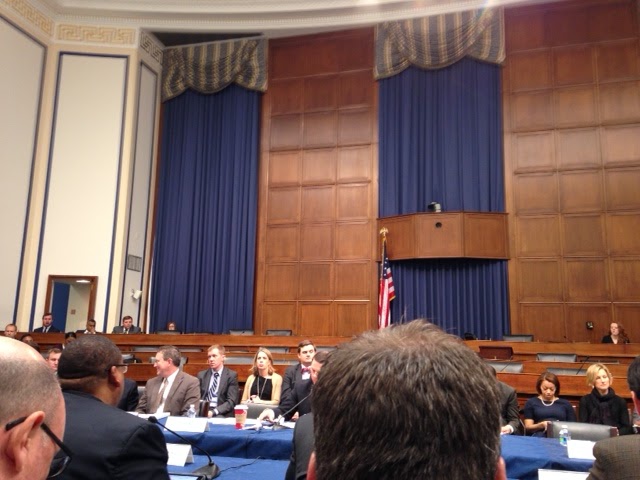
I went to a roundtable discussion on Monday hosted by the US House of Representatives, Subcommittee on Highways and Transit, where six Congressional representatives from the left to the right and various industry and other stakeholders all agreed that innovation is good and stymying autonomous vehicle development and implementation would be bad. The room was packed even though no food, drinks, or particularly new information were served. The members of Congress were guest star Chairman of the House Transportation Committee Bill Schuster (R-PA), subcommittee Chairman Sam Graves (R-MO), Eleanor Holmes Norton (D-DC), Thomas Massie (R-KY), Daniel Webster (R-FL), and Daniel Lipinski (D-IL). I hope I did not leave out anyone. (Information in the parentheses refers to party, Democrat or Republican, and state.)

The subcommittee's informal conversation - NOT a Congressional hearing - was with:
  • Mr. Chris Spear, President and CEO, American Trucking Associations (ATA),
  • Hon. David Strickland, Counsel and Spokesperson, Self-driving Coalition for Safer Streets (and former NHTSA Administrator during the Obama Administration),
  • Mr. David Zuby, Executive Vice President and Chief Research Officer, Insurance Institute for Highway Safety, and
  • Mr. Kevin Acklin, Chief of Staff and Chief Development Officer, City of Pittsburgh


Keeping a straight face award goes to ...

The representative from the American Trucking Associations said - without laughing - that no jobs will be lost and that it will take decades for driverless technology to roll out. However, without turning his head completely around, he also said that trucking fleets would transition to driverless much more quickly than passenger vehicles because these are business vehicles and are operated as fleets. Mr. Spear also said that truck driver jobs are difficult to fill, so, presumably, the never-get-tired driverless technology will be a better bet than humans.

On the other hand, the Pittsburgh representative and David Strickland were much more jolly and upbeat about the prospect of autonomous vehicles, what they can accomplish for society, and the improvement in quality of life for older adults and people with disabilities.

Eyes on safety and commerce

Safety was a topic on everyone's lips with the significant uptick in fatalities on US roads in 2015 and 2016. Mr. Strickland emphasized this and it was also noted by the representative of the Insurance Institute, Mr. Zuby. Mr. Zuby was first runner up for the straight face award because he managed to express a belief in innovation and risk while also suggesting that the insurance industry needs complete proof. But insurance is a follower and not a leader in this field.

One aspect of safety that the members of Congress hung on to was the question of safety during the expected three decades - not my expectation - when "legacy" and fully autonomous vehicles will be sharing the road.

The other significant topic discussed was commerce with no one enjoying the prospect of 50 states with differing regulations governing driverless operations. The Commerce Clause of the US Constitution allows Congress to pass legislation that affects any related issue and to preempt state laws and regulations that interfere with interstate commerce. The representatives present at the roundtable discussion referred to their Constitutional authority. It was mentioned (I think by Strickland) that the California regulations go beyond the traditional self-certification model that NHTSA generally uses. 

What does "driverless" mean exactly?

Like people off the street, participants on both sides of what was a long rectangular table with Congress members on one side and the invited guests on the other, talked about both partially autonomous and fully autonomous vehicles. The guests were generally better at articulating these distinctions.

Really not any news here. Just interesting to see alignment among unusual Congressional bedfellows. No one mentioned the elephant in the room - what will happen when a completely different kind of Administration fills the offices of the government on January 20 and beyond.

Friday, October 21, 2016

Third Hand: Reports of Pesky Attitude at California Hearing

Darn! I did not attend or live stream the public meeting this week to discuss the proposed California driverless regulations, so this post just has links to reports from others. Look at the reports because the fingerprints of the Self-Driving Coalition for Safer Streets is all over the autonomous vehicle industry's issues with the proposed California regulations. David Strickland, the sole person at the coalition is an experienced player and former administrator of the NHTSA.

In-depth articles

GovTech.com 

Automotive news 

Quick reads 

Endgadget

Reuters 

ArsTechnica

My two cents

I just want to say "I told you so," on some points of contention, such as the role that California has proposed for municipalities. I hope that the companies involved do not make the serious error of opposing any and all reporting requirements and regulation.

I personally like the black box/data recorder requirement. 

Significant issues under the proposed rules are trade secrets becoming publicly-available information, role of municipalities, and delays inherent for technology rollouts. 

Not that I disagree, just that there is a positive role for devil's advocates to be playing in terms of the California proposed rules.

Back to Strickland

The Self-Driving Coalition for Safer Streets is growing its website by posting a small library of driverless studies and reports. Testimony by David Strickland at public meetings and other venues is also posted there.