Showing posts with label Universities. Show all posts

Monday, March 1, 2021

#3 Comments in Response to USDOT OST RFI


Acronyms for today

Americans with Disabilities Act - ADA

Office of the Secretary - OST, located at the USDOT (see acronym in this list)

Request for Information - RFI

Request for Qualifications - RFQ

US Department of Transportation - USDOT


Which comment opportunity are we talking about?

I have to admit that I forgot about this comment opportunity, but being a person who doesn't close the many, many open tabs in my browser, and monitoring the numbers of various comment opportunity responses, the ball has not been dropped. This is the third post about comments submitted in response to the late release (in the tenure of Secretary of Transportation Elaine Chao) from the USDOT OST, of an RFI for an Inclusive Design Reference Hub, These were slow in coming in, but we have a total of 10.

Today I cover three non-profit comments that could not be more different. These are the last comments.

Comments submitted = who is paying attention

What strikes me is not so much who has submitted comments as the many players - stakeholders - in this  sandbox who have wisdom and experience, but whom we do not see on the comments list. These include major national organizations that might merely offer a paragraph showing support and perhaps a  suggestion. What I wonder is whether these major organizations in the fields of disability, transportation,  universal design, aging, urban planning, rural development, and equity are good at and concentrate on their relationships in Congress and with USDOT staff, but do not consider the time spent on contributing comments to be time well spent. Or perhaps it is just that all it takes is a staff member to take on this task. I suspect that many busy people and organizations do their jobs and are too occupied or not paying attention beyond their four corners to consider the contribution of comments to the administrative record.

A tale of two types of commenters


Comment from SAE International

This comment is more like a response to an RFQ than an RFI. SAE writes a nice comment about how it is already in the business of:

Designing, operating, and maintaining engineering reference hubs for various technologies, capacities, modes, and subject areas is what SAE has been doing for decades. This is a core element of SAE’s product and service portfolio. SAE has the program management and operational experience to support the daily operations and lifecycle requirements for an inclusive design hub as envisioned by USDOT. In addition, SAE has an established technology transfer processes in place and continually develops new products to further serve the community. This is what we do; a vehicle manufacturer cannot build a saleable motorcycle, car, truck, or bus without using SAE standards, best practices, design tools, and other reference materials.


Who or what is SAE? Previously known as the Society of Automotive Engineers, like its peer AARP, this successful society ditched the name and retained the acronym because it expanded into aerospace. Henry Ford was one of the founders, according to Wkipedia. SAE has been active on engineering standards, but also, in the last few years, on issues surrounding shared-use transportation, accessibility, and, of course, with its famous levels of automation, for automated vehicles. (I used the term automated and not autonomous because SAE's involvement is broad and automation includes everything from cruise control and up.)

According to its comment, SAE, again still marching in front of the judges in order to win the crown, reminds the USDOT that it already does this type of work for the agency and it gives lots of examples.  "SAE proposes to set up a webinar or an in person meeting (whatever the criteria is at the selected time   regarding in person gatherings) to respond to many of the questions in the RFI by demonstrating  reference hubs, standards development processes, and examples of the continuous transfer of technology  performed by SAE for stakeholders." More details follow in this two-page comment, but you get the picture. This comment had nothing, nada, zippo, about the idea of establishing an Inclusive Design  Reference Hub and how that would or would not advance accessible design in transportation. 


Comment from Feonix - Mobility Rising

This comment represents the very opposite of the previous comment. Feonix Mobility Rising is a player in the small urban and rural on-demand transportation world. Feonix concentrates on stakeholder coordination for partnerships mixed with Uber-like ride-request technology, accomplished through publicly-funded projects and the leadership of Valerie Lefler, who is based in Nebraska. Valerie is a strong believer in the value of community in rural towns and she is a proponent of increased access for people with disabilities. Lefler's current and previous work has involved every type of project from volunteer-led partners to transit agencies and other entities that serve transportation-challenged populations in sparsely populated areas.

Feonix works to improve that sorry world for rural residents who do not drive, many of them elders who have lived their entire lives in a particular community. Social isolation and a lack of transportation or expensive transportation are all terrible choices; but non-profit transportation services, often operated by volunteers, or meagre transit systems help these residents with their very personal, friendly, and community sustaining service. Making the most of the sum of the local institutional partners available in a given area, Feonix brings technology rather than actual wheels on the ground, which are provided by local players.


The comment offers suggestions of existing research to include, such as that done or funded by "AARP, the Robert Wood Johnson Foundation, the American Center for Mobility, and the US DOT UTC Program/Council of University Transportation Centers" as well as focusing on several audiences, including non-profits, engineers, and graduate students, among others. This comment has a no-wrong-door feel as well, extending to its suggestion that the proposed Inclusive Design Reference Hub reflect the diversity of types of disability and the lived experience of people along that spectrum.

Feonix displays its own expertise by referencing a training it created for the Michigan Department of Transportation about disability awareness, but the comment is not at all about its own possible role. Rather the comment points to the importance of engaging and employing existing institutional players: 

It will also be critical that US DOT engage the National Council on Independent  Living,  National Center for Mobility Management, National Aging and Disability  Transportation Center, and the National Association of Area Agencies on Aging in designing and promoting the Inclusive Design Reference Hub. These organizations represent incredible  programs and supportive services that are provided to tens of millions of Americans with disabilities and older adults. Their insight and perspective are essential in the success and  utilization of the Hub.

[Editor's note: Links added. Also please note that the editor of this blog worked with the above-mentioned organizations and directly for the National Center for Mobility Management. I also know Valerie Lefler.]


Comment from Alliance for Automotive Innovation

Now, here at the end of the 10 comments submitted, we have another association, an automotive industry player. The Alliance for Automotive Innovation (Alliance) is relatively new, but it comes from a combination of an established organization, a powerful industry, and new startups in the fields of electric, connected, and autonomous vehicles.

Formed in 2020, the Alliance for Automotive Innovation (Auto Innovators) is a the singular, authoritative, and respected voice of the automotive industry. Focused on creating a safe and transformative path for sustainable industry growth, Auto Innovators represents the manufacturers producing nearly 99 percent of cars and light trucks sold in the United States. The newly established organization, a combination of the Association of Global Automakers and the Alliance of Automobile Manufacturers, is directly involved in regulatory and policy matters impacting the light-duty vehicle market across the country. Members include motor vehicle manufacturers, original equipment suppliers, as well as technology and value chain partners.

[Link added to the quoted text.]


The comment reads like one would expect right around the corner that the Alliance will declare it is in favor of apple pie; nothing controversial here. But let us remember that its members are responsible for manufacturing ever larger vehicles that are responsible for a large increase in pedestrian and biker deaths and injuries, that they advertise machines that keep many people sedentary, and that they have traditionally lobbied for a transportation system that is based on a combination of a single skill, the ability to drive, and money to purchase their vehicles. 

That rant out of the way, the Alliance states that it is fully in favor of accessibility. The Alliance points out that an important focus population should be older adults. After reviewing the large percentages of Americans who either have a disability or whom are considered to be seniors, the Alliance confirms that there is, therefore, a need for greater accessibility in transportation. 
To advance this important effort, we support the establishment of an Inclusive Design Hub that can serve as a library of resources for accessibility in AVs. Once created, this online database can provide a “onestop-shop” for the standards and best practices that currently exist regarding accessible vehicle design as it pertains to AVs. 
The Alliance suggests that - wait for some good Washington, DC speak - "An Inclusive Design Hub that is hosted and maintained by an entity or entities that appropriately reflect or represent the cross-stakeholder nature of this issue is more likely to survive into the future as a useful and productive accessibility resource." Cross-stakeholder: Now that's a word for a conversation when heading on the Green Line to the USDOT building. Love it.

Warning: One more rant


Now let's look at the past and current actions of the members of the Alliance. None of its members are building, proposing, or advocating for a significant increase in the numbers or percentages of accessible vehicles. None are promising an all-accessible product line. If these member companies are innovators, hello!, there is lots of opportunity. Instead the Alliance is advocating for better job training, expansion of electric charging infrastructure, and creating incentives for research and development. Thank you, all good, positive steps, but the actual layout of the car has not changed in a 100 years, without considering cupholders. It is time to design universally instead of for a market that excludes 20 percent of the population, some of whom are unable to enter or exit those vehicles.


This is where the comment is intriguing. The Alliance seems to be looking for guidance, standards, and, perhaps, should I say looking for an opportunity to be officially encouraged to provide more access. 

Perhaps what the Alliance is really saying, through the murky lens of non-committal language supportive of the good of transportation-and-tech challenged populations, is that it is time to actually require the industry as a whole to provide accessibility - whether through the Inclusive Design Reference Hub standards or elsewhere - but that each player left on its own will not move forward individually.

Friday, September 21, 2018

More Pilots and Actual Game Changer Possibilities

Columbus, Ohio - a city sorely in need of better schools, land use and a boost in economic development. The city, which has limited walkable neighborhoods and is currently split by highways and areas of true urban blight, is banking on its smart city plans, which now include an AV pilot. Lots of high hopes: "'This is just the beginning," said Jim Barna, the executive director of Drive Ohio. "We envision this really transforming us from a state that's known for agriculture and manufacturing to a state that's known for its advancements in technology.'"

The Columbus AV shuttle pilot, fare free for riders, will operate downtown near the COSI science museum (a great place for kids) and it will operate everyday for a year, traveling at speeds of up to 15 mph. Yet to be determined is whether service will continue once the year is up. Transit bus drivers are pissed and they are already protesting. The pilot will be using May Mobility AV shuttles. May Mobility is located in Ann Arbor, MI. One report states that passenger service will begin in December 2018.

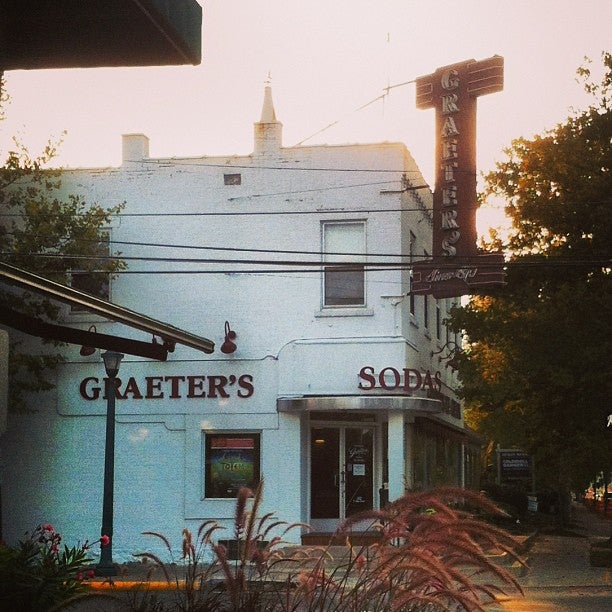
Photo by Mechelle S. on Foursquare.
Maybe Columbus should bank instead on Graeter's ice cream, a homegrown business that has served its customers well since 1870 and has expanded way beyond the Midwest. The photo is from the Bexley location.

Bryan, Texas - A city in Southeast Texas with a walkable downtown and roadways that are controlled by the city rather than the state's department of transportation, TXDOT, Bryan will be launching an AV trolley - no tracks - with room for only six passengers (really four after the two staff per vehicle). The AVs will operate for"two hours each day between the hours of 10 AM and 4 PM, Monday through Friday. After these first 30 days, there is an opportunity for the schedule to be modified."

The AV program is a partnership between Bryan and the Texas A&M Transportation Institute. Service will begin next month.

Some More Slow Shuttles in Europe

Luxembourg has launched two pilots this week, one in Luxembourg City and the other in Contern, both in time for Europe's Mobility Week (see video below). These use Navya vehicles.

Cheap AV pod

Is the AV DragonFly pod a harbinger of a game changer that will replace utopian visions of Mobility as a Service (MaaS) with more of the auto-centric landscape we have now? Yes, it is only meant for private or quiet roadways; yes, it only travels at speeds of up to a meagre 20 mph. BUT the DragonFly only costs $40,000 - quite affordable for individuals who live in retirement or closed communities, and affordable for colleges and universities, for office parks, and places like airports. The DragonFly is manufactured by a company called PerceptIn, which has offices in California and China.

Renault is expanding on its EZ-Go AV concept design with adaptable truck/pop-up shop pods that could operate solo or in Brio-like convoys. Yes, it has been pointed out that the Renault announcement comes on the heels of last week's Ikea AV adaptable pods that can be used as mobile offices, medical clinics, or hotel rooms, among other uses.

Pretty soon, we'll be living and traveling in AV tiny house/offices and eating at pop-up food truck parks.

Tuesday, June 5, 2018

Small Steps from Houston to Florida and Big Steps Abroad

Prelude: Thus far, and for the near future, this blog exists in some respect as my personal filing cabinet of topics I follow about autonomous vehicle (AV) business development, models of future service and arrangements, and legal and regulatory issues. At the moment I do not have the time and resources to cover and catalogue these issues as thoroughly and in ways I would like to. Not sure when that will change, but I do feel torn because I want to follow through on my ideas for better resources than currently exist.

That's my reason for why the following is a list and not an analysis or complete coverage of what follows. PLUS - This is not up-to-the-moment. 😦

Read below while considering the "cities-first" approach of an AV planning partnership from the Bloomberg Philanthropies AV Cities project and the National League of Cities. In an American governance framework where cities are often preempted from regulating their street use due to federal or state laws and regulations, it will be interesting to see the planning coming out of the project. So far, these two organizations say there has been a 30 percent jump in cities incorporating AV transportation into their planning.

There's more than a yellow rose in Texas


Texas is growing as far as AV pilot programs. There is Arlington, where the Dallas Cowboys and the Texas Rangers play, which has an AV shuttle operating on game days and around other events. But now:

Houston - An AV shuttle will be operating on campus at Texas Southern University (TSU) shuttle. "The small shuttles, called “university circulators,” will be limited to a mile-long campus pathway and will run at average speeds ranging from 8 to 12 miles per hour."

Frisco, a suburb of Dallas - According to a Dallas News article, Drive.ai will be testing and doing a six-month pilot of an AV ridehailing service that is planned to commence in July. "The service is made possible through a unique public-private partnership among California-based Drive.ai, the city of Frisco, the Denton County Transportation Authority and the private developments for Hall Park, The Star and Frisco Station. They are all part of the newly formed Frisco Transportation Management Association."

The Frisco AV shuttle will serve the general public at an office park near where the Arlington, TX, AV shuttle operates.

Commercial interruption


Florida

Two states with strong conservative tendencies have attracted plenty of AV testing, Arizona and now Florida. Florida, which is a little far from California and does not have that dry heat, has also rolled out the red carpet of no regulation for AV testing, pilots, and operations.

Gainseville, below the Florida Panhandle, but not at all on the water, is getting a cute AV shuttle route for a transit pilot. EasyMile will be supplying four shuttle AVs. Service is expected to begin for regular riders by the fall.

Tampa already has a shuttle and Babcock Ranch, a real estate development creation of a town, has a pilot that is expected to turn public. The town, Babcock Ranch, announced in 2016 as an eco-friendly soon-to-be-developed town the size of Manhattan, is being true to the word of the developers and an AV shuttle is on its streets being tested since January. Some houses are already built.

Viva Las Vegas

Coming this summer to the streets of Vegas to join the cute AV shuttle there will be Lyft AV ridehailing - BUT to run on fixed routes. This partnership of Lyft and Aptiv will build on the January pilot that provided rides during the CES conference in January 2018. Aptiv's Chief Technology Officer says, "Aptiv will work closely with the city to design future mobility solutions, which benefit public transportation and help with urban congestion challenges. The findings in the Las Vegas test run will be deployed in other cities across the world."

While in the Midwest:
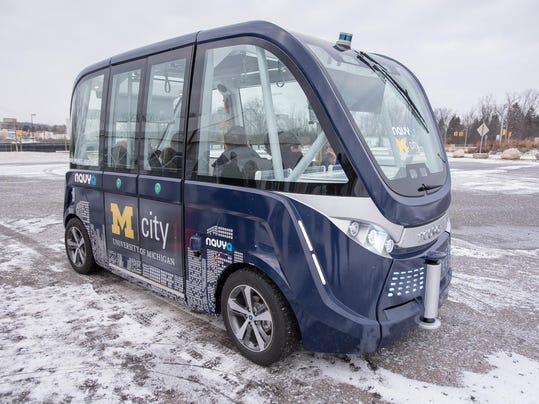
FINALLY the University of Michigan MCity AV shuttle makes its debut, after over a year in the works. Ferrying students on North Campus is a cute shuttle vehicle from  Navya. Students, staff, and eligible guests are invited to ride for free. Hours are limited to daytime and the shuttle ceases service at 3 pm.

Watch the cool video from Ford about enabling people with visual disabilities to "see" or at least to experience the visual landscape.

Over there ... and turn north


When you're in Norway, you are definitely not in the US. While the federal government, over both the Obama and Trump Administrations, has tried to stay more out of the way on AVs and electric vehicles, Norway is taking a wholly different route. AV shuttles are planned and the country is actively encouraging more electric vehicle use.

The long-running AV shuttle operating in Sion, Switzerland is being taught to cross busy streets and communicate with traffic signals. There will also be testing for making its route more complex with roundabouts as well.

Monday, April 30, 2018

Pilots, Pods, and AV Shuttle Sales

Texas: Houston's public transit agency, METRO, announced that its board has approved an AV pilot with one of those cute AV shuttle companies for the Texas Southern University campus. A METRO employee will be on board the AV shuttle, but the shuttle will NOT operate on a public road and will not be on a road with any vehicles, only with pedestrians and bikers. "METRO hopes a successful test of the technology could lead to customers using the autonomous vans as a connection to major transit locations."

Texas Southern University is a historically black college with approximately 10,000 students. It is a major Texas provider of higher education for African Americans and latinos. Considering how underrepresented minorities are in the tech world generally and in AV development in particular, this is a good step. It also is nice to see a transit system actively participating in the first steps and planning for AVs as part of a city's mobility network. This is the exception rather than the rule.

UK: As part of the Leeds Digital Festival, a demo is going on in Leeds of four-seater AV pods; these cute little vehicles will be part of a trial in Leeds to begin sometime in the next few months. The Lake District (isn't that one of those places that Jane Austen's characters visit?) is the site of an ongoing pilot at a national park. I do not believe, however, that Colin Firth will be appearing near or taking a ride on the AV shuttle.

[For Jane Austen fans: Yes, indeed, Elizabeth Bennet, in Pride and Prejudice, visits the Lake District, where she tours Darcy's enormous home. She is in the company of her aunt and uncle.]

New Zealand and Korea: A New Zealand AV shuttle company has a buyer in South Korea for a bunch of its cute shuttles. The Korean buyer is a company developing a smart city. It is selling 150 of its 20-person shuttles, with capacity to extend to 40 riders. The company, Ohmio Automation, a subsidiary of HMI Technologies, has already begun testing and regular service is planned at Christchurch Airport; that's in New Zealand.

Thursday, April 19, 2018

Demos, Pilots, Airports, and Street Sweepers

Autonomous Vehicle Trip to Big 10 and Beyond the Midwest 


Wisconsin - AV shuttle to operate on the University of Wisconsin campus in Madison next week on Apr. 24 and 25. Wisconsin is one of 10 autonomous vehicles testing grounds. And by "Wisconsin" I mean the big 10 school. There is lots of AV and connected vehicle technology development and testing happening there.

Michigan - The University of Michigan in Ann Arbor will have an AV shuttle in operation by the end of April. It will be free for students, faculty, and staff to ride on a 3/4 mile route on North Campus. Finally, because this AV shuttle pilot has been in the works forever, or at least since October 2017.

Minnesota - Minneapolis is about to host its second AV demo. The first was a pilot that took place before and during the Super Bowl festivities early this year. The second will be a weekend AV shuttle open to the public on the Midtown Greenway. Not set in stone, but it looks like the shuttle will operate on Apr. 27-29. The public will be permitted to ride that Sunday, Apr. 29.

Further south and then west ...


Texas - Officials in Houston are considering AV buses. The city hosts an AV testing ground. From a press report, the idea is that a first step would be a three-month AV shuttle pilot "on the campus of Texas Southern University."

Washington - Bellevue officials are in talks with companies to do the usual downtown AV shuttle pilot thing and to "test self-driving van pools to bring commuters into the city." (The city is Seattle, just for all of you native New Yorkers who know where "the city" is.) Turns out, the Seattle-area transit agency has a long-standing large vanpool program, so the program's administrative structure is already in place. Various, well-funded, players are reportedly ready to join in this sandbox. There does seem to be acknowledgement that fully AV vanpools are quite different than a slow speed AV shuttle that operates on a fixed route.

Over in Asia


Japan - 15-passenger AV buses - really shuttle size - in operation at the Fukushima Daiichi nuclear power plant, which is still being cleaned up after the 2011 tsunami and earthquake caused a complete breakdown at the plant. By the way, the disaster was found to have been foreseeable because the plant operator "had failed to meet basic safety requirements such as risk assessment, preparing for containing collateral damage, and developing evacuation plans." That kind of disaster shows why we need safety advocates.

China - An AV container truck at a Chinese port is in operation. The truck is "expected to help port terminals and logistics companies to improve efficiency and save labour cost by more than 50%.
Compared to the traditional self-driving vehicles, the Westwell vehicle can quickly adapt to the port environment, make decisions and alternate controls."

China - The country has also instituted nationwide regulations  for AVs. According to FastCompany:
  1. All cars must first be tested in non-public zones.
  2. Road tests can only be on designated streets.
  3. A qualified driver must always be in the driver’s seat, ready to take over control.


China - Shanghai has already begun trying out automated street cleaner vehicles. They will work quietly and neatly in the middle of the night to keep the streets swept and tidy.

One airport and then beyond


France - Charles DeGaulle Airport outside of Paris is the site of an AV pilot, but the plan is to expand to other airports operated by Groupe ADP, which operates 34 international airports. Don't head to Paris just for this. The AV shuttle, which will last until this July, will only be "offering free rides to passengers with limited mobility."

NOT A random AV tidbit

University of Florida - a graduate student is working on technology that will assist people with visual disabilities to navigate the use of AVs. For a person who is visually impaired, being a few feet away or half a block away from one's destination or vehicle location can be a complete barrier to travel.

Thursday, October 26, 2017

Local Governments Scream "What do I do now?"

All over the United States, cities and counties, even state governments, are waking up - suddenly, as if an alarm clock just went off, awakening them from a deep sleep - and they are screaming "What are we going to do when autonomous vehicles come? Ahhhhhh!!!!! Oh my g-d, what the f&*ck are AVs? CVs? V2Vs? And gas stations versus EVs?

They don't know what the future holds and how to plan; no one knows, partly because the private sector is calling the shots. Plus, federal legislation will come along to preempt state laws and state laws will preempt local laws.

[Aside: I do believe that in the next year, unless we get totally bogged down with impeachment proceedings or some nightmare major distraction, the US will see the passage of a true bipartisan law in the form of AV legislation. The regulation and on-the-street details will fall to the US Department of Transportation and state departments of transportation. Many states already have some kind of AV advisory council.]

Calling on the quiet kid in the back

Let's take Nashville as an example because its transit plans for bus rapid transit (BRT) and light rail (LRT) are attracting criticism - as ambitious transit projects tend to do in car-oriented places - because of talk that shared AVs will make transit less important or not important at all. Shared AVs, some say, will absorb all of the extra congestion expected in the coming decades from Nashville's growth. So, two giant assumptions here: (1) Nashville's current population trajectory will continue, and (2) residents and workers in Nashville will be traveling in shared-AVs that are shuttle or taxi-like instead of alone in their own AVs.

So, one might say, plan for AVs. BUT no one knows when AVs will be coming, in what form, or what business models will co-exist in particular local and regional markets or which will dominate, or whether to go out now and buy all of the connected technology one can get one's hands on or whether to wait because vehicle-to-infrastructure (V2I) won't be necessary when every vehicle is connected to every other one.

A question answered - Where?

We do know where AVs are thanks to a cool map from the Initiative on Cities and Autonomous Vehicles (ICAV, funded by Bloomberg Philanthropies and the Aspen Institute). This screenshot is just of the US and Canada, but the Initiative map covers the globe and one can zoom in and click on a colored spot for information about the AV activity in that city AND a link to municipal information about the particular project. Very cool.

Go local

Local is in. Local is farmers markets and quirky restaurants, yarn stores, parks, and murals. But most places are full of strip malls, free parking, and street crossings and pedestrian infrastructure that are ugly and dangerous. AVs challenge the conventional transportation wisdom of free parking and  everyone needing a car. However, that challenge might only be in the minds of planners and others paid to ponder transportation networks. It is possible that we will have an AV in every parking spot and companies aiming to make that goal both affordable and profitable.

Now, cities and counties are wondering how to move forward and they are hosting meetings, writing reports, investing money, and sometimes being completely frank that they are not sure what to do. In no particular order, here are some examples.

Disclaimer: What appears below is not a complete list. In fact, actual city plans are mentioned later. Scroll down if at first you become irritated.

Columbus, Ohio - Winner of the much-hailed and competitive $40 million Smart Cities Challenge (with a matching bonus of another $10 million), Columbus is perceived as having an advantage. Here is a one-year update on the Columbus demos being funded, which include autonomous shuttles and new fare card technology. Do not believe Columbus is ahead, if only because this city is very troubled. Few complete streets, terrible transit, lots of highways, illegal drugs, and big, big problems with poverty. There is so much to fix; this is a city very much tied to the automobile and the Smart Cities plan tries to do too much. Big doubts. - 😬. Columbus' plan links via ICAV.

Lake County, Illinois - Just outside of Cook County, which is mostly Chicago, Lake County is suburban and exurban, with lots of strip malls and big box stores, and some local stuff thrown in. (I've had decent falafel there and lots of good walks.) Great parks and walking trails. This is a place built around the car. Lake County is just beginning to address AVs and the already changing transportation system as it ponders the new popularity of complete streets and cities. So, being smart, nearby experts from Chicago were invited to address the Lake County Transportation Alliance about ways to improve transportation that do not involve extra lanes and more cars - or huge investments of tax dollars.


Atlanta, Georgia - Not even on the ICAV map yet, but Atlanta is promising a hi-tech, connected corridor right by Georgia Tech, with an AV shuttle. Lots of promotion and news stories about the Ponce-City-Market-to-Midtown (home of Georgia Tech) CV corridor and future AV shuttle route. Here's a boring, but informative video that focuses on the CV aspects of the project. (As a mom of a GaTech grad student, not sure the cycling stuff alleviates any concern about my biking offspring on that exact route.)


Portland, Oregon - Home of Portlandia, food trucks, and all things artisnal - way west of Brooklyn, still independent as its own city, and without the snarkiness. Have to include a clip from Portlandia. This is from a classic early episode about whether the organic chicken on the menu had a full life.

Portland's draft policy smartly considers AVs in the context of the city's transportation goals, such as Vision Zero for pedestrian and biking safety, pollution reduction, and reduction in low-occupancy vehicle trips, among others. View the Portland AV policy page for draft policy documents, timeline, and a new acronym - SAVI for Smart Autonomous Vehicles Initiative. Basically, the draft policy is four single-spaced pages stating that AVs should serve the very new urban goals that the city has already identified. That's good, BUT (you knew there would be a but) there is no explanation of who, when, or how these linkages will be made and goals accomplished. Still, this is a saner-than-Brooklyn-almost-paradise (which has had its own problems, such as the recent ethnic-reactionary murder on the streetcar). The policy identifies a rational order of priorities.
Implement a prioritization of modes for people movement by making transportation system decisions according the following ordered list:
1. Walking
2. Bicycling
3. Transit
4. Fleets of electric, fully automated, multiple passenger vehicles
5. Other shared vehicles
6. No or low occupancy vehicles, fossil-fueled non-transit vehicles

Boston, Massachusetts - The Boston Plan incorporates the laudable non-tech goals of “Zero deaths. Zero injuries. Zero disparities. Zero emissions. Zero stress.” Good way to think of technology - as a means to an end, rather than as the end. Boston has articulated definite goals, a brave move because results can be compared against actual performance. One goal even aims for improved transportation for people with disabilities: "Greater Access for Nondrivers. AVs increase the mobility of people who are unable or unwilling to drive, such as the disabled and the elderly."

While the Boston planning document makes major assumptions, it does examine a range of scenarios in terms of ownership, modes, and use of AVs. I like that. BUT this document only looks at a dense, urban area of the city instead of playing with variables for different types of neighborhoods throughout the city. Allston is not Jamaica Plain is not Beacon Hill. The document also foresees improved mobility for older adults and people with disabilities without analyzing at all the pieces that must be in place for those results to occur.

One more like: The Mobility-as-a-Service (MaaS) type of "digital mobility platform." Here is the image from the document. Interesting that the city is set up as the central governor of the system. Boston rightly envisions itself as part of a public/private ecosystem with which coordination must happen with other city and state bodies.

Toronto, Ontario - This Canadian city has long been on top of AV developments. Thus far, Toronto staff have acknowledged that there are too many unknowns to make firm predictions. A March 2017 document, Implications of Automated Vehicles for TTC, spends most of its pages defining variables and what exists. About two-thirds of the way in, the Toronto document lists the ways in which AVs will likely bring change to traffic, transit fleet management, workforce needs, roadway safety, and the mobility of people with disabilities (without offering any details on that one). It identifies these questions as ones that remain unanswered:
  • What will be the cost of the vehicles, the services needed to support them, the training to work with them, etc.? 
  • Will the software running the system be proprietary, or something independent of the vehicle that can be changed? 
  • How is liability determined between Operators, maintenance, ITS, and the manufacturer? 
  • What would the overall net change in costs be after considering vehicle and software procurement, new infrastructure, and changes in roles and staffing? 
  • How will AVs operate in inclement weather?


Seattle, Washington - Seattle does not so much have a plan as a working let's-look-into-these factors document, which also serves as a teaching document that defines what the heck is actually being discussed. This document nicely summarizes the federal/state/local/judicial division of responsibilities and powers.

Arizona - Just read the other day about Waymo's expansion to the four Arizona cities of Phoenix, Mesa, Tempe and Gilbert. Well, a native New Yorker would not characterize these as cities because walking and transit are not major transportation modes, but Waymo is there and those "cities" are happy. Actually, to be fair, Tempe is a real city, small, but a city.

I have now managed to write a too-long post and insult most cities in the US. At least the dog is sleeping next to me.

Tuesday, October 17, 2017

Michigan: Shift From Motor City to Transit State

Michigan is truly a leader in the development of autonomous vehicles (AVs). Long known as the state where Detroit, the Motor City, is located - a city with a reputation as a transit desert - a reputation that is beginning to turn around, this was the quintessential state devoted to the motor vehicle. Michigan is changing.

The automobile companies stopped singing the tune a few years ago that drivers will never give up the wheel or their personal vehicles, and that AVs would be decades away. Since then big auto has invested billions in AVs and planning for shared-use transportation services. The Hill reports that total AV investment now exceeds $80 billion and that is only a conservative estimate that for the past three years, with investment growing. This news relies on a Brookings Institution report entitled Gauging Investment in Self-Driving Cars. The report is on my to-read list.

Image from Detroit News.
Universities jump on board

But research and development is not the only area where Michigan is a leader. Recently, Michigan has become a leader in AV pilots. First, the University of Michigan added an AV shuttle this academic year on its North Campus. (This blog covered the pilot news in posts during June and August.) The shuttles arrive every 10 minutes.

More Michigan universities are working on AV development. "Lawrence Tech’s vehicle is known as ACTor, or Autonomous Campus Transport/Taxi, and is expected to be functioning on campus by August."

BUT

The Lawrence Tech vehicle, which is homegrown, created at the college, will NOT be an AV. The vehicle will be, at least to start, only partially autonomous. Still, this will add more Michigan competition and it is likely only a matter of time before a true AV shows up shuttling passengers around the Lawrence Tech campus.

Across the Pond in another university town

Image from Business Weekly UK.
Four-passenger autonomous shuttle pods, called PodZero, are operating in Cambridge, England, as part of RDM Group's effort to "deliver the data, information and experience required to get the fleet of larger, 10-seater autonomous buses on the busway a reality sooner rather than later.” England has long been planning and testing AVs. This Cambridge AV PodZero is operating on a guided busway; plans are already in the works to expand to other locations and to larger transit AVs.

Friday, June 23, 2017

Transit AV Shuttles and Curious Jurisdictions

An ambitious autonomous shuttle pilot program is starting up at the University of Michigan in Ann Arbor. The 15-passenger shuttles are manufactured by Navya and a caretaker will be on board, in case anyone is too freaked out that there's no driver. Okay, that's not the official reason for the human present. The vehicle model is the Arma and it is fast for a pilot shuttle, going up to 35 mph.

The pilot starts with two vehicles and service every 10 minutes on campus, but plans are already being discussed for more. Needless to say, the vehicles are fully electric. MCity, an autonomous vehicle testing facility in Ann Arbor, is part of the partnership making the pilot happen.

Service will begin in the Fall of 2017.

Another cute transit shuttle

First Transit has announced that it will be a partner in the GoMentum autonomous vehicle shuttle pilot that Contra Costa Transit Authority will be conducting at Bishop Ranch, a huge office park in suburban California. EasyMile is supplying the autonomous shuttle vehicles. "First Transit is responsible for providing staffing, maintenance and operational support for the two SAV shuttles during the testing and deployment phases of the program."

Commercial break

Ford showing off its autonomous car at the MCity testing ground in Ann Arbor, Mich. Aren't those uncongested streets cute? And what sweet, undistracted, few pedestrians.

Info-gathering mode for the gun shy

Not every US state and jurisdiction is ready for autonomous vehicles, self-driving tiny houses, and transit to be anywhere and everywhere on its roads. Some would prefer to sit back, have research performed, and read a report before getting feet wet. Portland, Ore., and the small state of Rhode Island fall into this category. Both recently issued RFIs - or requests for information.

Portland is high tech, granola, and transit, bike and artisnal friendly. Its RFI, issued on June 9, seeks "data to assist the City in understanding the availability and diversity of suppliers in the marketplace, as well as approaches and solutions to AV testing, piloting and deployment." (To view the RFI, click on link to file attachment number in the middle of the page.) This specifically includes business models, electric vehicles, maintenance, and communications.

In its open way, Portland invites all players to submit information. "We are open to receiving individual applications from companies that have a single piece of the AV puzzle, or group applications that bring together multiple entities." Listed are traditional car manufacturers, transportation network companies - a/k/a TNCs, such as Uber and Lyft, tech companies, consultants, and community stakeholders, among a few others.

Among the topics Portland seeks input about include, but not limited to, first and last mile for transit, commuter transportation, etc., drone or mobile delivery, campus/private land transportation, connected vehicle and infrastructure technology, data collection, and freight transportation.

The deadline for submissions is Aug. 11, 2017. Though a pilot program might come later, the city emphasizes that a pilot program description is not what it is currently seeking.

The Ocean State

Seems like a weird nickname for Rhode Island because it can apply to so many states. Rhode Island's RFI has a deadline of July 12., mid-day. The state is seeking information about autonomous vehicles and not proposals for pilots or programs. RI is seeking information about autonomous surface transportation in all of its forms, from ordinary cars to  inter-suburban mobility to ride sharing (or ride hailing, I suppose) to intercity rail. The state also wants ideas about public-private partnerships and utilizing the state's well-known academic institutions, including Brown University and RISDI (Rhode Island School of Design), both within walking distance in Providence.

Mentioned in the RI RFI are requests about planning, employment, laws and regulation, operations in various weather conditions, and law enforcement as well as particular cities, corridors, and connectivity to specific campuses.

Self-driving entertainment

... and finally, a video of a potato enabled to travel autonomously shows what happens when a smart, tech-savvy person has too much time on his or her hands. Cute, odd, and entertaining one-minute-plus video. Plus proof that one can be a plant and travel at the same time.

Teaser: We have draft federal legislation!!! Next Tuesday will be a hearing on Capitol Hill, though I will be on a different coast at the time. Maybe I can catch the live stream. The subcommittee hosting the hearing will be the Subcommittee on Digital Commerce and Consumer Protection of the House Committee on Energy and Commerce. The draft legislation is available and I will be examining it ASAP.

Tuesday, January 24, 2017

Still Looking Like State/University vs. State/University

Despite proposed national guidelines and lots of talk about how a national approach is needed so that driverless vehicles will be licensed, for want of a better word, to travel across jurisdictional and state lines, we continue to see a vacuum at the federal level in terms of legislation. That is to be expected because the United States Constitution established a system where it would be difficult, not easy, to pass legislation. Presently, there is no fire under Congress, no immediacy, for consensus to propel the enactment of a law. So the decision making remains with the states, which police and license motor vehicle travel and road design, building, and maintenance.

And in that vacuum, more and more states are seeing opportunity or, at least, they are attempting not to be left behind. Last week, I reported on Maryland, Texas, Pennsylvania, Michigan and Ohio. Here are a few more, plus a sales tour for a driverless transit-like shuttle.

Nevada and transit?

Who would have thought that Nevada would be a leader in the testing of driverless transit? Or that Nevada will be the first state to have driverless transit-like shuttle pilots going on in multiple cities? Well, count me in as someone who is surprised because with my East Coast glasses on I did not look into a crystal ball a year or two ago and proclaim Nevada! And I did not read anyone else predicting this either.

Las Vegas is already a location for driverless experimentation and soon Reno, Carson City, and Sparks (a city I have never heard of) will be hosting driverless shuttles as part of a project out of the Regional Transportation Commission (RTC). This project is a collaboration among the RTC, the University of Nevada (link to Reno campus), transit, and others.

Sales tour for driverless transit-like service

Speaking of transit or transit-like, Transdev and Easy Mile are taking their cute driverless shuttle across the country to market it for providing transportation for events and on private campuses, basically off of public roads. Right now, the shuttle is in Florida, but they will be showcasing the vehicle in Atlanta, New Orleans, LA, San Jose, and Arlington, TX. 

Riding easy in the Sunshine state

Florida Polytechnic University is, perhaps, taking a first step to follow Carnegie Melon University and a few other universities, to train students in driverless vehicle software and design, except that the Florida course - only one course - is not growing out of anyone's research, but rather is an intentional move by the university. What remains to be seen is whether a program will grow out of the course, now being taught by a retired Air Force colonel, who has a background in computer science and drone technology. The course is based on one taught at MIT (that's Massachusetts Institute of Technology).

The Florida university is located right near the testing ground recently picked by the US Department of Transportation.

MIT spawn

It is not only Carnegie Melon and Stanford with spawn in the driverless world, MIT's offspring nuTonomy is doing pretty well in Asia and in its extended hometown of Boston, crossing over one of the bridges from Cambridge for its driverless testing and, hopefully, pilot project. The linked article is a nice update and summary of the nuTonomy Boston project. No doubt the very progressive and innovative MassDOT secretary, Stephanie Pollack, will make sure there is a welcoming environment in Massachusetts for driverless. She gave some great talks at the recent TRB (Transportation Research Board) conference. I am a big fan.

By the way, nuTonomy has lots of job openings in engineering, cybersecurity, and mapping.

And out on the Northern Plains

To show how popular it is for states to attract driverless testing, research, and industry, even very sparsely-populated states are trying to get in on the action. Here's an article from North Dakota about consideration of legislation and driverless testing possibilities. The state hasplenty of space, weather, and open roads. Not much congestion.

10 chosen sites

Just so I have this somewhere in my blog-file cabinet of driverless stuff, here is a link to the 10 chosen proving ground sites in the US. 

Tuesday, October 18, 2016

Is UW a New Driverless Hotbed?

Two reports in the past few days about creative driverless developments out of the University of Washington Bothell, a campus I had never heard of before (probably because I have lived my entire life on the East Coast). 

1. Driverless tricycle - so I'm not sure why anyone would need this and does this machine pedal for you? Transport packages? Right now, this is an incredibly early prototype that goes in circles and thrills only the students working on it. But you never know where it will go. I wrote about this tricycle yesterday, very briefly, at the end of a pretty unrelated post.

2. The ELF, a tricycle that looks like a mini-car, is driverless and being developed with funding from Amazon. It is solar powered and can hold up to 550 pounds of persons and/or merchandise. That's a lot of books. The startup working with UW-Bothell is called Organic Transit. You can already buy a non-driverless ELF from Organic Transit. They come in cute colors and cost $7000 and above. I'm not sure you can bring it up to the office; might need conventional parking, though it is considered a bicycle and can travel at the speed of a heavy bike. This is definitely a vehicle that can go to the supermarket, but it might be really slow on steep hills on the way home. 

Monday, October 17, 2016

Pre-Market Approval Floating and 18 for California

California issued its 18th permit to test driverless vehicles to NextEV, a company that is also receiving millions in tax credits for creating jobs in the state's zero-emission industry. I have read a few sources, but they are repeats of press-release-speak and without real details.

Real debate

The real news is the bubbles of unhappiness floating to the surface with California's new proposed driverless regulations and the proposed NHTSA guidelines out of Washington, DC. Toyota is grousing about the possibility of pre-market approval of driverless vehicles and a 15-point safety checklist included in the proposed guidelines. 

We test 16 year olds before they can go out on the road alone and we inspect vehicles at least once a year (my state does) , so perhaps a road-ready inspection system for driverless vehicles is not unreasonable. Total bull that a technology-agnostic testing requirement would necessarily stifle innovation. Like lawsuits are efficient in this regard? Then you have, effectively, regulation by jurors and judges, who know nothing about technology, but generally prefer the little guy defendant.

Pre-market approval

Right now, the argument is, as legal speak would term this, not yet ripe. It would take an act of Congress to grant pre-market approval authority to NHTSA. NHTSA can talk of this possibility, but it has no power at this time to implement such a process. 

From a substantive angle, the other side of the argument is that government will take too long, be inefficient, and blah, blah, blah ruin the auto industry or words to that effect. It's not too often the auto industry begs for government regulation, so excuse me for thinking of Toyota's response as pretty much a knee-jerk reaction.

Interesting that there has been no public word from David Strickland of the Self-Driving Coalition for Safer Streets and its tech and auto industry players. No doubt they are working behind the scenes.

Maybe the auto and tech companies should not fight every government requirement. Makes them look unreasonable to most people, as in people who know little to nothing about the details of driverless technology. 

FYI: Decided not to post the video of the self-driving tricycle - without a seat - that is able to go around in circles. The trike is being developed at the University of Washington Bothell. 

Friday, October 14, 2016

No Break From Driverless Developments

A few days off to enjoy real-life family and events. A little less attention paid to driverless while immersed in much home baking of holiday and rye breads for friends and family. (Everyone needs a source of good bread, but truly here's nothing like homemade. Not that I am the best baker, but a fresh homemade bread has amazing taste and is pure comfort food. Plus, naturally leavened bread is far healthier than breads made with commercial yeast. Rant over.)

The result? I fell woefully behind - for just a few days - on driverless news. Really, driverless news should not come out if I am not paying attention.

Acquisitions and money flowing

German-based Infineon acquires Innoluce BV, a Dutch producer of miniature, and potentially a very cheap, lidar technology. Infineon us a chip manufacturer. Here's a Business Insider article about the acquisition, which also explains well the differences in production costs.

A French driverless shuttle startup, Navya, is receiving a funding boost from, among others, Keolis, a large international transportation and transit company. The boost is to the tune of $34 million, with a $224 million valuation that demonstrates the current groupthink about Navya.

MIT-spawned Optimus Ride is also receiving an infusion of about $5 million. No specifics on the emerging technology that Optimus is incubating, but there is deep autonomous vehicle experience on the staff of the Boston startup.

Technology advance

The University of California at Riverside (UC Riverside) has created a new type of navigation technology. The technology does not rely on GPS, which does not work well in certain settings (such as mountain valleys), and instead relies on existing signals, such as cellular networks and wifi.

Finally on the street

After announcements and plans, finally, finally, driverless cars have appeared on the streets of Milton Keynes, a city in England. They are slow - at 5 mph - and cute and there. Australia, site of the current ITS World Congress conference, has hosted an actual driverless car on its roads as well. Bosch is the producer of the driverless system used on that car.

Friday, October 7, 2016

On the Edges of Driverless Development

This video seems a bit like technology-meets-Reading-Rainbow in its approach, but it does show possibilities for the future in travel and in sitting at home watching your drone have a wonderful day outside. Or the drone can check traffic up ahead or how long the line is outside your favorite restaurant or whether the parking lot up ahead is full.

The car comes with a drone.

The 3D-printed car has not been made, but Local Motors is in exactly that business, with work on 3D-printed driverless vehicles.


Beware: The video is part of a public relations effort.

Korean initiative has sensors seeing colors

The sensors for driverless vehicles that are being developed in Korea do not only see colors - as in traffic signals - they communicate with sensors on roads. Driverless meets CV. The CV or connected vehicle and road sensors give each driverless vehicle information from beyond its own little moving structure. Working on this are a mobile phone carrier, SK Telecom and Seoul National University (SNU) Intelligent Vehicle IT Research Center.

Thursday, September 29, 2016

Such a Thing as a Free Ride

Pennsylvania lawmakers got free rides - driverless rides - from a an adapted Cadillac that Carnegie Mellon University folks have transformed into a driverless vehicle.

By the way, the quick route included jaywalking pedestrians and traffic signals. The Caddy successfully navigated the busy route for willing members of the General Assembly as well as the mayor of Harrisburg, where the demo took place. Harrisburg is the capital of Pennsylvania and the city was hosting a safety conference this week.

I tried to get a video, but no luck.

I did get a video of a self-driving dump truck that doesn't even pretend to need a driver. There's no cab, no driver's seat, no steering wheel. It looks like a toy.


A bonus

I do not get the science and math, but here is an explanation from PCWorld about Nvidia's upgraded AI self-driving technology.

Wednesday, September 28, 2016

Some US Cities Imagining Driverless Future

I'm wishing there was not so much driverless news. It keeps me from other obsessions, like baking bread and watching tiny house shows and videos. Oh and reading. Really, with people visiting soon, I have a ton of bread to bake. Thinking rye, spelt, and whole wheat. And that's before I start another round of cinnamon raisin challahs.

After a few days with transportation geeks, I am dividing the world into the two types of transportation professionals below. Okay, I mean shared use and transit professionals, not any kind of transportation professional.

1. Those who think driverless is coming soon and will be a revolution in transportation.

2. Those who are concentrating on the transportation world as it is and don't believe driverless will be coming for another 10 to 20 years. Basically, they are attempting to be nice by not saying outright that they really think driverless is irrelevant.

Adding places to category #1

Yes, there are the usual suspects of states that want driverless production and testing in their states. But I'm talking about places that are reimagining use of the roadway and what driverless will mean for life in their cities and states.

New York, New York, it's a hell of a town

The Manhattan borough president recently convened a panel to discuss this topic. FYI - The City of New York is divided into five boroughs. Manhattan and Brooklyn are two of them. The panel addressed the different possible scenarios that might unfold with driverless vehicles.

[Side note: Lyrics: New York, New York, it's a hell of a town; the Bronx is up and the Battery's down; the people ride in a hole in the ground ... I tried to find the lyrics online, but all I discovered were videos with the Frank Sinatra, Gene Kelly movie version and what I have below, which is from the current Broadway show that went on site to locales in the city. They show Bethesda Fountain, different parts of Central Park, Nathans in Coney Island, and lots more.]


Chicago is my kind of town - NOT a driverless town

To be fair to the Second City, despite its inferior pizza and its frigid cold winters, the place is good about being in the forefront. Not on driverless, at least not one local politician. A particular alderman wants to ban driverless vehicles and fine any that show up in the Windy City. This puts the local pol against the state government, which wants to encourage driverless investment in the state. [Video is of the Chicago song, with Sinatra singing.]


According to the article about Chicago, Los Angeles is taking a different route and planning for a largely driverless reality in 2035.

No song for Utah

It may be there are songs about Utah, I just don't know them. I could have done Oklahoma.

But Utah has a driverless transit bus at a university. That's Utah State University and the driverless bus has intriguing wireless charging capabilities. I do not know if and when the bus will be tested with actual passengers on a real route. 

Still, I think Chicago might want to reconsider.

Tuesday, September 20, 2016

Before I Write About NHTSA

Yes, yes, yes, I'm reading the long NHTSA guidelines document. It will take a few days to digest, or at least a day. This is called reading beyond the executive summary. And there is actually other news.

UK insurers are handling driverless stuff behind the scenes and dealing calmly with the driving - or partially self-driving - public by stating that all normal car insurance policies will cover human-operated vehicles and self-driving vehicles. And coverage will extend to whatever insurance usually covers inside and outside of the vehicle.

Lots in England

Oxford-spawned Oxbotica, over in England, is busy designing driverless software and hardware for many types of vehicles. The hardware is lasers and cameras. This is for cars, of course, but also for forklifts, mining trucks, and a NASA Mars rover (I guess the Buy America requirements do not apply).

By a lovely canal

In Amsterdam, you might soon see and be able to ride on a driverless - or should I say captainless - boat. It is called, no joke, Roboat. This is the product of a partnership among MIT, which is a US university, and two Dutch universities. To be ready for testing next year, the Roboat will be able to carry people or packages. Since it is basically a flat raft, a succession of Roboats lined up can operate as a walkway or a bridge.

For fun, meet the Rolls Royce moving fancy TV den 

Without steering wheel and brakes, but with "Eleanor," your personal artificial intelligence assistant, the Rolls Royce driverless concept design is neat, but totally impractical. Bright beige carpeting means you will not be bringing kids, coffee, wine, or pizza. There is a very large screen and a loveseat. Fancy, in a futuristic way.