Pilots
Truly awful of me to send out a post that is a list with links. Too busy this week to do otherwise and this post is more personal filing of information than entertaining or informative writing for an audience. My apologies.
Australia - Regional pilot locations announced in New South Wales.
Phoenix, Arizona area - Waymo and Phoenix's public transit, AND Waymo and Walmart partner up for rides to the store, AND Waymo test families include a teenager with the coolest driver - as in none.
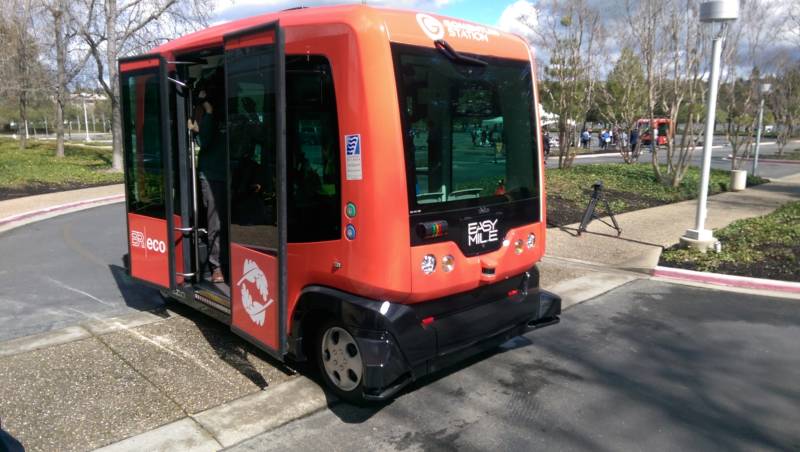
Austin, TX - Cap Metro, the transit agency, is testing AVs prior to year-long pilot with EasyMile shuttles. More local coverage.
Dallas/Fort Worth, TX, area - AV service within geofenced area by Drive.ai with bright orange Nissan vans.
Regulation and insurance
Pennsylvania - Stronger "voluntary" regulations, I mean "guidelines," demand more of AV testing companies.
New insurance law in England, mostly concerned with partial vehicle automation.
SAE
SAE to develop standards for AV safety. First draft due by end of 2018.
New SAE J3016 levels of automation came out in June and a new graphic was released in July. Still clumping together the very different and distinguishable partial automation level 3 with full automation levels 4 and 5.
Showing posts with label Australia. Show all posts
Wednesday, August 8, 2018
Sunday, June 24, 2018
Not Actually Too Long Blog Post #2
The second of two kitchen sink posts slammed between a major conference and a vacation.
Transit in Japan - By 2020, Japan will be introducing regular AV transit service in rural and other areas where transit buses have been discontinued. Regulatory policies must first be put in place.
Another transit bus for Australia - Australia has embraced AV transit service, with Perth having the oldest continuous AV transit route in the world. Australia also has a large city, Liverpool (no kidding), that is planning for an AV bus rapid transit route, with a dedicated lane, to an airport.
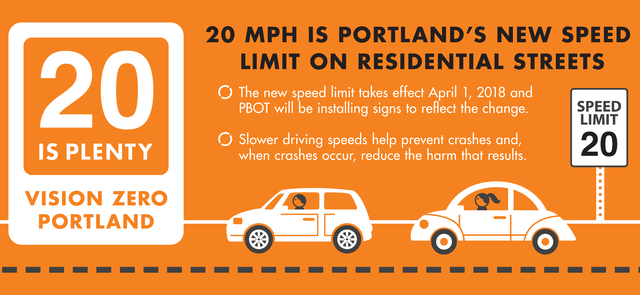
Now Australia can boast the fastest AV shuttle in the world. It goes a whopping 30 km per hour, which is just about 18 mph for you Americans and English. Actually, for the 20 Is Plenty crowd, this is perfect. (20 Is Plenty is a strategy for complete streets and vision zero to decrease road speed to a level that is safer for pedestrians in terms of drivers noticing them and in terms of reducing fatalities and lessening levels of injury when pedestrians are hit.) By the way, the vehicle is capable of reaching speeds up to 40 km per hour.
The speedy AV shuttle is operating on public roads and will be tested as a South Australian university commuter bus. "Flinders Express, or FLEX, was unveiled in Adelaide on Tuesday to launch a five-year trial, transporting university students in southern suburbs." Another, more detailed, article from CIO, reports:
Putin, basically the decider in chief for all of Russia, has turned his attention to AV transit. Quite the scary guy, he seems to get what he wants. Now he wants AV buses. Though cautious and not willing to allow AV transit in mixed traffic, the buses were used near some of the World Soccer games. "The buses traveled just 2,132 feet (650 meters) from Kazan’s “fan zone” meeting point, along a dedicated road empty of other traffic and surrounded by a light fence to keep away pedestrians and animals. It stopped well before the Kazan Arena, leaving fans to walk the rest of the way." Notable is that the AV bus was loaded with 5G capability.
Asia and down under
Transit in Japan - By 2020, Japan will be introducing regular AV transit service in rural and other areas where transit buses have been discontinued. Regulatory policies must first be put in place.
![]() |
| Showing the successful adoption of 20 Is Plenty in Portland, OR |
Now Australia can boast the fastest AV shuttle in the world. It goes a whopping 30 km per hour, which is just about 18 mph for you Americans and English. Actually, for the 20 Is Plenty crowd, this is perfect. (20 Is Plenty is a strategy for complete streets and vision zero to decrease road speed to a level that is safer for pedestrians in terms of drivers noticing them and in terms of reducing fatalities and lessening levels of injury when pedestrians are hit.) By the way, the vehicle is capable of reaching speeds up to 40 km per hour.
The speedy AV shuttle is operating on public roads and will be tested as a South Australian university commuter bus. "Flinders Express, or FLEX, was unveiled in Adelaide on Tuesday to launch a five-year trial, transporting university students in southern suburbs." Another, more detailed, article from CIO, reports:
Members of the public can book a ride on the electric shuttle bus this week, which will initially provide ‘first mile–last mile’ services between Adelaide’s Clovelly Park Train Station and Tonsley Innovation District Main Assembly Building (MAB). It will then continue to bus stops on the main South Road and businesses within the Tonsley precinct.The AV shuttle bus is from Navya. Not to be outdone, New South Wales (NSW) is putting more money on the table to allow for AV pilots.
Russia Wants In
Putin, basically the decider in chief for all of Russia, has turned his attention to AV transit. Quite the scary guy, he seems to get what he wants. Now he wants AV buses. Though cautious and not willing to allow AV transit in mixed traffic, the buses were used near some of the World Soccer games. "The buses traveled just 2,132 feet (650 meters) from Kazan’s “fan zone” meeting point, along a dedicated road empty of other traffic and surrounded by a light fence to keep away pedestrians and animals. It stopped well before the Kazan Arena, leaving fans to walk the rest of the way." Notable is that the AV bus was loaded with 5G capability.
Tuesday, April 10, 2018
PennDOT and a Wine Tour AV Shuttle - Drink and Ride
A perfect reason for an AV shuttle: tourist wine tours without driving. Taste more and ditch the designated driver. BUT you will have to go all the way to Australia (unless you are already there). Autovino - no kidding - if approved, will operate in New South Wales, that's NSW for those in the know, "on Hermitage Road, set against the majestic Brokenback Mountain Range." Not to worry if you prefer beer or no alcohol; craft beer, olive groves, and a day spa are in the area. The Around Hermitage Association will be happy to help with accommodations and other plans. The association is also a partner in the Autovino plan.
Could be better than attending an AV conference, given the wine, the gorgeous scenery, and the cute shuttle. No word yet on when Autovine will debut.
Liberal AV policy makes one state nervous
Pittsburgh, located in the Commonwealth of Pennsylvania, has lots of AV activity going on and - until THE fatality - Uber was giving driverless, well partially driverless, it turns out, rides. Someone at PennDOT, the state department of transportation, or someone close to the governor, must have panicked at Arizona's bad fortune to get caught with its pants down, basically not regulating AVs at all.
So Pennsylvania, a state founded by Quakers (just to throw in a bit of Pennsylvania history), rightfully has cold feet, but it does not wish to alienate the tech industry. Instead of passing a law or issuing regulations, which take time and get mired in details and advocacy, Pennsylvania is entering into a gentlemen's agreement of sorts. Basically, the deal for the tech industry is "you cooperate and we won't get too tough."
Kind of like a sweet plea bargain - technically voluntary
The deal is voluntary. Technically.
Again, these are not regulations at this point, just a request that companies may voluntarily accede to.
Here's a clip from the movie Gentleman's Agreement.
Could be better than attending an AV conference, given the wine, the gorgeous scenery, and the cute shuttle. No word yet on when Autovine will debut.
Liberal AV policy makes one state nervous
Pittsburgh, located in the Commonwealth of Pennsylvania, has lots of AV activity going on and - until THE fatality - Uber was giving driverless, well partially driverless, it turns out, rides. Someone at PennDOT, the state department of transportation, or someone close to the governor, must have panicked at Arizona's bad fortune to get caught with its pants down, basically not regulating AVs at all.
So Pennsylvania, a state founded by Quakers (just to throw in a bit of Pennsylvania history), rightfully has cold feet, but it does not wish to alienate the tech industry. Instead of passing a law or issuing regulations, which take time and get mired in details and advocacy, Pennsylvania is entering into a gentlemen's agreement of sorts. Basically, the deal for the tech industry is "you cooperate and we won't get too tough."
Kind of like a sweet plea bargain - technically voluntary
The deal is voluntary. Technically.
The plan includes submission of detailed company information, verification that federal and state safety standards are met, certification of driver training, list of vehicles involved, routes for testing and proof of insurance.
At least six entities are involved with HAVs in this area, including Aptiv, Argo AI, Aurora Innovation, Carnegie Mellon University and Uber, although Uber suspended testing while national highway traffic officials investigate the Arizona tragedy.Leslie Richards, the PennDOT secretary, said "[w]ithin 60 to 90 days, ... she would convene a meeting with the companies testing autonomous vehicle technology to discuss the interim [request] regulations. In addition, the state will reconvene the Autonomous Vehicle Policy Task Force to review the regulations and update policy recommendations."
Again, these are not regulations at this point, just a request that companies may voluntarily accede to.
Here's a clip from the movie Gentleman's Agreement.
Monday, March 19, 2018
AV Developments Look Good for Drinking and Transit - but maybe not both at the same time
Buses, drinking, and sleek accessible vehicles are all around in autonomous vehicles (AVs) news these days. Maybe if I can't keep up, I can share in the alcohol industry's euphoria about the prospects of ditching the designated driver and the inebriated driver for guilt-free evenings of fine wine, craft beers, and/or drunkenness.
Why not have another glass of wine or four beers?
Both the alcohol industry and those who fight against drunk driving are advocating in favor of AVs. According to a Washington Post article:
Or take the bus - driverless - to or at the airport
The UK and Australia are both considering airport-related AV bus services. Gatwick Airport, near London, will pilot the AV equivalent of an airport shuttle. The summer of 2018 will see the beginning of a six-month trial.
Australia has a much more ambitious AV project under discussion - an AV bus rapid transit (BRT) route to an airport with a dedicated lane - so that travelers will not be slowed down by auto traffic. This plan is so cool because it would integrate BRT with AV technology and combine them in a scheme that would be much cheaper than a rail train-to-the-plane project. Look at the post because there is a neat video that envisions the ambitious plan for Liverpool, a city in Australia, to the soon-to-be-built Western Sydney Airport.
Down in the heart of Texas
As I have said before, it is outside the major cities that AVs are progressing in terms of excitement and concrete plans. A Texas city illustrates the point that while New York City has no public document about AV strategy or large-scale AV service, smaller communities are planning publicly-available transportation for the AV age.
Frisco, TX, a suburb in the Dallas-Fort Worth area, will have an autonomous bus this year. The AV bus was mentioned at a town hall meeting. An official announcement is expected soon.
Why not have another glass of wine or four beers?
Both the alcohol industry and those who fight against drunk driving are advocating in favor of AVs. According to a Washington Post article:
Without the need to drive home after a night at the bar, drinkers could also consume far more. And that will boost alcohol sales, one analysis predicts, by as much as $250 billion.
“It makes a lot of sense that the industry is interested,” said Jim Watson, a senior beverage analyst at Rabobank, a multinational finance firm. “It’s a win-win for them: Self-driving cars could boost alcohol sales and simultaneously reduce drunk driving.”Apparently, alcohol retailers also make significantly more money if you purchase drinks, beer, or wine at a restaurant or a bar than if you buy at a store.
Or take the bus - driverless - to or at the airport
The UK and Australia are both considering airport-related AV bus services. Gatwick Airport, near London, will pilot the AV equivalent of an airport shuttle. The summer of 2018 will see the beginning of a six-month trial.
Australia has a much more ambitious AV project under discussion - an AV bus rapid transit (BRT) route to an airport with a dedicated lane - so that travelers will not be slowed down by auto traffic. This plan is so cool because it would integrate BRT with AV technology and combine them in a scheme that would be much cheaper than a rail train-to-the-plane project. Look at the post because there is a neat video that envisions the ambitious plan for Liverpool, a city in Australia, to the soon-to-be-built Western Sydney Airport.
Down in the heart of Texas
As I have said before, it is outside the major cities that AVs are progressing in terms of excitement and concrete plans. A Texas city illustrates the point that while New York City has no public document about AV strategy or large-scale AV service, smaller communities are planning publicly-available transportation for the AV age.
Frisco, TX, a suburb in the Dallas-Fort Worth area, will have an autonomous bus this year. The AV bus was mentioned at a town hall meeting. An official announcement is expected soon.
Labels:
airports,
Alcohol industry,
Australia,
England,
Texas
Tuesday, February 27, 2018
AV Shuttles in the Outback and US; MADD Partners
Yes, I will admit that to a native New Yorker, anything beyond Ohio, let alone Chicago, seems like the outback, but that is where AVs are taking hold first. By the way, I am simply being self-aware here and not proud of this mindset as I work with many lovely people across the US who see far prettier landscapes than I do everyday and live outside of the DC and NY bubbles.
Plus, we already have 12 mph vehicles in NYC; that's called regular traffic.
Australia
Perth has had a driverless shuttle for over a year and the Darwin Airport just had its own AV shuttle demo to ferry folks on airport grounds. This was the "EZ10 shuttle from Transdev and Easymile." However, this was only a two-day demonstration last week to show the wonders of new transportation technology and to get the conversation started.
Meanwhile, a suburb in Queensland, Australia, is planning for a totally AV system in a private area. Springfield - not the one in Illinois or Massachusetts - is a suburb of Ipswich and this week it is hosting an EasyMile AV shuttle demo.
Minneapolis wants another taste
Now that Minnesota had its first taste with an AV shuttle, this during the winter in downtown Minneapolis during Super Bowl week, the Minnesota Department of Transportation (MNDOT) is moving on demos elsewhere in its biggest city. ""I've ridden on the vehicle, and it feels a bit like the people-mover at the airport that runs between terminals," says [Hennepin] county transit director John Doan."
The Hennepin County Board just approved the idea for a demo in another location. That location is the Greenway, which advocates are touting as part of a route for another light rail line. The Greenway is a six-mile bike and pedestrian trail. "Driverless rides will be offered over a weekend in April. They'll take place along a 2-3 block stretch." Rides will be fare free.
FYI: If you go out to Minneapolis to ride an AV shuttle, take the time to go have pancakes at Mickey's Diner in St. Paul. The place is tiny, so get there early or on the very late side.
One more FYI: I know John Doan and he heads up Mobility 4 All, which is advocating for accessible AVs for people with disabilities. Mobility 4 All is a partner in the Self-Driving Coalition for Safer Streets.
Even the Marines
A Marine Corps air station in California is planning for AV routes, as in real service, on a sprawling base in Miramar, CA. "Two routes on the air station, a “rural” and “urban” route, will provide opportunities for stakeholders to initiate autonomous vehicle testing and development projects. The rural route is located on East Miramar where autonomous vehicle technology testing began early February 2018."
The AVs will be vans and they will also be part of a connected vehicle project.
Buffalo university buys a shuttle
The state university of New York campus at Buffalo has purchased an Olli with help from the NYS DOT and the NYS Energy and Research Development Authority. The Olli, a product of Local Motors, will be used on campus for first-mile/last-mile service to and from public transit. Service is not set to begin until at least the end of April.
Public good case for AVs
MADD and Velodyne Lidar have entered into a partnership to do something unspecified for the cause of getting humans away from the steering wheel.
MADD is an easy partner because unlike advocacy groups for people with disabilities, MADD's push to transport drunk and tipsy people - who seem to greatly overestimate their ability to drive under the influence of alcohol (or other substances) - without having them drive does not require any accessible equipment or interfaces.
And if I sound snarky, I do not mean to. I have known a few people who have been killed in car crashes and I have seen a dear friend try to rebuild her life after her son's death. My father's best friend was killed by a drunk driver. Already two young adults from my daughter's high school class have been killed on US roads. I applaud MADD for encouraging AV technology.
Velodyne is supplying lidar technology to Ford, Volvo, Baidu, Mercedes and other companies, according to the Velodyne Lidar homepage. MADD is a partner in the Self-Driving Coalition for Safer Streets.
Plus, we already have 12 mph vehicles in NYC; that's called regular traffic.
Australia
Perth has had a driverless shuttle for over a year and the Darwin Airport just had its own AV shuttle demo to ferry folks on airport grounds. This was the "EZ10 shuttle from Transdev and Easymile." However, this was only a two-day demonstration last week to show the wonders of new transportation technology and to get the conversation started.
Meanwhile, a suburb in Queensland, Australia, is planning for a totally AV system in a private area. Springfield - not the one in Illinois or Massachusetts - is a suburb of Ipswich and this week it is hosting an EasyMile AV shuttle demo.
Minneapolis wants another taste
Now that Minnesota had its first taste with an AV shuttle, this during the winter in downtown Minneapolis during Super Bowl week, the Minnesota Department of Transportation (MNDOT) is moving on demos elsewhere in its biggest city. ""I've ridden on the vehicle, and it feels a bit like the people-mover at the airport that runs between terminals," says [Hennepin] county transit director John Doan."
The Hennepin County Board just approved the idea for a demo in another location. That location is the Greenway, which advocates are touting as part of a route for another light rail line. The Greenway is a six-mile bike and pedestrian trail. "Driverless rides will be offered over a weekend in April. They'll take place along a 2-3 block stretch." Rides will be fare free.
FYI: If you go out to Minneapolis to ride an AV shuttle, take the time to go have pancakes at Mickey's Diner in St. Paul. The place is tiny, so get there early or on the very late side.
One more FYI: I know John Doan and he heads up Mobility 4 All, which is advocating for accessible AVs for people with disabilities. Mobility 4 All is a partner in the Self-Driving Coalition for Safer Streets.
Even the Marines
A Marine Corps air station in California is planning for AV routes, as in real service, on a sprawling base in Miramar, CA. "Two routes on the air station, a “rural” and “urban” route, will provide opportunities for stakeholders to initiate autonomous vehicle testing and development projects. The rural route is located on East Miramar where autonomous vehicle technology testing began early February 2018."
The AVs will be vans and they will also be part of a connected vehicle project.
Buffalo university buys a shuttle
The state university of New York campus at Buffalo has purchased an Olli with help from the NYS DOT and the NYS Energy and Research Development Authority. The Olli, a product of Local Motors, will be used on campus for first-mile/last-mile service to and from public transit. Service is not set to begin until at least the end of April.
Public good case for AVs
MADD and Velodyne Lidar have entered into a partnership to do something unspecified for the cause of getting humans away from the steering wheel.
To fulfill this vision, Velodyne and MADD have adopted the shared mission of promoting and advancing Autonomous Vehicle technology with the singular goal of getting you and your loved ones home – safely. The Designated Driver of the future is Velodyne LiDAR. Velodyne LiDAR will never be drunk, drugged, distracted, or even drowsy.Following the press release, I have not seen anything more detailed.
MADD is an easy partner because unlike advocacy groups for people with disabilities, MADD's push to transport drunk and tipsy people - who seem to greatly overestimate their ability to drive under the influence of alcohol (or other substances) - without having them drive does not require any accessible equipment or interfaces.
And if I sound snarky, I do not mean to. I have known a few people who have been killed in car crashes and I have seen a dear friend try to rebuild her life after her son's death. My father's best friend was killed by a drunk driver. Already two young adults from my daughter's high school class have been killed on US roads. I applaud MADD for encouraging AV technology.
Velodyne is supplying lidar technology to Ford, Volvo, Baidu, Mercedes and other companies, according to the Velodyne Lidar homepage. MADD is a partner in the Self-Driving Coalition for Safer Streets.
Labels:
Australia,
California,
EasyMile,
Local Motors,
MADD,
Marines,
Minnesota,
New York,
Self-Driving Coalition,
Velodyne Lidar
Friday, February 9, 2018
Brought to You by the Letter P for Pittsburgh and Perth
Way, way, way too busy with autonomous vehicle (AV) work on top of actual work and actual life. So here is what I see as important news this week. I am not covering the Uber/Waymo settlement. It's everywhere, easy to find, and the professional reading equivalent of the last episode of the season of a guilty-pleasure TV drama. Oh my, though, right?
City of bridges and AVs
I just went to Pittsburgh, in the worst weather possible, and found an entire transportation community knowledgable about AVs and robotics. I am talking people working in programs for older adults, people with disabilities, and healthcare transportation - not staff from startups or Uber.
This morning, I found a great article in my feed from TheIncline, which is closely monitoring the bubbling, active AV testing going on downtown and elsewhere in Pittsburgh. Truly amazing as well because the Commonwealth of Pennsylvania is quite enthusiastic about AVs, so there is none of the usual state/city friction that one sees in many other states.
I hope to have the time to return to state legislative developments, and there are some in Pennsylvania. Carnegie Mellon University has really solidified itself as a center for AV and robotics technology and has almost single-handedly launched Pittsburgh into a major contender.
For right now, it's ridehailing giant Uber providing rides. There is no AV shuttle - yet, but there is plenty of planning.
Down under city starting with P
Perth is also in the forefront and an old hat in the AV transit bus world. It has had an AV bus since 2016, practically the middle ages in terms of AV pilots. The AV bus is open to the public and the city will be hosting a launch of AV ridehailing this year, otherwise called on-demand. Navya will be the partner for that project, which will use cars.
I'm including the link because I keep getting redirected to a subscription page. Here is the link: https://www.theaustralian.com.au/news/nation/perth-residents-embrace-driverless-vehicle-technology/news-story/6f0a3b8288db6e791bba316477906f8c.
Cross-country in a truck
Embark can boast a successful demonstration with a coast-to-coast US truck trip with its AV truck. Do not get too excited because there was a driver and that person did take over a few times. The trip was from LA to Florida. Quietly, Embark is accomplishing quite a bit with frequent LA to El Paso trips. Now there's a beach destination.
City of bridges and AVs
I just went to Pittsburgh, in the worst weather possible, and found an entire transportation community knowledgable about AVs and robotics. I am talking people working in programs for older adults, people with disabilities, and healthcare transportation - not staff from startups or Uber.
![]() |
| [From TheIncline] |
I hope to have the time to return to state legislative developments, and there are some in Pennsylvania. Carnegie Mellon University has really solidified itself as a center for AV and robotics technology and has almost single-handedly launched Pittsburgh into a major contender.
For right now, it's ridehailing giant Uber providing rides. There is no AV shuttle - yet, but there is plenty of planning.
Down under city starting with P
Perth is also in the forefront and an old hat in the AV transit bus world. It has had an AV bus since 2016, practically the middle ages in terms of AV pilots. The AV bus is open to the public and the city will be hosting a launch of AV ridehailing this year, otherwise called on-demand. Navya will be the partner for that project, which will use cars.
I'm including the link because I keep getting redirected to a subscription page. Here is the link: https://www.theaustralian.com.au/news/nation/perth-residents-embrace-driverless-vehicle-technology/news-story/6f0a3b8288db6e791bba316477906f8c.
Cross-country in a truck
Embark can boast a successful demonstration with a coast-to-coast US truck trip with its AV truck. Do not get too excited because there was a driver and that person did take over a few times. The trip was from LA to Florida. Quietly, Embark is accomplishing quite a bit with frequent LA to El Paso trips. Now there's a beach destination.
Thursday, August 17, 2017
Transit Pulling Ahead
Reading the news on autonomous vehicles (AVs), everyday I am seeing more shared-use, transit, and transit-like AVs. These pilot programs are spreading quickly. Slow, fixed-route - or limited radius - AV shuttles have captured the imagination of places in the United States that are (1) NOT our major cities, meaning places without strong transit unions, and (2) NOT transit rich. Indeed, in at least one spot, AV shuttles will used to ferry people to and from parking lots.
Most of the AV shuttles are manufactured by Navya and EasyMile, though there are other companies in the game and some homegrown, usually university-developed, shuttle vehicles.
Down under, over to Far East, and towards the West
Perth, Australia has an AV transit shuttle service - open to the public - that just turned one year old. The Navya shuttle, called Arma, operates on public roads. The shuttle reads signs and turns right. Unlike human drivers, it regularly improves due to software upgrades. [See photo.]
Singapore will have AV ridehailing in mid-2018 via a partnership with nuTonomy. Unknown is whether a local ride hailing company will be involved. This city-state is already ahead of the curve on AV testing and is currently well in the lead in terms of AV-related urban planning. (Lots more on that topic in a blog post soon.)
Helsinki, Finland has an AV shuttle as a regular service - NOT a pilot project. Finland's pilots have used the EasyMile EZ10 for AV service and that tradition continues with the Helsinki shuttle.
Tallinn, Estonia recently saw the end of a month-long AV transit shuttle pilot that was open to the public. This project also used EasyMile vehicles. There are already plans to bring the AV transit option back to Estonia, but next time to a different city and not until next summer. A leading Estonian transportation official is pushing for Estonia to move forward with AVs generally.
Go west young shuttle
Michigan: Ann Arbor, home of Big Ten school University of Michigan (UM) and the MCity AV testing facility (and not far from the American Center for Mobility testing facility in Ypsilanti, Michagan) is about to host an AV shuttle on a two-mile route between engineering buildings at UM's North Campus. The shuttle vehicles are manufactured by Navya and they carry up to 15 passengers. Rides will be fare free and the AV shuttle will operate during the university's business hours (not intended for late-night studying or as a drunk bus).
Texas
Texas A&M has a homegrown AV shuttle on campus for Howdy Week. The plan is to have 15 of these shuttles in operation by the end of the spring semester, meaning by May.
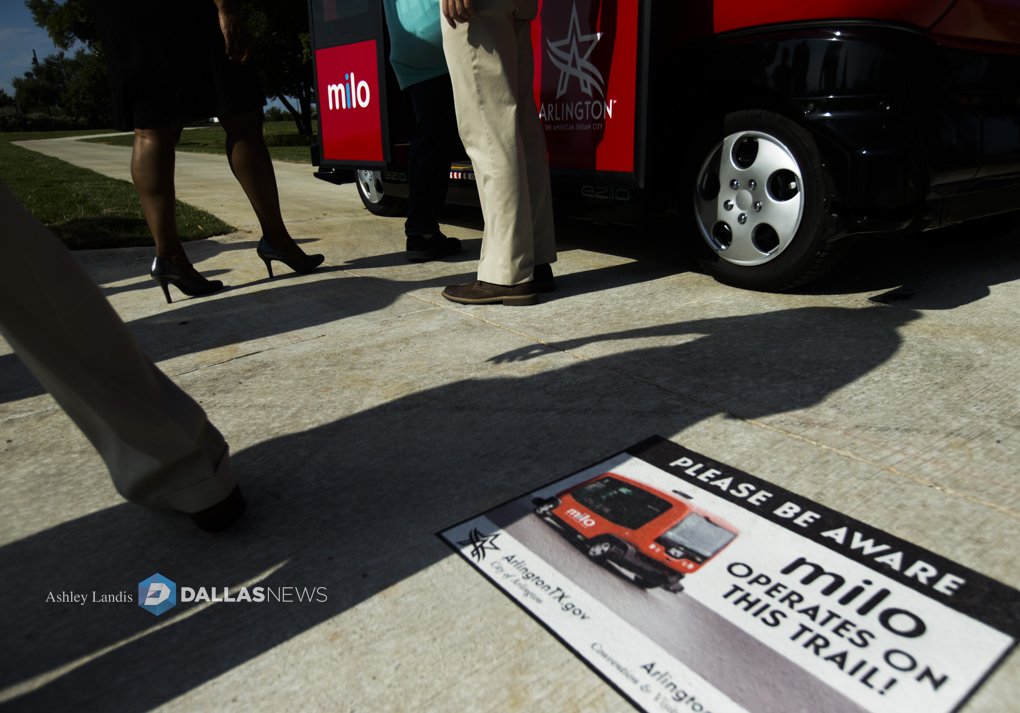
Arlington, Texas has a pilot AV shuttle program that began on Aug. 26 and will continue through mid-2018. The shuttle will provide AV transportation around the Arlington entertainment district and to Texas Rangers and Dallas Cowboys games on game days and when concerts and other events are held. EasyMile shuttle vehicles will be used. Arlington is already considering expanding the use of AV transit shuttles beyond the pilot project. The vehicles hold 12 passengers, according to one enthusiastic report.
California
San Jose Airport is testing an EasyMile shuttle vehicle and hopes to use it for ferrying travelers and workers around the airport. The wish list includes an AV shuttle to transit and a dedicated lane on public roads. A local article about the project does a nice job of explaining the huge quality-of-life implications for people with disabilities and older adults.
San Ramon, CA, home of the Bishop Ranch office campus has an AV shuttle pilot program that is designed for ferrying office workers. The AV shuttle became a local celebrity when it was featured as the grand marshal of the Concord, CA, July 4th parade. EasyMile shuttle vehicles are being used.
Apple is floating the idea of an AV shuttle for employees. No word on timing or which company will be supplying the shuttles.
Colorado: Denver's transit system is planning for cute AV shuttles for first and last mile connection to transit. RTD, the transit agency, was testing the EasyMile EZ10 in a giant parking lot. If you watch the video, just note that the snarky New Yorker reaction is that unless this vehicle has a dedicated lane or a built-in "oh no you don't" feature, in a busy city pedestrians will eating this adorable vehicle for lunch. You cannot combine a courteous, safe vehicle with a nasty, walking Brooklynite.
MaaS on the menu - tea leaf of expected profitable service
None other than Ernst & Young (really called EY), a large multinational accounting firm, has developed a Blockchain platform, called Tesseract, for managing fleets of AVs. The firm sees mobility as a service - or MaaS - somewhere on the expected horizon. From what I understand, which is little, about Blockchain, also used for bitcoin transactions, it is nearly unhackable and it is instantaneous. Evidently, EY sees money in this and has confidence that MaaS will emerge with sharing of different types of AVs, and differently-owned vehicles.
People with disabilities: AV transportation equity
Australia, like the US, a country of long distances, has a company about to pilot AV pods for older adults. Called Pod Zero, and manufactured by UK-based company RDM Autonomous, the pilot will only offer transportation on local roads within some elder communities owned by IRT, an Australian company. (For you older New Yorkers or subway history buffs, this company appears to have no relation to IRT train lines, such as the 1, 2, 3, 4, 5, and 6.) According to RDM, Pod Zero "is currently built in two variants – four-seater and eight-seater – and offers an operating speed up to 15 mph, multiple battery options up to eight hours or 50 miles, wheelchair accessibility and air conditioning."
Pod Zero will launch in November at an aging and information technology conference.
Autonomous wheelchairs are being tested and plans so far are for use in hospitals and airports. Though this wheelchair comes out of MIT research, the pilots are in Singapore and Japan.
Fare free for a price
Under the category "you get what you pay for," ideas for how businesses will make money off of AV transportation are growing. One idea floating around is that AV service, perhaps shared-use ridehailining trips, will be free - actually "sponsored" - by a local business, maybe a restaurant that wants your patronage. Other ideas revolve around fare free because transportation will be a cheap perk to deliver in exchange for valuable data. Sorry, forgot to get a link for this.
OMG, can't believe someone just said this - try being in a wheelchair for a few days
Below is a quote from a Mother Jones post that shows how people totally do not get the need for accessibility. It's as if the writer and like-minded individuals assume that all people with disabilities have extra cash to pay for personal service and that they don't deserve transportation equity. I agree with the point of the post, to not let the perfect be the enemy of the good, BUT people with mobility challenges - by they mothers with strollers or grandfathers with wheelchairs or cousins with intellectual disabilities, should not have to continue to be second-class transportation citizens. (I include the mother because so many parents develop back problems during the car-seat years. Why can't we have cars in which you can just roll in a stroller?)
Most of the AV shuttles are manufactured by Navya and EasyMile, though there are other companies in the game and some homegrown, usually university-developed, shuttle vehicles.
Down under, over to Far East, and towards the West
Singapore will have AV ridehailing in mid-2018 via a partnership with nuTonomy. Unknown is whether a local ride hailing company will be involved. This city-state is already ahead of the curve on AV testing and is currently well in the lead in terms of AV-related urban planning. (Lots more on that topic in a blog post soon.)
Helsinki, Finland has an AV shuttle as a regular service - NOT a pilot project. Finland's pilots have used the EasyMile EZ10 for AV service and that tradition continues with the Helsinki shuttle.
Tallinn, Estonia recently saw the end of a month-long AV transit shuttle pilot that was open to the public. This project also used EasyMile vehicles. There are already plans to bring the AV transit option back to Estonia, but next time to a different city and not until next summer. A leading Estonian transportation official is pushing for Estonia to move forward with AVs generally.
Go west young shuttle
Michigan: Ann Arbor, home of Big Ten school University of Michigan (UM) and the MCity AV testing facility (and not far from the American Center for Mobility testing facility in Ypsilanti, Michagan) is about to host an AV shuttle on a two-mile route between engineering buildings at UM's North Campus. The shuttle vehicles are manufactured by Navya and they carry up to 15 passengers. Rides will be fare free and the AV shuttle will operate during the university's business hours (not intended for late-night studying or as a drunk bus).
Texas
Texas A&M has a homegrown AV shuttle on campus for Howdy Week. The plan is to have 15 of these shuttles in operation by the end of the spring semester, meaning by May.
Arlington, Texas has a pilot AV shuttle program that began on Aug. 26 and will continue through mid-2018. The shuttle will provide AV transportation around the Arlington entertainment district and to Texas Rangers and Dallas Cowboys games on game days and when concerts and other events are held. EasyMile shuttle vehicles will be used. Arlington is already considering expanding the use of AV transit shuttles beyond the pilot project. The vehicles hold 12 passengers, according to one enthusiastic report.California
San Jose Airport is testing an EasyMile shuttle vehicle and hopes to use it for ferrying travelers and workers around the airport. The wish list includes an AV shuttle to transit and a dedicated lane on public roads. A local article about the project does a nice job of explaining the huge quality-of-life implications for people with disabilities and older adults.
San Ramon, CA, home of the Bishop Ranch office campus has an AV shuttle pilot program that is designed for ferrying office workers. The AV shuttle became a local celebrity when it was featured as the grand marshal of the Concord, CA, July 4th parade. EasyMile shuttle vehicles are being used.
Apple is floating the idea of an AV shuttle for employees. No word on timing or which company will be supplying the shuttles.
Colorado: Denver's transit system is planning for cute AV shuttles for first and last mile connection to transit. RTD, the transit agency, was testing the EasyMile EZ10 in a giant parking lot. If you watch the video, just note that the snarky New Yorker reaction is that unless this vehicle has a dedicated lane or a built-in "oh no you don't" feature, in a busy city pedestrians will eating this adorable vehicle for lunch. You cannot combine a courteous, safe vehicle with a nasty, walking Brooklynite.
MaaS on the menu - tea leaf of expected profitable service
None other than Ernst & Young (really called EY), a large multinational accounting firm, has developed a Blockchain platform, called Tesseract, for managing fleets of AVs. The firm sees mobility as a service - or MaaS - somewhere on the expected horizon. From what I understand, which is little, about Blockchain, also used for bitcoin transactions, it is nearly unhackable and it is instantaneous. Evidently, EY sees money in this and has confidence that MaaS will emerge with sharing of different types of AVs, and differently-owned vehicles.
People with disabilities: AV transportation equity
Australia, like the US, a country of long distances, has a company about to pilot AV pods for older adults. Called Pod Zero, and manufactured by UK-based company RDM Autonomous, the pilot will only offer transportation on local roads within some elder communities owned by IRT, an Australian company. (For you older New Yorkers or subway history buffs, this company appears to have no relation to IRT train lines, such as the 1, 2, 3, 4, 5, and 6.) According to RDM, Pod Zero "is currently built in two variants – four-seater and eight-seater – and offers an operating speed up to 15 mph, multiple battery options up to eight hours or 50 miles, wheelchair accessibility and air conditioning."
Pod Zero will launch in November at an aging and information technology conference.
Autonomous wheelchairs are being tested and plans so far are for use in hospitals and airports. Though this wheelchair comes out of MIT research, the pilots are in Singapore and Japan.
Fare free for a price
Under the category "you get what you pay for," ideas for how businesses will make money off of AV transportation are growing. One idea floating around is that AV service, perhaps shared-use ridehailining trips, will be free - actually "sponsored" - by a local business, maybe a restaurant that wants your patronage. Other ideas revolve around fare free because transportation will be a cheap perk to deliver in exchange for valuable data. Sorry, forgot to get a link for this.
OMG, can't believe someone just said this - try being in a wheelchair for a few days
Below is a quote from a Mother Jones post that shows how people totally do not get the need for accessibility. It's as if the writer and like-minded individuals assume that all people with disabilities have extra cash to pay for personal service and that they don't deserve transportation equity. I agree with the point of the post, to not let the perfect be the enemy of the good, BUT people with mobility challenges - by they mothers with strollers or grandfathers with wheelchairs or cousins with intellectual disabilities, should not have to continue to be second-class transportation citizens. (I include the mother because so many parents develop back problems during the car-seat years. Why can't we have cars in which you can just roll in a stroller?)
No, we don’t need to deal with the problem of seniors and disabled passengers before it becomes an issue. Why would we? The market will almost certainly take care of this. Maybe companies will spring up that maintain human drivers, or that offer to have a human accompany the car to help you load your luggage or get your wheelchair into the trunk. Maybe driverless taxi companies will include this as an option. Or something. This is a no-brainer. [Emphasis added.]So if you are an affluent person with a disability, no worries. But if you can't afford to pay twice as much for transportation or if you do not want to permanently be stuck at home, sorry. OMG, bad attitude. Maybe it's time to expand the Americans with Disabilities Act to comprehensively include all for-hire and private vehicle transportation. This just gets too hard for anyone marginalized just because he or she uses a wheelchair.
Friday, October 14, 2016
No Break From Driverless Developments
A few days off to enjoy real-life family and events. A little less attention paid to driverless while immersed in much home baking of holiday and rye breads for friends and family. (Everyone needs a source of good bread, but truly here's nothing like homemade. Not that I am the best baker, but a fresh homemade bread has amazing taste and is pure comfort food. Plus, naturally leavened bread is far healthier than breads made with commercial yeast. Rant over.)
The result? I fell woefully behind - for just a few days - on driverless news. Really, driverless news should not come out if I am not paying attention.
Acquisitions and money flowing
German-based Infineon acquires Innoluce BV, a Dutch producer of miniature, and potentially a very cheap, lidar technology. Infineon us a chip manufacturer. Here's a Business Insider article about the acquisition, which also explains well the differences in production costs.
A French driverless shuttle startup, Navya, is receiving a funding boost from, among others, Keolis, a large international transportation and transit company. The boost is to the tune of $34 million, with a $224 million valuation that demonstrates the current groupthink about Navya.
MIT-spawned Optimus Ride is also receiving an infusion of about $5 million. No specifics on the emerging technology that Optimus is incubating, but there is deep autonomous vehicle experience on the staff of the Boston startup.
Technology advance
The University of California at Riverside (UC Riverside) has created a new type of navigation technology. The technology does not rely on GPS, which does not work well in certain settings (such as mountain valleys), and instead relies on existing signals, such as cellular networks and wifi.
Finally on the street
After announcements and plans, finally, finally, driverless cars have appeared on the streets of Milton Keynes, a city in England. They are slow - at 5 mph - and cute and there. Australia, site of the current ITS World Congress conference, has hosted an actual driverless car on its roads as well. Bosch is the producer of the driverless system used on that car.
The result? I fell woefully behind - for just a few days - on driverless news. Really, driverless news should not come out if I am not paying attention.
Acquisitions and money flowing
German-based Infineon acquires Innoluce BV, a Dutch producer of miniature, and potentially a very cheap, lidar technology. Infineon us a chip manufacturer. Here's a Business Insider article about the acquisition, which also explains well the differences in production costs.
A French driverless shuttle startup, Navya, is receiving a funding boost from, among others, Keolis, a large international transportation and transit company. The boost is to the tune of $34 million, with a $224 million valuation that demonstrates the current groupthink about Navya.
MIT-spawned Optimus Ride is also receiving an infusion of about $5 million. No specifics on the emerging technology that Optimus is incubating, but there is deep autonomous vehicle experience on the staff of the Boston startup.
Technology advance
The University of California at Riverside (UC Riverside) has created a new type of navigation technology. The technology does not rely on GPS, which does not work well in certain settings (such as mountain valleys), and instead relies on existing signals, such as cellular networks and wifi.
Finally on the street
After announcements and plans, finally, finally, driverless cars have appeared on the streets of Milton Keynes, a city in England. They are slow - at 5 mph - and cute and there. Australia, site of the current ITS World Congress conference, has hosted an actual driverless car on its roads as well. Bosch is the producer of the driverless system used on that car.
Labels:
Australia,
Bosch,
California,
England,
France,
Germany,
Infineon,
Innoluce BV,
Navigation,
Navya,
Netherlands,
Optimus Ride,
Universities
Tuesday, September 27, 2016
Bad Pizza by Drone
Dominos is working hard to take out the human delivery person from its delivery service. The pizza company has worked with a robotics company to develop a drone that is currently being tested in a pilot program in Australia. Like Google, Uber, and others doing driverless testing, there is a human accompanying the Dominos drone delivery unit. Concentrating on delivery, there is a Dominos' robotics unit - or DRU. Supposedly, the drone keeps the mediocre (at best) pizza warm.
Which robotics company is the Dominos partner? Marathon Targets, based in Sydney. The robot can traverse grass or ground as well as sidewalks, but not stairs. Business Insider posted a photo montage that explains the service and shows the logo-labeled Dominos drone.
Cautionary note: As a native New Yorker, I am offended by the very idea and definitely by the taste of Dominos pizza.
Which robotics company is the Dominos partner? Marathon Targets, based in Sydney. The robot can traverse grass or ground as well as sidewalks, but not stairs. Business Insider posted a photo montage that explains the service and shows the logo-labeled Dominos drone.
Cautionary note: As a native New Yorker, I am offended by the very idea and definitely by the taste of Dominos pizza.
Thursday, September 1, 2016
Bye, Bye Bus Driver
Australia - A pilot transit bus - really a cute shuttle vehicle - is being tested in Perth. Hopes are to expand the 2.5-km/1.6-mile route if all goes well. This is not a relatively complex autonomous vehicle. It will go slowly and travel on a route with plenty of pedestrians to watch out and stop for. (I do not believe in avoiding finishing sentences with prepositions.) This project required a unique permit from the state government.
Russia - Maybe it's the Putin-uber macho mystique, but Russia is (like the US Army) working on a driverless tank, or, as it is officially referred to, an armored vehicle. The tank can fit 10 soldiers and their gear, so it is also the first tiny driverless barracks. This video is like a combination of a bad car commercial and a bad the-vehicle-as-villain scary movie.
It is truly a weird thing that I am reading any article from Popular Mechanics, but the worlds of mechanics, technology, and transportation are merging when it comes to autonomous vehicles.
And on the farm
It's not only soldiers whose jobs will be redefined or lost. We're doing away with farm hands as well, at least the ones holding onto to steering wheels. Driverless tractors are being perfected and soon to be sold to farmers everywhere. You will be able to use your i-pad or other tablet to start and monitor the tractor as it plants and does other stuff. (I'm from Brooklyn. Assume I know nothing about agricultural operations.) Warning: The video on the linked webpage is creepy.
Russia - Maybe it's the Putin-uber macho mystique, but Russia is (like the US Army) working on a driverless tank, or, as it is officially referred to, an armored vehicle. The tank can fit 10 soldiers and their gear, so it is also the first tiny driverless barracks. This video is like a combination of a bad car commercial and a bad the-vehicle-as-villain scary movie.
It is truly a weird thing that I am reading any article from Popular Mechanics, but the worlds of mechanics, technology, and transportation are merging when it comes to autonomous vehicles.
And on the farm
It's not only soldiers whose jobs will be redefined or lost. We're doing away with farm hands as well, at least the ones holding onto to steering wheels. Driverless tractors are being perfected and soon to be sold to farmers everywhere. You will be able to use your i-pad or other tablet to start and monitor the tractor as it plants and does other stuff. (I'm from Brooklyn. Assume I know nothing about agricultural operations.) Warning: The video on the linked webpage is creepy.
Friday, May 27, 2016
From Sea to Shining Sea - Everyone Is Interested
At a session I put on yesterday at a national community transportation conference, there were attendees from rural and small city areas across the United States and Canada. Everyone is interested in driverless and many in community transportation are afraid. They are afraid that their passengers who are elderly or disabled will not have a friendly driver on board - whether a car, a van, or a bus - to give assistance. They are afraid of interfaces that do not work for people with cognitive disabilities. Some are excited about the opportunities driverless transportation will bring, while others would prefer to hold on to the present, despite its inefficiencies and inequities.
This is an exciting time; possibilities are not set in stone. Now is the time and it is the role now for advocates and educators - national associations and others - to make sure that manufacturers, tech companies, and elected officials understand the importance of equity, not only in large cities, but in rural areas, suburbs, and small urban areas. Transit and community transportation in many places is often the only link that enables older adults, people with disabilities, and people with low incomes to remain independent, to work, and to travel. Rural areas present a unique challenge, with long distances and low population densities. If such places and such people are not to be left in the rear view mirror, then solutions must be developed and voices heard by the powers that be.
Congestion is not the problem in many places; less dense cities and regions have significant equity issues that the Americans with Disabilities Act (ADA) has just touched the surface of. Driverless has the potential for vast improvements on this score.
That's my rant for the week.
Scant update
I have hardly paid attention to driverless news in the past week, so here is a summary, just so I jot down what I think is important. For anyone out there who concentrates on this stuff, much is this will be old news to you.
Follow the money
Ford putting its money where its mouth is, both working on and investing in the shared-use driverless business model. The venture capital firm founded by Bill Ford, Jr. has put real money into nuTonomy, the company doing the robo-taxis in Singapore.
Intel buying up start-up companies so that it can go full speed ahead in the driverless race. The latest buzz focuses on Intel's purchase of Itseez, a San Francisco company. One could think that hanging out at SF coffee places is the way to get get intelligence on start-ups to invest in or purchase for driverless and other tech races.
Everybody's making sausages
Nice state legislation update, especially regarding New York and Michigan. New York wants to clear a path for sale of driverless vehicles and shared-use driverless transportation. The legislation will also trash the requirement that a driver have a hand on the steering wheel at all times - because there might not be a steering wheel.
UK government talking legislation that will make manufacturers of driverless vehicles and technology liable in case of crashes and other incidents.
Hints of Tesla going from partially autonomous vehicles to fully autonomous? Reports that updates could be coming before late 2017.
On the roads now and soon in ...
Driverless vehicles soon to be tested on roads in Australia.
Japan unveils robo-taxi for G7 summit.
Have recent tests in Europe of driverless - or almost driverless - connected vehicle (CV) convoys of trucks inspired the hungry state of Michigan? Hungry, that is, for keeping all things vehicular manufacturing and development in the Motor State. Michigan roads will soon see CV convoys. Right now, these will be convoys operating for testing purposes only. Interesting - it will be the US Army doing the testing.
This is an exciting time; possibilities are not set in stone. Now is the time and it is the role now for advocates and educators - national associations and others - to make sure that manufacturers, tech companies, and elected officials understand the importance of equity, not only in large cities, but in rural areas, suburbs, and small urban areas. Transit and community transportation in many places is often the only link that enables older adults, people with disabilities, and people with low incomes to remain independent, to work, and to travel. Rural areas present a unique challenge, with long distances and low population densities. If such places and such people are not to be left in the rear view mirror, then solutions must be developed and voices heard by the powers that be.
Congestion is not the problem in many places; less dense cities and regions have significant equity issues that the Americans with Disabilities Act (ADA) has just touched the surface of. Driverless has the potential for vast improvements on this score.
That's my rant for the week.
Scant update
I have hardly paid attention to driverless news in the past week, so here is a summary, just so I jot down what I think is important. For anyone out there who concentrates on this stuff, much is this will be old news to you.
Follow the money
Ford putting its money where its mouth is, both working on and investing in the shared-use driverless business model. The venture capital firm founded by Bill Ford, Jr. has put real money into nuTonomy, the company doing the robo-taxis in Singapore.
Intel buying up start-up companies so that it can go full speed ahead in the driverless race. The latest buzz focuses on Intel's purchase of Itseez, a San Francisco company. One could think that hanging out at SF coffee places is the way to get get intelligence on start-ups to invest in or purchase for driverless and other tech races.
Everybody's making sausages
Nice state legislation update, especially regarding New York and Michigan. New York wants to clear a path for sale of driverless vehicles and shared-use driverless transportation. The legislation will also trash the requirement that a driver have a hand on the steering wheel at all times - because there might not be a steering wheel.
UK government talking legislation that will make manufacturers of driverless vehicles and technology liable in case of crashes and other incidents.
Hints of Tesla going from partially autonomous vehicles to fully autonomous? Reports that updates could be coming before late 2017.
On the roads now and soon in ...
Driverless vehicles soon to be tested on roads in Australia.
Japan unveils robo-taxi for G7 summit.
Have recent tests in Europe of driverless - or almost driverless - connected vehicle (CV) convoys of trucks inspired the hungry state of Michigan? Hungry, that is, for keeping all things vehicular manufacturing and development in the Motor State. Michigan roads will soon see CV convoys. Right now, these will be convoys operating for testing purposes only. Interesting - it will be the US Army doing the testing.
Friday, December 4, 2015
To Unions: Let's Start Job Training Now
Driverless vehicles - including buses, taxis, and trucks - are coming in a few years. This is a fact, an inevitable revolution about to take place. At some point, the vast majority of human drivers will lose their jobs, whether that comes after union negotiations or at the end of a long contract or whether it is the immigrant Uber or taxi driver being giving the shaft at the end of his shift.
Driver unions can help their members. I hope some politician somewhere powerful can assist those drivers without a union or any worker protections.
Just saying no will not work
However, unions merely declaring that driverless won't happen or that human drivers do so much more than drive and therefore should not lose their jobs - these might stall the inevitable, but they will ultimately be losing arguments.
And the first arguments are just being spouted. An article from Vancouver, shows that the Translink drivers' union and Translink itself are the first in North America to be arguing labor rights as a reason to reject driverless transit.
Their energies would be better spent considering and providing job training to the thousands of drivers who will be out of a job.
Remember actual shoe stores, airlines with good service (outside of first class), small hardware and electronics stores and restaurants before cheap no-frills big box stores and fast food took over? Fortunately or unfortunately, cheap service - that means driverless vehicles without wage and benefits drivers - will also win out. I just hope we remember to replace this step on the economic ladder and to protect those who will be mid-career when they lose their livelihoods.
O' Henry in Australia
This is already happening in a Chinese and Japanese-owned mine in Australia. All vehicles working in the mine are driverless. According to an article from down under, these bot trucks do not get bored and make mistakes. They also eliminate accidents of humans and vehicles working side by side or inside of the the vehicles. [Editor's note: I had trouble getting to the article the second time. Seems the publication prefers readers to be subscribers and not those just occasionally interested in reading a local article.]
Sunshine state
Not everyone is thinking of the unionized drivers or their unrepresented brethren (and sisters). Florida, for example, is doing whatever it can to attract the vehicles and the companies working on them, including hosting an annual autonomous vehicle summit, now in its third year. Here's a video of a self-driving Army vehicle. And an article with more summit details. Okay and a second video below.
Driver unions can help their members. I hope some politician somewhere powerful can assist those drivers without a union or any worker protections.
Just saying no will not work
However, unions merely declaring that driverless won't happen or that human drivers do so much more than drive and therefore should not lose their jobs - these might stall the inevitable, but they will ultimately be losing arguments.
And the first arguments are just being spouted. An article from Vancouver, shows that the Translink drivers' union and Translink itself are the first in North America to be arguing labor rights as a reason to reject driverless transit.
Their energies would be better spent considering and providing job training to the thousands of drivers who will be out of a job.
Remember actual shoe stores, airlines with good service (outside of first class), small hardware and electronics stores and restaurants before cheap no-frills big box stores and fast food took over? Fortunately or unfortunately, cheap service - that means driverless vehicles without wage and benefits drivers - will also win out. I just hope we remember to replace this step on the economic ladder and to protect those who will be mid-career when they lose their livelihoods.
O' Henry in Australia
This is already happening in a Chinese and Japanese-owned mine in Australia. All vehicles working in the mine are driverless. According to an article from down under, these bot trucks do not get bored and make mistakes. They also eliminate accidents of humans and vehicles working side by side or inside of the the vehicles. [Editor's note: I had trouble getting to the article the second time. Seems the publication prefers readers to be subscribers and not those just occasionally interested in reading a local article.]
Sunshine state
Not everyone is thinking of the unionized drivers or their unrepresented brethren (and sisters). Florida, for example, is doing whatever it can to attract the vehicles and the companies working on them, including hosting an annual autonomous vehicle summit, now in its third year. Here's a video of a self-driving Army vehicle. And an article with more summit details. Okay and a second video below.
Tuesday, November 10, 2015
Passengers Welcome
Where can normal people board driverless vehicles? Right now, in Greece. In a few months, add China, if a developer's plans come true.
Greece - yet another reason to travel there
Everyone is smiling on the driverless CityMobil2 bus on the roads of a city in Greece. Can't help thinking - Look ma, no hands! After the pilot is over, what next? People already seemed tickled pink by the cute pod bus. Watch the video.
New for neighborhoods, I mean housing developments, in China
Safety, avoiding pesky human labor, and rational mobility within an enclosed community are the reasons why China's largest property development company is investing big time in driverless technology. Watch the video as the small pod - a six-seater - travels about. The same developer will be opening a hotel in 2017 with an all-robot staff. Solves the issue of a labor shortage.
Down under - plastic kangaroos, oh no
South Australia is trying hard to attract the emerging driverless vehicle industry and Volvo has arrived. Unfortunately, the first ride involved a collision between an inflatable kangaroo and a car with the South Australian transport minister, one Stephen Mullighan.
Turns out the collision was human error. Had the driverless car been left to itself, the collision would have been avoided. But the human stepped in, or rather, touched the brake.
Now Volvo will be testing its vehicles in South Australia. They can even operate at night, hopefully avoiding actual marsupials. Volvo is - no joke - studying marsupials.
Greece - yet another reason to travel there
Everyone is smiling on the driverless CityMobil2 bus on the roads of a city in Greece. Can't help thinking - Look ma, no hands! After the pilot is over, what next? People already seemed tickled pink by the cute pod bus. Watch the video.
New for neighborhoods, I mean housing developments, in China
Safety, avoiding pesky human labor, and rational mobility within an enclosed community are the reasons why China's largest property development company is investing big time in driverless technology. Watch the video as the small pod - a six-seater - travels about. The same developer will be opening a hotel in 2017 with an all-robot staff. Solves the issue of a labor shortage.
Down under - plastic kangaroos, oh no
South Australia is trying hard to attract the emerging driverless vehicle industry and Volvo has arrived. Unfortunately, the first ride involved a collision between an inflatable kangaroo and a car with the South Australian transport minister, one Stephen Mullighan.
Turns out the collision was human error. Had the driverless car been left to itself, the collision would have been avoided. But the human stepped in, or rather, touched the brake.
Now Volvo will be testing its vehicles in South Australia. They can even operate at night, hopefully avoiding actual marsupials. Volvo is - no joke - studying marsupials.
Monday, November 2, 2015
Snow, Obstructed Corners? No Problema Aqui
Up until now driverless naysayers have raised weather, especially, as a big obstacle. Not that I don't believe weather must be accounted for to ensure safe driverless services, but the technology is advancing so rapidly that I'm confident that weather and other challenges will be resolved.
And they are being resolved.
In Australia, a company by the name of Cohda Wireless has tackled two such challenges: weather and physical obstructions.
Rain, snow, sleet, and ...
Cohda has developed a sensor that can see through obstructions, be they trees or buildings at corners, and snow floating through the air, as well as other weather conditions. The system uses radar - radio waves that bounce off of any surface and, like magic, can also detect the speeds of other vehicles. The technology can be used in current generation traditional cars as well.
Two articles about this, one with a quick summary and no details about the technology, and the other a somewhat detailed description.
Honestly, I am in no position to judge the technology and I like my technology to work without my need to understand it, BUT the weather challenge and others, such as buildings and pedestrians, are often cited as reasons why driverless will not happen. Technology, whether I comprehend it or not, tends to solve such problems, especially where lots of money can be made.
And they are being resolved.
In Australia, a company by the name of Cohda Wireless has tackled two such challenges: weather and physical obstructions.
Rain, snow, sleet, and ...
Cohda has developed a sensor that can see through obstructions, be they trees or buildings at corners, and snow floating through the air, as well as other weather conditions. The system uses radar - radio waves that bounce off of any surface and, like magic, can also detect the speeds of other vehicles. The technology can be used in current generation traditional cars as well.
Two articles about this, one with a quick summary and no details about the technology, and the other a somewhat detailed description.
Honestly, I am in no position to judge the technology and I like my technology to work without my need to understand it, BUT the weather challenge and others, such as buildings and pedestrians, are often cited as reasons why driverless will not happen. Technology, whether I comprehend it or not, tends to solve such problems, especially where lots of money can be made.
Thursday, September 24, 2015
Good Driverless Planning Happening
In Australia, one state, South Autstralia, is planning on being the first state there to embrace drirverless technology and attract companies that are developing this technology.
Take a bot on a cold day
Toronto has two-year effort to plan for driverless vehicle future. The plan for the plan has an actual leader designated and he is enthusiastic. Toronto's General Manager for Transportation Services, Steve Buckley, wants to make sure his city is ready to seize and make the most of the opportunities that widespread driverless adoption will bring.
Issues that Buckley is studying include whether taxi and other bots, as he's calling them, will share lanes with traditional driver vehicles, whether taxi bots will rule the day, or whether there will be a mix of SOV driverless, privately owned, mixed in with the taxi bots.
Take a bot on a cold day
Toronto has two-year effort to plan for driverless vehicle future. The plan for the plan has an actual leader designated and he is enthusiastic. Toronto's General Manager for Transportation Services, Steve Buckley, wants to make sure his city is ready to seize and make the most of the opportunities that widespread driverless adoption will bring.
Issues that Buckley is studying include whether taxi and other bots, as he's calling them, will share lanes with traditional driver vehicles, whether taxi bots will rule the day, or whether there will be a mix of SOV driverless, privately owned, mixed in with the taxi bots.
Subscribe to:
Posts (Atom)