Showing posts with label Nebraska. Show all posts

Tuesday, March 12, 2019

AV State Laws Passed From 2018 to Present

I was wondering recently what has been the trajectory in terms of state laws passed in the post-2016-17 heyday of perfectly safe AVs will soon be here! The killing - yes, killing - of Elaine Herzberg on Mar. 18, 2018, with a combination of unsafe pedestrian infrastructure and Uber's hubris was a major dump of cold water on a free pass for lenient AV legislation. Ms Herzberg did not die in vain; state legislatures slowed down considerably.

This slowdown did not mean inaction. In the last year, two types of state laws have become popular: those mandating AV studies and those allowing for truck platooning. Please note that the source for most the provisions discussed below is the set of links from the National Conference of State Legislatures (NCSL) webpage that houses a list of enacted state laws dealing with autonomous vehicles, and some independent research.

I have no idea how much trucking trade associations and companies are paying for lobbying at the federal level, but they have quietly infiltrated state legislatures and, without fanfare, accomplished the passage of platooning bills in many states.

There are a few exceptions in terms of topics among the 2018 and 2019 statutes, which are explained below.

Another reason for a slowdown and look around among state legislators is the anticipation that the US Congress will act and that it needs to act. There is limited authority to among states to regulate vehicles anyway. What I find most interesting in the passage of recent state laws is the diversity among the "Let's study this" laws as to what is actually being pondered and examined.

Study and report

Maine requires state government agency participation related to aging and people with disabilities,  and participation of a non-profit transit provider.

New York requires that its second annual AV report, in 2019, be from the Commissioner of Motor Vehicles.

Oregon's task force is mandated to include representatives from transit, the taxi industry, and transportation unions, as well as the usual AV, cybersecurity, and insurance industry representation, among others. The study topics go beyond those routinely mentioned in such legislation, with land use, transit, and infrastructure design among the specified long-term topics.

Pennsylvania requires transit participation and either pedestrian or biking participation on its advisory committee.

Washington State has created a work group that is tasked with reporting annually and which is set to expire in 2023. The work group is made up solely of state officials and legislators. The net that the work group is required to cast is broad in that it includes examination of AV social impacts, among other topics, and the task force is legislatively mandated to engage stakeholders and the public.

Washington, District of Columbia (DC) has an impossible legislative search system, so I did a Google search for the name of the legislation. The legislative text (link gives you a Word document) authorizes an expansive AV study, but it does not restrict or discuss who specifically (or their designees) will serve on any committee to research and consider AV laws, regulations, and possible impacts. The District Department of Transportation (DDOT) is required to produce a study that will be made publicly available by July 1, 2019. The DDOT study must consider many of the usual AV study topics, as well as public space and public health, safety of pedestrians and bicyclists, various transportation modes - "including mass transit, shared-use vehicles, and public and private vehicles-for-hire" - and the "impact on the District's disability community."


Platooning

Alabama allows for truck platooning, offers a definition, and authorizes its state Department of Transportation to regulate. Alabama does not appear on the studies list because it passed a "thou shalt study and prepare a report" law in 2016.

Indiana platooning law is not limited to trucks.

Kentucky requires that a proposed plan be submitted to the state Department of Vehicle Regulation, which must approve before platooning is permitted; notification is required to be made to the state police.

Louisiana platooning is not permitted on two-lane roads.

Mississippi does not allow platooning on two-lane roads. Platooning must be also expressly approved by both the state department of transportation and the department of public safety after a "plan for approval of general platoon operations" is submitted.

Oregon does not use the term "platooning," instead calling it "connected automated braking system" and this term conceivably applies to any type of vehicle, not merely commercial vehicles or trucks, that is equipped with the appropriate technology.

Pennsylvania allows for platooning with military, bus, or motor carrier vehicles. Platooning vehicles must bear a visual mark. Platoons are limited to a maximum of three vehicles and each must have a driver on board. There's more, which means that platooning takes a considerable amount of lead time.

Utah has passed a platooning law. It is not limited to any particular type of vehicle. This is in addition to Utah's general AV law discussed below.

Wisconsin passed a simple platooning law. It is not limited to specific classes of vehicles.


Other

California statute allows law enforcement officers to remove an AV from a road if the vehicle does not possess a permit to operate as an AV on public roads within the state.

Another California law allows the City of San Francisco to impose a fee for every AV ridehailing or shared ride provided for a fare.

Nebraska general AV law: Requires that an AV be able to achieve on its own a minimal risk condition, but does not require proof or testing of such capability. Also explicitly allows for ridehailing, other shared-use AV commercial passenger transportation, and public transit. Preempts local regulation or taxes related to AVs.

New York specifies the coordination with the state police required prior to AV testing demonstrations in the Empire State. This is an update to a pretty restrictive AV statute passed in 2017. The 2018 law requires that a "law enforcement interaction plan shall be included as part of the demonstration and test application that includes information for law enforcement and first responders regarding how to interact with such a vehicle in emergency and traffic enforcement situations." The law also calls for a report to be written; see above for details about that.

Pennsylvania allows for automated work zone vehicles as part of its Turnpike Commission's road projects.

Utah's legislature just passed an AV law, awaiting the governor's signature, that:
  • Governs and allows for AV ridehailing 
  • AV registration requirement
  • Fully allows, for level 3 automation, whether with driver on board or a remote driver 
  • No license required for AV systems
  • Preemption of local government regulation of AVs 
  • Low speed vehicles have different rules. Defined as four passengers, including the driver or fallback operation, or less. BUT that human driver is permitted to be a remote operator. These vehicles have a maximum speed permitted of 25 mph.
It should be noted that Utah was an early state that studied AVs. Perhaps the state is a bellwether for others that are or have studied AVs and will then consider AV legislation.

Sunday, June 24, 2018

Way too long blog post #1 - US

You spend a week away and tons of autonomous vehicle (AV) stories come out, by which I exclude the "here's how the world will change, IMHO" pieces and the "world will end with AV transportation" stuff. My favorites of those genres are the "we'll all be having sex in AVs" and the "we'll all be nauseous with carsickness in AVs," which, if you consider those together for a second, is not an attractive combination.

I will only mention actual news.

United States


Still waiting - We are sitting by our laptops and phones in anticipation of the next iteration of the NHTSA AV guidance, due in July. I personally expect the guidance to be released after mid-July or, perhaps, I'm just hoping not to sit inside on July 4th reading it. I think it will continue along the trajectory of the "let's get out of the way of private sector innovation" 2.0 guidance released last time around. This is not to judge Sec. Chao's USDOT in particular because the Obama Administration took pretty much the same position.

Minor revision - Partial AV technology is revisited by SAE. The standard AV taxonomy is reconsidered oh so slightly by clarifying what SAE is referring to in its six levels of vehicle automation - from 0 to 5. Here's the heart of the brief document:
The levels of driving automation are defined by reference to the specific role played by each of the three primary actors in performance of the DDT [dynamic driving task] and/or DDT fallback. “Role” in this context refers to the expected role of a given primary actor, based on the design of the driving automation system in question and not necessarily to the actual performance of a given primary actor. For example, a driver who fails to monitor the roadway during engagement of a level 1 adaptive cruise control (ACC) system still has the role of driver, even while s/he is neglecting it. 
Active safety systems, such as electronic stability control and automated emergency braking, and certain types of driver assistance systems, such as lane keeping assistance, are excluded from the scope of this driving automation taxonomy because they do not perform part or all of the DDT on a sustained basis and, rather, merely provide momentary intervention during potentially hazardous situations. Due to the momentary nature of the actions of active safety systems, their intervention does not change or eliminate the role of the driver in performing part or all of the DDT, and thus are not considered to be driving automation.
Startup boost - May Mobility is getting a boost from an auto supplier company named Magna. Looks like pilots with May Mobility technology will be coming down the pike.

Senators hear both sides of debate - The June 13 hearing of the Senate Environment and Public Works (like roads) Committee featured witnesses on both sides of the AV START Act debate, meaning those favoring more versus less regulation and control over AVs. A stark comparison can be made, for example, between the testimony of Shailen P. Bhatt, President and CEO of ITS America (the former Colorado Secretary of Transportation who allowed the spectacle of the staged AV truck delivery of Coors beer), who recommended that tech and auto companies get free reign, and the testimony of Shaun Kildare, Director of Research at Advocates for Highway and Auto Safety, who pointed out how untested AVs are and how we don't maintain roads now, so how can we expect anything different with roads full of connected vehicle technology. Apologies for the awful run-on sentence.

Is concern in the Senate part of the reason for the birth of the Partnership for Transportation Innovation and Opportunity (PTIO)? Though PTIO is touted as a labor-focused enterprise to deal with upcoming loss of jobs, the initial descriptions - here's the website - show a concerted effort to deal with public relations problems that the AV industry has been and will encounter. PTIO includes some big players - Lyft, Uber, Waymo, FedEx, Ford, Toyota, Daimler, and the American Trucking Associations. Interesting that none of the cute AV shuttle companies are in the group. Probably have not been asked to join the team. Right now, it looks like PTIO will only have a presence in DC.

Pittsburgh mayor is pissed - Love this because Mayor Peduto is fighting the battle for every city in the country to control its streets and not be completed preempted by sometimes faraway and antagonistic state capitals. So what is Peduto angry about? The state transportation department of Pennsylvania, PennDOT, will be meeting separately with each of the major AV players in the state - meaning Pittsburgh, where they are all testing and developing technology - instead of hosting a public  meeting. Basically, the people of Pittsburgh, whose streets are the testing ground, and Mayor Peduto have been locked out of the process.

At first, after the Uber crash in Arizona, PennDOT appeared to be changing course and steering toward a California-like regulatory/voluntary approach. Peduto seemed to be on board or, at least, ready to talk. But then, like many matches made through dating apps, radio silence. This whole debacle demonstrates that inclusion and taking the time to invest stakeholders (such a DC word), such as major cities, works far better than effectively saying "screw you, not interested in your input." In an instantly viral world, PennDOT should be careful; Mayor Peduto is a charming and passionate adversary if that is what the agency turns him into.

Commercial interruption for Waymo video. Arizona riders love Waymo AVs.


Wicked* AVs in Beantown - Watch out Jamaica Plain, Beacon Hill, Roxbury, and Alston: Every Boston neighborhood could soon see AVs zipping around. Boston is now permitting AVs to be tested throughout the city. So far, that means nuTonomy, which has been testing for a long time at the seaport. nuTonomy is beaming, stating the company is:
[P]roud to be the first and only company authorized to operate autonomous vehicles on public roads citywide in Boston. Being recognized by the City for our exceptional safety record is an important milestone for the entire nuTonomy and Aptiv team.  
My message to nuTonomy is to watch out. Those Boston drivers can be aggressive; as a pedestrian, I used to wait for three cars to go through the intersection as the light changed before I felt safe to walk.

*By the way, translate the word "wicked," when used in Boston (or anywhere in the Red Sox Nation states of New England) as "fabulous."

Wicked all over Massachusetts - So far, the states that have passed AV laws have either preempted their municipalities out of any say-so for control of where AVs may test or the state laws call for onerous requirements, hoops that would have to jumped through with each municipality. The latter demonstrate part of the reason that a state like Arizona has attracted testing. It's easier to operate when there is one state rule.

Massachusetts has possibly arrived at a beautiful angle of repose for balancing state-city relationships in relation to AV testing. "the Massachusetts Department of Transportation and 14 towns and cities in the Greater Boston area signed a Memorandum of Understanding that will open up their roads to autonomous vehicle testing." Massachusetts, unlike some other states with councils established to study AV testing, continued to meet even after testing commenced in the state. Usually those councils precede and end with a report.

According to an article from a Worcester news source:
The new MOU streamlines and standardizes the process for companies seeking to test Autonomous Vehicles on Massachusetts roadways. Following the signing of this MOU, MassDOT and the participating communities will finalize a universal application for companies to use when seeking to test Autonomous Vehicles and the participating municipalities will identify locations and roadways suitable for Autonomous Vehicle testing. 
The municipalities signing the MOU today include Arlington, Boston, Braintree, Brookline, Cambridge, Chelsea, Malden, Medford, Melrose, Newton, Revere, Somerville, Weymouth, Winthrop, and Worcester. In addition, the Department of Conservation and Recreation is joining the MOU in order to make Commonwealth-owned parkways available for the testing of Autonomous Vehicles.
Basically, this area covers the Boston T and commuter-rail universe. Nice.

Nebraska slows down - Despite a lenient, come-on-in-to-test new law and despite plans for testing on public roads in Lincoln, Nebraska will not be seeing AVs too soon on public roads. No reports are explaining the details of why an ambitious pilot for testing in Lincoln has slowed way down, but now the word is that the University of Nebraska will host a pilot on the private roadway of the campus.
Officials in Lincoln had initially planned to launch a driverless shuttle service to carry passengers between downtown Lincoln, the Haymarket District and the University of Nebraska-Lincoln’s main campus, but a city spokeswoman said the project was delayed and won’t arrive in Lincoln for at least another few weeks. City officials now expect to run smaller-scale tests on the University of Nebraska-Lincoln’s Innovation Campus to work out any possible kinks.
Not the Lincoln in Brooklyn* - BUT Lincoln, NE won a grant from Bloomberg Philanthropies to fund an AV shuttle pilot. The mayor has declared, "Lincoln is seeking to become the first city in the United States to offer an on demand autonomous shuttle service for public transportation." A Navya shuttle will be used.

*In Brooklyn, NY, there is Lincoln High School, Lincoln Gardens cooperative apartment building community, and Lincoln Garden Cleaners. All of you alumni of P.S. 209 and Avenue Z Jewish Center (plus the million nearby churches) know what I'm talking about. And tons of famous Lincoln alumni, including Mel Brooks, Arthur Miller, Neil Sedaka, and Stephan Marbury.

Back to Nebraska, the law is lenient for AVs. Neb. Revised Staututes from 60-3301 to 60-3311 are the pertinent state code sections; 60-3308 is the preemption provision.

Even Toledo - The Toledo in Ohio (not Spain) has a plan for AVs; the "[u]se of smaller, autonomous vehicles is a key element of MoveToledo, a strategic plan TARTA [Toledo Area Regional Transit Authority]." Last week,  TARTA's general manager "announced his agency has received a $1.8 million federal grant to develop an experimental automated public transit route. The three-year pilot, Mr. Gee said, most likely will use small vehicles similar to a 15-passenger, electric shuttle." The pilot is scheduled to be on the street by summer of next year. Details have yet to be determined and these AV transit pilots take a while to arrange due to the programming of the vehicles and the need for accessibility, which is an odd add-on for foreign manufacturers.

Cross-border cooperation - On the state/province level, there is collaboration on AV planning. This is in the Pacific Northwest and cross-border counterparts in Canada. The states of Oregon and  Washington, and the province of British Columbia have set up an AV working group called the Automated, Connected, Electric, and Shared (ACES) Northwest Network, an organization focused on moving people and goods throughout the Puget Sound. ACES is not an official government endeavor for either the American or the Canadian participants, but, according to it press release, will include visionaries, researchers and other experts. (I have the same instinctive response to the word "visionaries" that I have to the word "passion," which is that these words are being employed awkwardly outside of their central zones of application.)

Thursday, April 26, 2018

California Gets Into the Weeds, and Other States Continue Down Other Paths

Waymo has applied to the state of California for a permit to test completely autonomous vehicles (AV) - as in no human operator in the vehicle - on the state's public roads. So far, Waymo has no peers in applying for this top tier California AV operation permit. A post from Teslarati also reports that a second, unnamed, company applied, but that the application was incomplete. That makes one company out of 52 that already have obtained permission to test AVs with a driver. Consumer Watchdog is pressing the state to make the application process open to the public. This group has been the primary national voice for slowing down state and national permission to test and operate AVs and for restrictions.

California's new regulatory regime provides for testing and deployment of full-scale AV fleet operations of taxipods or shuttles zipping around its cities and suburbs or replacing rural vanpools. California is asking quite a bit of manufacturers that wish to test without human drivers, leveraging its geography as home base to Silicon Valley and a robust AV industry. I am not certain that a state or country without such a strong AV presence would be able to attract applicants for a permit otherwise.

Starts at level 3


Stays the same: For level 3 and above, California is allowing companies to continue AV testing with a driver, just continuing the regulatory regime of the past few years. Unlike many states, California requires:
A manufacturer conducting testing of autonomous vehicles on public roads shall maintain a training program for its autonomous vehicle test drivers and shall provide the department with a course outline and description of the autonomous vehicle test driver training program. 
This training will include"practical experience in recovering from hazardous driving scenarios." Not a job for me.

Completely human driverless testing: New Section 227.38 conceives of the empty AV and the AV with only passengers on public roads, but only for testing of a level 4 or 5 AV. Lots more information is required of the AV manufacturer for this higher-level permit. Among other requirements, the state will want to know where and when this testing is happening.

Remote operation capability required: Section 227.38 only permits AV operation without a human driver ready to take over IF there is a human somewhere who is tasked to remotely take over operation of the vehicle in case of emergency or failure.

A two -way communication link is required and the remote human must "continuously monitor" the vehicle. The applicant must provide a "description of how the manufacturer will monitor the communication link" of each of its AVs. Other requirements include, but are not limited to, a law enforcement interaction plan. I am uncertain whether this human, resembling the security guard who stares at security camera monitors for hours at a time, will be able to avoid distraction, boredom, and drowsiness.

Navya AV shuttle on Apr. 25 at University of Wisconsin-Madison campus.
There is quite a bit of information that must be included in a mandatory law enforcement plan so that law enforcement will be able to detect an AV, will be able to communicate with its remote operator, and will have the capability to safely remove such a vehicle from a roadway.

Oh, and the remote operators must be trained.

Not all about safety: First, presume no privacy in the information about your whereabouts, what you are doing in the vehicle, and what, if anything, you say. That's my advice. California is acting as if we are interested in the details. "The manufacturer shall disclose to any passenger in the vehicle that is not an employee, contractor, or designee of the manufacturer what personal information, if any, that may be collected about the passenger and how it will be used."

We'll all be clicking on I Agree to long privacy notices.

California continues to require collision and disengagement reports for all AVs.

The big kahuna - deployment: California has developed a separate application for the top tier of deployment of AVs. Remember that this includes level 3 vehicles that have backup drivers as well as AVs that can operate without a human operator on board.

California is requiring that AVs have event data recorders, which it calls an "autonomous technology data recorder," that are required to collect and store "autonomous technology sensor data for all vehicle functions that are controlled by the autonomous technology at least 30 seconds before a collision with another vehicle, person, or other object while the vehicle is operating in autonomous mode. The data captured and stored by the autonomous technology data recorder, in a read only format, must be capable of being accessed and retrieved by a commercially available tool."

Self-aware AVs only: 

Enthusiasm vs. prudence - prudence gets passing on the right in Uber/Tesla crash aftermath


Connecticut is on its way to implementing a law passed in 2018 that will only address a preliminary phase of AV testing and pilots. Towns and cities may apply to be testing areas, but only four will be selected. "Participating municipalities will have to enter into agreements with autonomous vehicle testers." Click here to view the requirements for city-corporate AV agreements and the application form for municipalities.

One report says that Stamford will be first to apply. No other cities or towns have been mentioned. My suggestion: AV shuttle for a New Haven pizza tour. Slices included.

There's a reason why New Hampshire is the Granite State. State legislators are reportedly resisting lobbying efforts to weaken its bill. These legislators are not quite ready for testing and full-scale deployment on any road at any time and with no conditions.

It is the conditions that are giving AV proponents cause for concern. "Test vehicles would have to be accompanied by escort vehicles, and the license could be revoked for violating the rules of the road." Other conditions include a larger bond than is usually required ($10 million instead of $5 million); notification to localities of where and when testing will occur; and law enforcement freedom to pull over an AV for vehicle code infractions.

Oh, and the bill, HB 314, requires:
Certification that, prior to testing on public roads, the autonomous vehicle has been tested under controlled conditions that simulate, as closely as practicable, the real world conditions that the autonomous vehicle will be subject to during testing.
No surprise that AV industry advocates are pushing for legislation that is more favorable for companies.

Nebraska puts out welcome mat

Nebraska just passed a very permissive law. Instead of passing its original bill, which provided for an AV pilot in Lincoln with four shuttle vehicles, the new law allows fully AVs to operate on public roads without a human driver present in the vehicle. The one unique aspect of Nebraska'a law is a concern about AV operations vis a vis railroad crossings.
The automated driving system feature, while engaged, shall be designed to operate within its operational design domain in compliance with the Nebraska Rules of the Road, including, but not limited to, safely negotiating railroad crossings, unless an exemption has been granted by the department. The department shall consult with the railroad companies operating in this state when considering an exemption that affects vehicle operations at railroad crossings.
Crashes must be reported. The law preempts local governments from imposing any requirements or restrictions. Nebraska seems to be giving a hell yes! green light to on-demand AV fleet operations, whether they be for ridehailing, transit, or any kind of microtransit.

More, but ...

There is more from Pennsylvania and Indiana, but this post is already way too long. Those will wait, though, like Lucy and Ethel on the speeded up chocolate factory assembly line, I don't have enough pockets or tabs to fit everything.

Friday, December 1, 2017

Small Cities, Suburbs Race Toward Next Transportation Age

Sorry, sorry for posting delay. Work is a bear; my Metro station is closed for two weeks, meaning my usual simple commute is transformed into the nightmare of most normal people. Uch. At least I can include a nice walk instead of the shuttle bus to hell. [Image source: Daily Mail.]


Bold announcement

GM-owned Cruise Automation will be avoiding pilot projects and going straight for full-scale deployment. The exact date is yet to be determined, but 2019 will be the year. "The goal of the service, ultimately, is to maximize its impact, ... and create something that truly affects people’s lives in a big, significant way. To do that, you need to launch first in big cities where ride hailing and electric vehicles available on-demand in significant numbers will make a serious dent not only in reducing traffic fatalities, but also in ecological footprint thanks to reduced emissions."

Autonomous neighborhoods to come

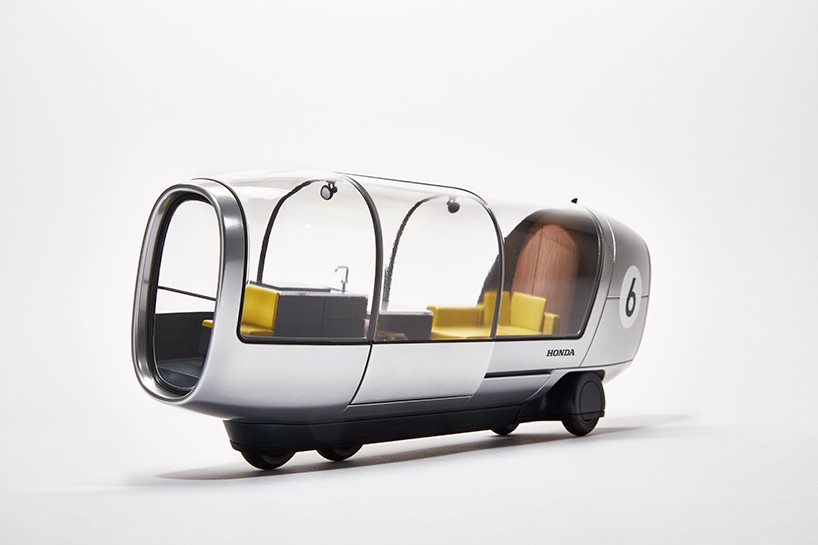
Silicon Prairie, otherwise known as Lincoln, NE, is doing more than union-entrenched cities to plan for autonomous vehicles. Not that the city is doing much; it has merely hired a consultant, but it perceives the need to get going. A city like New York, on the other hand, is so avoiding offending its unions that it is lagging behind. It's New York, so it will be fine. [Image source: Honda.]

As I have said before, if you are a professional driver, it is time to put together plan B.

Outside of Boston, like in Florida at the town of Babcock Ranch, a new neighborhood is being developed for driverless transportation from the start. This is a "1,550-acre urban development located 12 miles south of Boston." The development is a partnership between:
Optimus Ride, a MIT spinoff company developing self-driving vehicle technology ... [and] renowned real estate developer LStar Ventures to provide Union Point's residents with access to self-driving vehicles. This agreement represents the world's first revenue generating autonomous vehicle pilot program.
Revenue generating = NOT fare free.

Connected and wealthy

Bellevue, WA, is putting its money where its mouth is and investing heavily to speed toward AVs and a network of ACES (actually called the ACES network), which stands for autonomous, connected, electric, and shared. There are government and industry players actively involved. Whether this turns out to be an expensive venture that will later become off-the-shelf and cheaper remains to be seen. There's always someone or some community that is willing to pay big bucks just to be first or near the top, whether or not the additional investment makes financial sense in the long term. [Image source: vox.com.]

Don't ruin my nap time

Please, please, please do not force me to watch sponsored content when I ride in an AV. Okay, yes, I will if that movie, TV show, or article is only available for free with the commercial. But leave me alone if all I want to do is nap. Creeps me out to constantly read headlines - basically all the same article - about the Intel-Time Warner deal to provide entertainment inside AVs.