Showing posts with label Washington State. Show all posts

Friday, January 11, 2019

Lots of AV Reports, But Little on Accessibility

Automated vehicle (AV) development is not just about the technology that would allow for driver-free operation. AVs are partly advancing under the assumption that they will be electronic - EVs - and connected - CVs or CAVs. On the other hand, most of the legal studies and policy development is mode neutral and either gives lip service to, or ignores, people with disabilities. Accessibility embedded in the interfaces and the vehicles - whether for the benefit of people with disabilities, people with strollers, or people with luggage and grocery carts - is left out of the equation.

Considering that the touting of AVs highlights how wonderful they would be for current transportation-challenged populations, little ink or anything else has been spilled, so to speak, to guarantee that this promise will be fulfilled.

What do we mean by accessibility?


I will defer to the Consortium for Citizens with Disabilities (CCD) about their standard for accessibility in the context of AVs, taken from the CCD Task Force Autonomous Vehicle Principles.
AVs have the potential to drastically improve access for people with disabilities, including members of the blind and low vision, Deaf and hard of hearing, intellectual, developmental and cognitive disability communities, people with physical disabilities, including wheelchair users, and people with neurological conditions including epilepsy and seizure disorders. However, the promise and safety of AVs will only be realized if the vehicles and the surrounding infrastructure are fully accessible, and the safety elements consider the needs of people with disabilities
The CCD recommendations that particularly pertain to people with disabilities include:
  • Accessibility of human-machine interfaces,
  • AVs with lifts, ramps, and wheelchair securements,
  • No requirement of an operator on board who is licensed,
  • AV transit and pedestrian infrastructure that complies with the "Americans with Disabilities Act (ADA) accessibility requirements must be strictly adhered to in order for cities and states to work towards meeting goals of zero traffic deaths and serious injuries,"
  • An ADA or expansion that mandates "full accessibility for all types of common and public use AVs,"
  • "[L]egislation requiring that, as a matter of civil rights, all new technology incorporate the needs of people with disabilities at the earliest possible point, and 
  • "Congress should require that people with disabilities are part of the design and testing of new technologies in order to ensure the accessibility and usability of the technology." 
There is more, but you get the picture. Unfortunately, little or no mention of this sizable sector of the population and their needs is mentioned in reports about AVs. These reports, whatever they examine, are focused elsewhere.

Statements without supporting details


Two recent reports mention or refer vaguely to people with disabilities, but offer nothing more. These are the Human Factors and Ergonomics Society (HFES) Policy Statement on Autonomous and Semiautonomous Vehicles (Approved Sept. 30, 2018) and the Transportation Research Board (TRB) Forum on Preparing for Automated Vehicles and Shared Mobility (Sept. 2018). The HFES policy statement says: "Fully autonomous vehicles should accomodate people with disabilities." The document, while brief at five pages, mostly looks at safety; accessibility is not one of its main concerns. The TRB forum speaks globally about research needs that go from data to safety to business models for AV deployment, but it never uses the word accessibility. It mentions a research need addressing equity and another addressing "[h]ow best to serve those with special needs."

The Idaho 2018 Report to the Governor (Nov. 2018) from the Autonomous and Connected Vehicle Testing and Deployment Committee, like the Wisconsin Report of theGovernor’s Steering CommitteeonAutonomous and Connected VehicleTesting and Deployment, never uses any version of the word accessibility. The Wisconsin report does mention "underserved populations" and both address all users of the roadway, specifically including bicyclists and pedestrians. The Washington State Transportation Commission Autonomous Vehicle Work Group, like its counterparts in other states, is looking at AV developments from such a mode-neutral perspective that there is no weighing or consideration of how to steer AVs to serve everyone better and how to include people with disabilities in the next iteration of our transportation system.

State and other AV-related task forces typically examine insurance, licensing, registration, definitions, liability, and responsibility for maintenance. Maybe they consider policing and roadway management.

A whole different approach comes from the Scottish Law Commission, which produced a comprehensive paper - Automated Vehicles: A joint preliminary consultation paper (Nov. 8, 2018). It discusses both fully and partially AVs in terms of operations, reaching minimal risk condition, and liability. It explores different ways transportation is and could be delivered, including Mobility as a Service (MaaS). BUT, in terms of accessibility and providing an equitable transportation system to people with disabilities, nothing in the report goes beyond bare statements. We are talking lip service.

And the private sector?


The private sector is not rushing to provide accessibility - with the exception of Local Motors and others that aim to provide transit shuttle vehicles. And that would be current ADA accessibility that is not self-enforcing (as many lawsuits to enforce it demonstrate). But for taxi-like ridehailing service, no one is jumping up with any promises. Take Uber; in its report, A Principle Approach to Safety (Nov. 2, 2018), the only words related to transportation-challenged populations were these.
More equitable than existing transportation options 
Shared, automated mobility can work to extend the reach of public transit and bridge the first/last mile gap in areas typically underserved by transit systems, and for certain populations like people with disabilities, youth, and seniors. 
Aspirational, yes, but, as my mother used to say, that and (now) $2.75 will get you on the subway. $3 if you buy a single ride ticket. Referring, of course, to NYC, my mother's sole frame of reference.

Anxiety, of course, because lip service is not enough


My worry, and certainly the fear of the disability community (and some in the older adult community), is that lack of a mandate and/or concerted effort to embed accessibility now - during development of AVs and infrastructure (virtual and real) to support them - will put us in the same situation we were in, and in some respects continue to inhabit, which is attempting to retrofit a very inaccessible transportation system for people who are not the norm. The Americans with Disabilities Act (ADA) was a good first step almost 30 years ago, but, in any place without fabulous transit and even there (think elevators to subways in New York City and San Fransisco), people with disabilities continue to be second-class transportation citizens.

With the current House, Senate, and Administration, no one is pushing for ADA 2.0. If anything, there is fear of accessibility retrenchment. At three weeks into a government shutdown, one begins to wonder whether the dream of bipartisan action on infrastructure and transportation can even happen. Any progress is happening in large cities, such as Boston and New York, which are taking to heart transit accessibility concerns and commitments. (Sorry for the lack of links here.)

From the Navy Yard - possible home run hit right before the shutdown


The USDOT building in Washington, DC, is barely a walk away from the DC major league baseball stadium. That US agency building, which spans two large city blocks, was, hours before the government closed up, the site of a hopeful development that AVs will serve everyone. I imagine a government employee, in the dark, hovering over his or her computer in a rush to click "upload" before the shutdown announcement to step away from the building and all government-funded devices.

The Notice of Funding Opportunity - or NOFO, in acronym land - issued from the US Department of Transportation just a few hours before the government shutdown, expresses a commitment to transportation-challenged populations in general and to people with disabilities and older adults in particular. One of the prime goals of the USDOT project - entitled Automated Driving System (ADS) Demonstration Grants - is to "fund projects that test applications with the greatest potential to service transportation-challenged populations, including older adults and individuals with disabilities.” Additionally, "Each demonstration must include input/output user interfaces on the ADS [automated driving system] and related applications that are accessible and allow users with varied abilities to input a new destination or communicate route information and to access information generated by the ADS.”

The deadline for proposed demonstration projects is Mar. 21, 2019 - assuming that the federal government is back to work by then.

Sunday, June 24, 2018

Way too long blog post #1 - US

You spend a week away and tons of autonomous vehicle (AV) stories come out, by which I exclude the "here's how the world will change, IMHO" pieces and the "world will end with AV transportation" stuff. My favorites of those genres are the "we'll all be having sex in AVs" and the "we'll all be nauseous with carsickness in AVs," which, if you consider those together for a second, is not an attractive combination.

I will only mention actual news.

United States


Still waiting - We are sitting by our laptops and phones in anticipation of the next iteration of the NHTSA AV guidance, due in July. I personally expect the guidance to be released after mid-July or, perhaps, I'm just hoping not to sit inside on July 4th reading it. I think it will continue along the trajectory of the "let's get out of the way of private sector innovation" 2.0 guidance released last time around. This is not to judge Sec. Chao's USDOT in particular because the Obama Administration took pretty much the same position.

Minor revision - Partial AV technology is revisited by SAE. The standard AV taxonomy is reconsidered oh so slightly by clarifying what SAE is referring to in its six levels of vehicle automation - from 0 to 5. Here's the heart of the brief document:
The levels of driving automation are defined by reference to the specific role played by each of the three primary actors in performance of the DDT [dynamic driving task] and/or DDT fallback. “Role” in this context refers to the expected role of a given primary actor, based on the design of the driving automation system in question and not necessarily to the actual performance of a given primary actor. For example, a driver who fails to monitor the roadway during engagement of a level 1 adaptive cruise control (ACC) system still has the role of driver, even while s/he is neglecting it. 
Active safety systems, such as electronic stability control and automated emergency braking, and certain types of driver assistance systems, such as lane keeping assistance, are excluded from the scope of this driving automation taxonomy because they do not perform part or all of the DDT on a sustained basis and, rather, merely provide momentary intervention during potentially hazardous situations. Due to the momentary nature of the actions of active safety systems, their intervention does not change or eliminate the role of the driver in performing part or all of the DDT, and thus are not considered to be driving automation.
Startup boost - May Mobility is getting a boost from an auto supplier company named Magna. Looks like pilots with May Mobility technology will be coming down the pike.

Senators hear both sides of debate - The June 13 hearing of the Senate Environment and Public Works (like roads) Committee featured witnesses on both sides of the AV START Act debate, meaning those favoring more versus less regulation and control over AVs. A stark comparison can be made, for example, between the testimony of Shailen P. Bhatt, President and CEO of ITS America (the former Colorado Secretary of Transportation who allowed the spectacle of the staged AV truck delivery of Coors beer), who recommended that tech and auto companies get free reign, and the testimony of Shaun Kildare, Director of Research at Advocates for Highway and Auto Safety, who pointed out how untested AVs are and how we don't maintain roads now, so how can we expect anything different with roads full of connected vehicle technology. Apologies for the awful run-on sentence.

Is concern in the Senate part of the reason for the birth of the Partnership for Transportation Innovation and Opportunity (PTIO)? Though PTIO is touted as a labor-focused enterprise to deal with upcoming loss of jobs, the initial descriptions - here's the website - show a concerted effort to deal with public relations problems that the AV industry has been and will encounter. PTIO includes some big players - Lyft, Uber, Waymo, FedEx, Ford, Toyota, Daimler, and the American Trucking Associations. Interesting that none of the cute AV shuttle companies are in the group. Probably have not been asked to join the team. Right now, it looks like PTIO will only have a presence in DC.

Pittsburgh mayor is pissed - Love this because Mayor Peduto is fighting the battle for every city in the country to control its streets and not be completed preempted by sometimes faraway and antagonistic state capitals. So what is Peduto angry about? The state transportation department of Pennsylvania, PennDOT, will be meeting separately with each of the major AV players in the state - meaning Pittsburgh, where they are all testing and developing technology - instead of hosting a public  meeting. Basically, the people of Pittsburgh, whose streets are the testing ground, and Mayor Peduto have been locked out of the process.

At first, after the Uber crash in Arizona, PennDOT appeared to be changing course and steering toward a California-like regulatory/voluntary approach. Peduto seemed to be on board or, at least, ready to talk. But then, like many matches made through dating apps, radio silence. This whole debacle demonstrates that inclusion and taking the time to invest stakeholders (such a DC word), such as major cities, works far better than effectively saying "screw you, not interested in your input." In an instantly viral world, PennDOT should be careful; Mayor Peduto is a charming and passionate adversary if that is what the agency turns him into.

Commercial interruption for Waymo video. Arizona riders love Waymo AVs.


Wicked* AVs in Beantown - Watch out Jamaica Plain, Beacon Hill, Roxbury, and Alston: Every Boston neighborhood could soon see AVs zipping around. Boston is now permitting AVs to be tested throughout the city. So far, that means nuTonomy, which has been testing for a long time at the seaport. nuTonomy is beaming, stating the company is:
[P]roud to be the first and only company authorized to operate autonomous vehicles on public roads citywide in Boston. Being recognized by the City for our exceptional safety record is an important milestone for the entire nuTonomy and Aptiv team.  
My message to nuTonomy is to watch out. Those Boston drivers can be aggressive; as a pedestrian, I used to wait for three cars to go through the intersection as the light changed before I felt safe to walk.

*By the way, translate the word "wicked," when used in Boston (or anywhere in the Red Sox Nation states of New England) as "fabulous."

Wicked all over Massachusetts - So far, the states that have passed AV laws have either preempted their municipalities out of any say-so for control of where AVs may test or the state laws call for onerous requirements, hoops that would have to jumped through with each municipality. The latter demonstrate part of the reason that a state like Arizona has attracted testing. It's easier to operate when there is one state rule.

Massachusetts has possibly arrived at a beautiful angle of repose for balancing state-city relationships in relation to AV testing. "the Massachusetts Department of Transportation and 14 towns and cities in the Greater Boston area signed a Memorandum of Understanding that will open up their roads to autonomous vehicle testing." Massachusetts, unlike some other states with councils established to study AV testing, continued to meet even after testing commenced in the state. Usually those councils precede and end with a report.

According to an article from a Worcester news source:
The new MOU streamlines and standardizes the process for companies seeking to test Autonomous Vehicles on Massachusetts roadways. Following the signing of this MOU, MassDOT and the participating communities will finalize a universal application for companies to use when seeking to test Autonomous Vehicles and the participating municipalities will identify locations and roadways suitable for Autonomous Vehicle testing. 
The municipalities signing the MOU today include Arlington, Boston, Braintree, Brookline, Cambridge, Chelsea, Malden, Medford, Melrose, Newton, Revere, Somerville, Weymouth, Winthrop, and Worcester. In addition, the Department of Conservation and Recreation is joining the MOU in order to make Commonwealth-owned parkways available for the testing of Autonomous Vehicles.
Basically, this area covers the Boston T and commuter-rail universe. Nice.

Nebraska slows down - Despite a lenient, come-on-in-to-test new law and despite plans for testing on public roads in Lincoln, Nebraska will not be seeing AVs too soon on public roads. No reports are explaining the details of why an ambitious pilot for testing in Lincoln has slowed way down, but now the word is that the University of Nebraska will host a pilot on the private roadway of the campus.
Officials in Lincoln had initially planned to launch a driverless shuttle service to carry passengers between downtown Lincoln, the Haymarket District and the University of Nebraska-Lincoln’s main campus, but a city spokeswoman said the project was delayed and won’t arrive in Lincoln for at least another few weeks. City officials now expect to run smaller-scale tests on the University of Nebraska-Lincoln’s Innovation Campus to work out any possible kinks.
Not the Lincoln in Brooklyn* - BUT Lincoln, NE won a grant from Bloomberg Philanthropies to fund an AV shuttle pilot. The mayor has declared, "Lincoln is seeking to become the first city in the United States to offer an on demand autonomous shuttle service for public transportation." A Navya shuttle will be used.

*In Brooklyn, NY, there is Lincoln High School, Lincoln Gardens cooperative apartment building community, and Lincoln Garden Cleaners. All of you alumni of P.S. 209 and Avenue Z Jewish Center (plus the million nearby churches) know what I'm talking about. And tons of famous Lincoln alumni, including Mel Brooks, Arthur Miller, Neil Sedaka, and Stephan Marbury.

Back to Nebraska, the law is lenient for AVs. Neb. Revised Staututes from 60-3301 to 60-3311 are the pertinent state code sections; 60-3308 is the preemption provision.

Even Toledo - The Toledo in Ohio (not Spain) has a plan for AVs; the "[u]se of smaller, autonomous vehicles is a key element of MoveToledo, a strategic plan TARTA [Toledo Area Regional Transit Authority]." Last week,  TARTA's general manager "announced his agency has received a $1.8 million federal grant to develop an experimental automated public transit route. The three-year pilot, Mr. Gee said, most likely will use small vehicles similar to a 15-passenger, electric shuttle." The pilot is scheduled to be on the street by summer of next year. Details have yet to be determined and these AV transit pilots take a while to arrange due to the programming of the vehicles and the need for accessibility, which is an odd add-on for foreign manufacturers.

Cross-border cooperation - On the state/province level, there is collaboration on AV planning. This is in the Pacific Northwest and cross-border counterparts in Canada. The states of Oregon and  Washington, and the province of British Columbia have set up an AV working group called the Automated, Connected, Electric, and Shared (ACES) Northwest Network, an organization focused on moving people and goods throughout the Puget Sound. ACES is not an official government endeavor for either the American or the Canadian participants, but, according to it press release, will include visionaries, researchers and other experts. (I have the same instinctive response to the word "visionaries" that I have to the word "passion," which is that these words are being employed awkwardly outside of their central zones of application.)

Thursday, April 19, 2018

Demos, Pilots, Airports, and Street Sweepers

Autonomous Vehicle Trip to Big 10 and Beyond the Midwest 


Wisconsin - AV shuttle to operate on the University of Wisconsin campus in Madison next week on Apr. 24 and 25. Wisconsin is one of 10 autonomous vehicles testing grounds. And by "Wisconsin" I mean the big 10 school. There is lots of AV and connected vehicle technology development and testing happening there.

Michigan - The University of Michigan in Ann Arbor will have an AV shuttle in operation by the end of April. It will be free for students, faculty, and staff to ride on a 3/4 mile route on North Campus. Finally, because this AV shuttle pilot has been in the works forever, or at least since October 2017.

Minnesota - Minneapolis is about to host its second AV demo. The first was a pilot that took place before and during the Super Bowl festivities early this year. The second will be a weekend AV shuttle open to the public on the Midtown Greenway. Not set in stone, but it looks like the shuttle will operate on Apr. 27-29. The public will be permitted to ride that Sunday, Apr. 29.

Further south and then west ...


Texas - Officials in Houston are considering AV buses. The city hosts an AV testing ground. From a press report, the idea is that a first step would be a three-month AV shuttle pilot "on the campus of Texas Southern University."

Washington - Bellevue officials are in talks with companies to do the usual downtown AV shuttle pilot thing and to "test self-driving van pools to bring commuters into the city." (The city is Seattle, just for all of you native New Yorkers who know where "the city" is.) Turns out, the Seattle-area transit agency has a long-standing large vanpool program, so the program's administrative structure is already in place. Various, well-funded, players are reportedly ready to join in this sandbox. There does seem to be acknowledgement that fully AV vanpools are quite different than a slow speed AV shuttle that operates on a fixed route.

Over in Asia


Japan - 15-passenger AV buses - really shuttle size - in operation at the Fukushima Daiichi nuclear power plant, which is still being cleaned up after the 2011 tsunami and earthquake caused a complete breakdown at the plant. By the way, the disaster was found to have been foreseeable because the plant operator "had failed to meet basic safety requirements such as risk assessment, preparing for containing collateral damage, and developing evacuation plans." That kind of disaster shows why we need safety advocates.

China - An AV container truck at a Chinese port is in operation. The truck is "expected to help port terminals and logistics companies to improve efficiency and save labour cost by more than 50%.
Compared to the traditional self-driving vehicles, the Westwell vehicle can quickly adapt to the port environment, make decisions and alternate controls."

China - The country has also instituted nationwide regulations  for AVs. According to FastCompany:
  1. All cars must first be tested in non-public zones.
  2. Road tests can only be on designated streets.
  3. A qualified driver must always be in the driver’s seat, ready to take over control.


China - Shanghai has already begun trying out automated street cleaner vehicles. They will work quietly and neatly in the middle of the night to keep the streets swept and tidy.

One airport and then beyond


France - Charles DeGaulle Airport outside of Paris is the site of an AV pilot, but the plan is to expand to other airports operated by Groupe ADP, which operates 34 international airports. Don't head to Paris just for this. The AV shuttle, which will last until this July, will only be "offering free rides to passengers with limited mobility."

NOT A random AV tidbit

University of Florida - a graduate student is working on technology that will assist people with visual disabilities to navigate the use of AVs. For a person who is visually impaired, being a few feet away or half a block away from one's destination or vehicle location can be a complete barrier to travel.

Tuesday, February 20, 2018

Washington - the District and the State

DC brewing, distilleries, pop-up art and now AVs - time to rethink this city

I'll use the words prudent and leary, as in wary of new things, instead of employing the politically charged word "conservative;" but perhaps provincial is the best word for DC. And now, even DC is considering - not actually contracted to, not with actual date set - a small-scale autonomous vehicle (AV) shuttle pilot. Yes, after pondering in Bismarck, ND, and pilots in Arlington, TX, and in Contra Costa, Calif., DC is actively thinking and soliciting thoughts.

Last week, the mayor, Muriel Bowser, put out a "Request for Information [RFI] from private sector companies developing autonomous vehicle (AV) technology, seeking partnerships and industry input on policies and procedures to guide pilot projects within the District." This would be in an area with relatively little traffic, near tourist sites, and that the District wants to promote due to new development. According to this same article, "Starship Technologies autonomous delivery robots ... can be seen traversing sidewalks in Logan Circle and 14th Street, NW." You don't see those roaming near Metro Center and the White House.

The AV pilot RFI is the product of a municipal interagency working group and the business improvement district (BID) where the pilot would take place. The Mayor's press release identifies the municipal partners as including planning, transportation, emergency services and police, energy and the environment, the DMV, the Department of For-Hire Vehicles, and the Office on Aging, and Office of Disability Rights.

While in the other Washington, leaps ahead

Oh yes, anyone who says "Washington State" is likely from the East Coast. True that for me. Washington, the state, has AV cars in Kirkland and  AV planning in Seattle. In Seattle,
A three-person team has been assigned to monitor what the area’s 20-plus autonomous vehicle firms are doing, while also researching what issues the city will have to address when self-driving cars are advanced enough and plentiful enough to require regulation. Among the things the team is considering: whether the city government or a corporation—similar a phone company or a cable services provider—should build and maintain the master computers, transmission towers and data storage facilities that self-driving cars will require.
I'm sure this trio realizes that they are in a somewhat precarious position because the public sector, especially in cities, is the tail being wagged both by state governments preempting municipalities and by corporations and startups interested in their own rewards as much as in the public good - as defined locally.

Plan for this

In Singapore, testing begins next year on full-size AV Volvo buses. Time for transit to start planning and for drivers to get serious about Plan B.

Friday, December 1, 2017

Small Cities, Suburbs Race Toward Next Transportation Age

Sorry, sorry for posting delay. Work is a bear; my Metro station is closed for two weeks, meaning my usual simple commute is transformed into the nightmare of most normal people. Uch. At least I can include a nice walk instead of the shuttle bus to hell. [Image source: Daily Mail.]


Bold announcement

GM-owned Cruise Automation will be avoiding pilot projects and going straight for full-scale deployment. The exact date is yet to be determined, but 2019 will be the year. "The goal of the service, ultimately, is to maximize its impact, ... and create something that truly affects people’s lives in a big, significant way. To do that, you need to launch first in big cities where ride hailing and electric vehicles available on-demand in significant numbers will make a serious dent not only in reducing traffic fatalities, but also in ecological footprint thanks to reduced emissions."

Autonomous neighborhoods to come

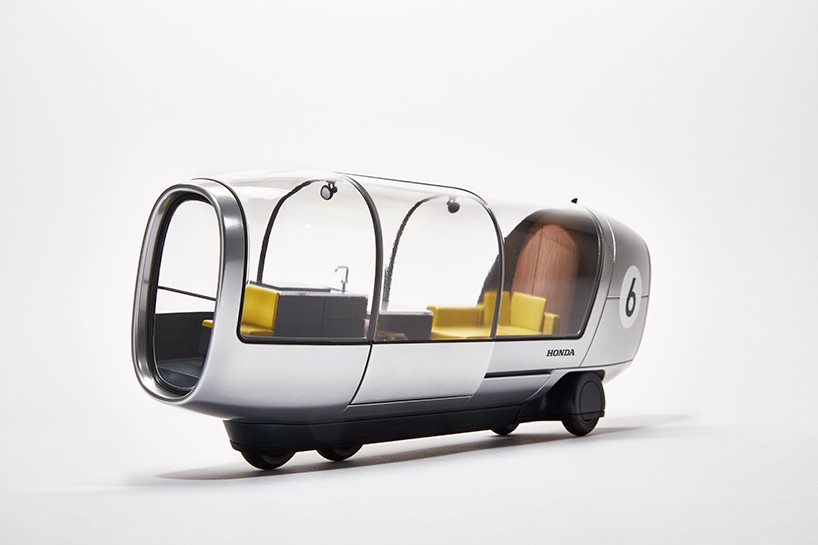
Silicon Prairie, otherwise known as Lincoln, NE, is doing more than union-entrenched cities to plan for autonomous vehicles. Not that the city is doing much; it has merely hired a consultant, but it perceives the need to get going. A city like New York, on the other hand, is so avoiding offending its unions that it is lagging behind. It's New York, so it will be fine. [Image source: Honda.]

As I have said before, if you are a professional driver, it is time to put together plan B.

Outside of Boston, like in Florida at the town of Babcock Ranch, a new neighborhood is being developed for driverless transportation from the start. This is a "1,550-acre urban development located 12 miles south of Boston." The development is a partnership between:
Optimus Ride, a MIT spinoff company developing self-driving vehicle technology ... [and] renowned real estate developer LStar Ventures to provide Union Point's residents with access to self-driving vehicles. This agreement represents the world's first revenue generating autonomous vehicle pilot program.
Revenue generating = NOT fare free.

Connected and wealthy

Bellevue, WA, is putting its money where its mouth is and investing heavily to speed toward AVs and a network of ACES (actually called the ACES network), which stands for autonomous, connected, electric, and shared. There are government and industry players actively involved. Whether this turns out to be an expensive venture that will later become off-the-shelf and cheaper remains to be seen. There's always someone or some community that is willing to pay big bucks just to be first or near the top, whether or not the additional investment makes financial sense in the long term. [Image source: vox.com.]

Don't ruin my nap time

Please, please, please do not force me to watch sponsored content when I ride in an AV. Okay, yes, I will if that movie, TV show, or article is only available for free with the commercial. But leave me alone if all I want to do is nap. Creeps me out to constantly read headlines - basically all the same article - about the Intel-Time Warner deal to provide entertainment inside AVs.

Thursday, October 26, 2017

Local Governments Scream "What do I do now?"

All over the United States, cities and counties, even state governments, are waking up - suddenly, as if an alarm clock just went off, awakening them from a deep sleep - and they are screaming "What are we going to do when autonomous vehicles come? Ahhhhhh!!!!! Oh my g-d, what the f&*ck are AVs? CVs? V2Vs? And gas stations versus EVs?

They don't know what the future holds and how to plan; no one knows, partly because the private sector is calling the shots. Plus, federal legislation will come along to preempt state laws and state laws will preempt local laws.

[Aside: I do believe that in the next year, unless we get totally bogged down with impeachment proceedings or some nightmare major distraction, the US will see the passage of a true bipartisan law in the form of AV legislation. The regulation and on-the-street details will fall to the US Department of Transportation and state departments of transportation. Many states already have some kind of AV advisory council.]

Calling on the quiet kid in the back

Let's take Nashville as an example because its transit plans for bus rapid transit (BRT) and light rail (LRT) are attracting criticism - as ambitious transit projects tend to do in car-oriented places - because of talk that shared AVs will make transit less important or not important at all. Shared AVs, some say, will absorb all of the extra congestion expected in the coming decades from Nashville's growth. So, two giant assumptions here: (1) Nashville's current population trajectory will continue, and (2) residents and workers in Nashville will be traveling in shared-AVs that are shuttle or taxi-like instead of alone in their own AVs.

So, one might say, plan for AVs. BUT no one knows when AVs will be coming, in what form, or what business models will co-exist in particular local and regional markets or which will dominate, or whether to go out now and buy all of the connected technology one can get one's hands on or whether to wait because vehicle-to-infrastructure (V2I) won't be necessary when every vehicle is connected to every other one.

A question answered - Where?

We do know where AVs are thanks to a cool map from the Initiative on Cities and Autonomous Vehicles (ICAV, funded by Bloomberg Philanthropies and the Aspen Institute). This screenshot is just of the US and Canada, but the Initiative map covers the globe and one can zoom in and click on a colored spot for information about the AV activity in that city AND a link to municipal information about the particular project. Very cool.

Go local

Local is in. Local is farmers markets and quirky restaurants, yarn stores, parks, and murals. But most places are full of strip malls, free parking, and street crossings and pedestrian infrastructure that are ugly and dangerous. AVs challenge the conventional transportation wisdom of free parking and  everyone needing a car. However, that challenge might only be in the minds of planners and others paid to ponder transportation networks. It is possible that we will have an AV in every parking spot and companies aiming to make that goal both affordable and profitable.

Now, cities and counties are wondering how to move forward and they are hosting meetings, writing reports, investing money, and sometimes being completely frank that they are not sure what to do. In no particular order, here are some examples.

Disclaimer: What appears below is not a complete list. In fact, actual city plans are mentioned later. Scroll down if at first you become irritated.

Columbus, Ohio - Winner of the much-hailed and competitive $40 million Smart Cities Challenge (with a matching bonus of another $10 million), Columbus is perceived as having an advantage. Here is a one-year update on the Columbus demos being funded, which include autonomous shuttles and new fare card technology. Do not believe Columbus is ahead, if only because this city is very troubled. Few complete streets, terrible transit, lots of highways, illegal drugs, and big, big problems with poverty. There is so much to fix; this is a city very much tied to the automobile and the Smart Cities plan tries to do too much. Big doubts. - 😬. Columbus' plan links via ICAV.

Lake County, Illinois - Just outside of Cook County, which is mostly Chicago, Lake County is suburban and exurban, with lots of strip malls and big box stores, and some local stuff thrown in. (I've had decent falafel there and lots of good walks.) Great parks and walking trails. This is a place built around the car. Lake County is just beginning to address AVs and the already changing transportation system as it ponders the new popularity of complete streets and cities. So, being smart, nearby experts from Chicago were invited to address the Lake County Transportation Alliance about ways to improve transportation that do not involve extra lanes and more cars - or huge investments of tax dollars.


Atlanta, Georgia - Not even on the ICAV map yet, but Atlanta is promising a hi-tech, connected corridor right by Georgia Tech, with an AV shuttle. Lots of promotion and news stories about the Ponce-City-Market-to-Midtown (home of Georgia Tech) CV corridor and future AV shuttle route. Here's a boring, but informative video that focuses on the CV aspects of the project. (As a mom of a GaTech grad student, not sure the cycling stuff alleviates any concern about my biking offspring on that exact route.)


Portland, Oregon - Home of Portlandia, food trucks, and all things artisnal - way west of Brooklyn, still independent as its own city, and without the snarkiness. Have to include a clip from Portlandia. This is from a classic early episode about whether the organic chicken on the menu had a full life.

Portland's draft policy smartly considers AVs in the context of the city's transportation goals, such as Vision Zero for pedestrian and biking safety, pollution reduction, and reduction in low-occupancy vehicle trips, among others. View the Portland AV policy page for draft policy documents, timeline, and a new acronym - SAVI for Smart Autonomous Vehicles Initiative. Basically, the draft policy is four single-spaced pages stating that AVs should serve the very new urban goals that the city has already identified. That's good, BUT (you knew there would be a but) there is no explanation of who, when, or how these linkages will be made and goals accomplished. Still, this is a saner-than-Brooklyn-almost-paradise (which has had its own problems, such as the recent ethnic-reactionary murder on the streetcar). The policy identifies a rational order of priorities.
Implement a prioritization of modes for people movement by making transportation system decisions according the following ordered list:
1. Walking
2. Bicycling
3. Transit
4. Fleets of electric, fully automated, multiple passenger vehicles
5. Other shared vehicles
6. No or low occupancy vehicles, fossil-fueled non-transit vehicles

Boston, Massachusetts - The Boston Plan incorporates the laudable non-tech goals of “Zero deaths. Zero injuries. Zero disparities. Zero emissions. Zero stress.” Good way to think of technology - as a means to an end, rather than as the end. Boston has articulated definite goals, a brave move because results can be compared against actual performance. One goal even aims for improved transportation for people with disabilities: "Greater Access for Nondrivers. AVs increase the mobility of people who are unable or unwilling to drive, such as the disabled and the elderly."

While the Boston planning document makes major assumptions, it does examine a range of scenarios in terms of ownership, modes, and use of AVs. I like that. BUT this document only looks at a dense, urban area of the city instead of playing with variables for different types of neighborhoods throughout the city. Allston is not Jamaica Plain is not Beacon Hill. The document also foresees improved mobility for older adults and people with disabilities without analyzing at all the pieces that must be in place for those results to occur.

One more like: The Mobility-as-a-Service (MaaS) type of "digital mobility platform." Here is the image from the document. Interesting that the city is set up as the central governor of the system. Boston rightly envisions itself as part of a public/private ecosystem with which coordination must happen with other city and state bodies.

Toronto, Ontario - This Canadian city has long been on top of AV developments. Thus far, Toronto staff have acknowledged that there are too many unknowns to make firm predictions. A March 2017 document, Implications of Automated Vehicles for TTC, spends most of its pages defining variables and what exists. About two-thirds of the way in, the Toronto document lists the ways in which AVs will likely bring change to traffic, transit fleet management, workforce needs, roadway safety, and the mobility of people with disabilities (without offering any details on that one). It identifies these questions as ones that remain unanswered:
  • What will be the cost of the vehicles, the services needed to support them, the training to work with them, etc.? 
  • Will the software running the system be proprietary, or something independent of the vehicle that can be changed? 
  • How is liability determined between Operators, maintenance, ITS, and the manufacturer? 
  • What would the overall net change in costs be after considering vehicle and software procurement, new infrastructure, and changes in roles and staffing? 
  • How will AVs operate in inclement weather?


Seattle, Washington - Seattle does not so much have a plan as a working let's-look-into-these factors document, which also serves as a teaching document that defines what the heck is actually being discussed. This document nicely summarizes the federal/state/local/judicial division of responsibilities and powers.

Arizona - Just read the other day about Waymo's expansion to the four Arizona cities of Phoenix, Mesa, Tempe and Gilbert. Well, a native New Yorker would not characterize these as cities because walking and transit are not major transportation modes, but Waymo is there and those "cities" are happy. Actually, to be fair, Tempe is a real city, small, but a city.

I have now managed to write a too-long post and insult most cities in the US. At least the dog is sleeping next to me.

Tuesday, June 13, 2017

Washington State Executive Order

1. An executive order is NOT a law. The next governor can cancel it at whim. The legislature, by passing a law, can change it.

2. An executive order, as we saw at the federal level with both President Obama and President Bush before him - with the authority to use broad administrative powers - can be a force for funding and direction. But see #3.

3. Every state is different. The governance structure - who has the power and authority - varies greatly from state to state, from legislature to legislature. In some states, the governor is the power center; in others it is three top legislators who stay forever and do not need to listen to anyone else.

Washington State does more than grow apples and technology
... it wants autonomous vehicles

I claim total ignorance of the power structure of Washington State politics, but with so much technology business, the Seattle area cannot be happy that Silicon Valley in California is synonymous with the current tech boom. The governor is lagging behind, but paying attention. Who knows what he tried to get going before deciding on an AV executive order.
[Photo from HUD.]

Lots of Whereas points before the meat (or vegan meat)

Likely following state tradition that an executive order must establish that a bona fide problem exists before one should be issued, the Washington State executive order begins with a list of "Whereas ... " there's a problem and opportunities here.

[Photo by from AJAD MOHAMAD (OWN WORK) [CC BY-SA 4.0] from livability.com.]

Problems identified include:
  • Lots of auto "accidents" - not PC; the correct term is crashes, 
  • The state wants to be in the technological lead - it's already behind in that race for this industry.
Low and behold, the executive order has found the solutions of (a) safety and (b) economic development in autonomous vehicles.

The nitty gritty

So how is the magical solution of autonomous vehicles going to happen in the land of apples and Microsoft? A study group - ta da! Actually, it's being called a "work group."

Not kidding. Obvious that no one on the governor's team is from the world of marketing.

But wait ...

The one promising point in the executive order is permission for pilot programs that allow for autonomous vehicles to be tested on Washington States roads. The vehicles must have on board equipment that can be operated by a human and an actual human physically present UNLESS (among other predictable details):
  • The vehicle is "capable of bringing the vehicle to a safe condition in the event of a system failure," 
  • Developers of the vehicles self-certify to DOL (Department of Licensing) that they are compliant with the above requirements.

No requirement of a data recorder, no requirement of coordination with local jurisdictions, and no extraneous requirements.

I make fun, but this executive order is pretty middle of the road in terms of state policies and laws.

[Photo: US Transportation Secretary Anthony Foxx (R) and Google Chairman Eric Schmidt (L) ride in a Google self-driving car at the Google headquarters on February 2, 2015 (Photo: Getty) via inews Essential Daily Briefing]

Crushing news for the cuteness factor

Say it ain't so. Did Waymo not learn the Toyota Prius v. Honda whatever lesson that conspicuous upgrades or do-gooding or technology quickly becomes a desired wow factor? Nope. Waymo is ditching the cute, pod-like driverless vehicles that Google developed and tested. Ah, I remember fondly the artistic designs put on the vehicles and the sweet factor.

Sorry, there's no charm in the look of an average car. A little sad here that the fireflies, as Google named the two-seater podcars, are disappearing. According to the inews Essential Daily Briefing:
Firefly will make a trip to the Arizona Science Centre in Arizona during August, before making its final journey back to Texas in October to commemorate the second anniversary of the first autonomous drive. They are also available to view in the Computer History Museum in California, and in London’s Design Museum.
Better yet - not - Waymo is counting on a minivan, which is inaccessible for people with disabilities and has zero charm, to catapult it to greatness with families who lug gear.

Tuesday, October 18, 2016

Is UW a New Driverless Hotbed?

Two reports in the past few days about creative driverless developments out of the University of Washington Bothell, a campus I had never heard of before (probably because I have lived my entire life on the East Coast). 

1. Driverless tricycle - so I'm not sure why anyone would need this and does this machine pedal for you? Transport packages? Right now, this is an incredibly early prototype that goes in circles and thrills only the students working on it. But you never know where it will go. I wrote about this tricycle yesterday, very briefly, at the end of a pretty unrelated post.

2. The ELF, a tricycle that looks like a mini-car, is driverless and being developed with funding from Amazon. It is solar powered and can hold up to 550 pounds of persons and/or merchandise. That's a lot of books. The startup working with UW-Bothell is called Organic Transit. You can already buy a non-driverless ELF from Organic Transit. They come in cute colors and cost $7000 and above. I'm not sure you can bring it up to the office; might need conventional parking, though it is considered a bicycle and can travel at the speed of a heavy bike. This is definitely a vehicle that can go to the supermarket, but it might be really slow on steep hills on the way home.