Showing posts with label Michigan. Show all posts

Tuesday, March 9, 2021

#4 Comments on Draft Strategic Plan on Accessible Transportation - Industry Representatives

I am making my way through the comments to the Draft Strategic Plan on Accessible Transportation and I recently looked at comments submitted by non-profit organizations, some representing people with disabilities, others connected to specific travel modes, and still others not tied specifically either to transportation or accessibility for people with disabilities.  

In total, nine groups with disability access as a primary focus submitted comments. Two organizations without such a focus offered their thoughts, and three organizations whose interests align with a particular transportation industry responded to the draft plan. I am reading those last ones first and covering them in this post. 

Lip service, perhaps, but that is meaningful

A generation ago, I doubt that every industry-related comment submitted in response to a government plan to expand accessibility would have genuflected at the altar of accessibility. Even if these same players will bark at the idea of independently changing their products to be accessible, or claim that regulation is needed to even that playing field, but that the time is ripe for innovation, not for regulation, they still feel compelled to state on the record that accessibility is good. I do not believe that companies or the associations that represent them or the research endeavors they fund would have made the same declarations 30 years ago, let alone 60 years ago. That change might not deliver a product line to help people with disabilities, but it is not meaningless. 

Painting of coffee mug and the word "slow."

I expected to find in the industry comments this genuflection to the value of accessibility, while pointing off that now is the time for prioritizing innovation, while equating that priority with a regulation holiday, as if kindergarteners would instantly learn to read and master algebra if only their teachers laid down no rules or schedules for the classroom.

What I found was different than what I expected. 

I discovered what looks like engagement. I think the tough nut to crack is not indifference so much as a desire that everyone hold hands and jump in the pool at the same time. It's not a fear of being left behind; it's a fear of being first, with no one following, and no one buying.

I am not always right


Comment from Alliance for Automotive Innovation

Here we go with the words of the industry association representing automobile manufacturers and their technology partners. I recently described the Alliance for Automotive Innovation (the Alliance) in a post discussing its comment submitted in response to the RFI for an Inclusive Design Reference Hub. My favorite part of that comment was a line talking about reflecting the "cross-stakeholder" nature of the issue of autonomous vehicle accessibility in a proposed repository of accessibility standards and resources. One is in DC for sure when words like cross-stakeholder are bandied about.

The Alliance has mastered the skill of making statements that are as American as apple pie, but have no meat behind them. Notice the lack of actual commitment.

Auto Innovators shares the Department’s commitment to a more accessible transportation future and therefore appreciates the Strategic Plan’s focus on this goal. We particularly appreciate the Strategic Plan’s identified strategies to promote accessibility for AVs. This includes strategies around: (1) advancing solutions that can further enable people with physical, sensory, and cognitive disabilities to use AVs; (2) leveraging Department research funds to investigate the impact of AVs on transportation for people with disabilities; (3) engaging stakeholders on inclusive design of AVs; and (4) working to pave the way for safe deployment of new technologies that increase accessibility in transportation by evaluating relevant regulations and eliminating unnecessary regulatory barriers.

The comment then proceeds to reiterate the Alliance's thoughts shared in response to the proposed Inclusive Design Reference Hub. I will repeat the bottom line of my tea-leaf interpretation of that comment, which is that the Alliance would adhere to accessibility standards if required, but its members will not voluntarily be offering anything new in accessibility.

No one in this group is jumping into that pool alone. But wait one hour after eating to swim.

[Caption to video: Clip from the Princess Bride with Billy Crystal and Carol Kane.]

Comment from University of Michigan, Mcity

I am counting MCity as an industry player because it is a partnership of academia; the auto industry and some AV companies; and all levels of government, from the city of Ann Arbor (home to the University of Michigan), to the state of Michigan to the federal government. Michigan's leaders are never at a loss for words to say that they intend for the AV future of the auto industry to remain in their state. Michigan Sen. Gary Peters has been, in my mind, an honorary Eisenhower Republican on the issue of industry-friendly AV legislation, for example. What's good for GM and so forth.

As for MCity's comment, it too utters a standard declaration of the goodness of accessibility. As I said, no one will come out against that, but the approach that MCity seems to support is one of investment in research, with no word on its position on establishing a goal of accessibility and a hard deadline to reach it. This is an entity that understands its partners. My snarky comments aside, the comment lists the work on AV accessibility that MCity has been involved with. 

  • "Michigan Mobility Collaborative - ADS Demonstration, led by the city of Detroit under a USDOT Automated Driving System Demonstration grant. The Detroit project will test the mobility, safety and endurance of a Level 4 AV – operating as Level 3 with a safety driver - to serve the city’s senior citizen population."
  • "[P]artner with May Mobility on an AV deployment in Ann Arbor expected to launch in October 2021. May Mobility and the U-M Transportation Research Institute just received $300,000 from USDOT’s Inclusive Design Challenge for their proposal, Independent Safety for Wheelchair Users in AVs. The deployment will include a wheelchair-accessible Toyota Sienna. J.D. Power will conduct a survey to collect user sentiment, of which a component will address accessibility."
  • Funding research projects: "Low Speed Accessibility Matrix, and Accessible Autonomous Shuttles: Human Factors Challenges and Design Solutions. A third is being considered for funding, Design Guidelines for Achieving Accessible Autonomous Vehicles." [Emphasis in original.]

What MCity does not do, perhaps what is feels it is inappropriate to do, is provide feedback on the draft plan. There is no discussion of it.

Comment from Airlines for America

Airlines have a terrible reputation in terms of accessibility. The bathrooms on planes are too small for wheelchairs; they have barely enough room for an occupant with a caretaker. Likewise, the aisles are no place for wheelchairs or walkers. A normal-sized human is too large for a basic seat. Legislation actually made it through Congress a couple of years ago that forced the airlines to report data on wheelchairs broken. It's like the strollers collected at the plane and given back at arrival - except that these are often broken by the time the plane lands. 😳 To be honest, I do not follow this issue particularly, so I do not know whether the situation has improved since the legislation was enacted.

Hand lettering: Mobility Smorgasbord

I therefore did not expect much of the comment from Airlines for America. But this association, which represents the major airlines in the US, plus FedEx and associate member Air Canada, seems to have a decided attitude toward regulation that while it is unpleasant, it is - I repeat - okay as long as everyone holds hands and jumps in the pool at the same time. The airlines association is talking stakeholder engagement, and it wants to be at the table, with the elephant in the room being the power of the consumer public to demand greater accessibility.

I have no interest in air travel, so I am going to give a quick rundown. The specifics that the airlines association comment addresses are: 

  • Accessible plane lavatories, 
  • FAA processing of disability-related complaints against airlines, 
  • A strategy for boosting accessibility compliance, and 
  • Expansion of outreach to include more players within the airline industry universe. 

Personal complaint for the airlines

As long as we are addressing the airlines, they not only discriminate against people with disabilities, they completely disrespect any customer not tall or strong enough to lift an average piece of luggage into the overhead luggage compartment. That's me and every petite woman, by the way. Plus there are those in this group who are barely able to retrieve their luggage from the overhead luggage compartment and thereby endanger whoever is sitting or standing nearby, putting all of those passengers at risk of luggage falling on one's head.

Monday, March 1, 2021

#3 Comments in Response to USDOT OST RFI


Acronyms for today

Americans with Disabilities Act - ADA

Office of the Secretary - OST, located at the USDOT (see acronym in this list)

Request for Information - RFI

Request for Qualifications - RFQ

US Department of Transportation - USDOT


Which comment opportunity are we talking about?

I have to admit that I forgot about this comment opportunity, but being a person who doesn't close the many, many open tabs in my browser, and monitoring the numbers of various comment opportunity responses, the ball has not been dropped. This is the third post about comments submitted in response to the late release (in the tenure of Secretary of Transportation Elaine Chao) from the USDOT OST, of an RFI for an Inclusive Design Reference Hub, These were slow in coming in, but we have a total of 10.

Today I cover three non-profit comments that could not be more different. These are the last comments.

Comments submitted = who is paying attention

What strikes me is not so much who has submitted comments as the many players - stakeholders - in this  sandbox who have wisdom and experience, but whom we do not see on the comments list. These include major national organizations that might merely offer a paragraph showing support and perhaps a  suggestion. What I wonder is whether these major organizations in the fields of disability, transportation,  universal design, aging, urban planning, rural development, and equity are good at and concentrate on their relationships in Congress and with USDOT staff, but do not consider the time spent on contributing comments to be time well spent. Or perhaps it is just that all it takes is a staff member to take on this task. I suspect that many busy people and organizations do their jobs and are too occupied or not paying attention beyond their four corners to consider the contribution of comments to the administrative record.

A tale of two types of commenters


Comment from SAE International

This comment is more like a response to an RFQ than an RFI. SAE writes a nice comment about how it is already in the business of:

Designing, operating, and maintaining engineering reference hubs for various technologies, capacities, modes, and subject areas is what SAE has been doing for decades. This is a core element of SAE’s product and service portfolio. SAE has the program management and operational experience to support the daily operations and lifecycle requirements for an inclusive design hub as envisioned by USDOT. In addition, SAE has an established technology transfer processes in place and continually develops new products to further serve the community. This is what we do; a vehicle manufacturer cannot build a saleable motorcycle, car, truck, or bus without using SAE standards, best practices, design tools, and other reference materials.


Who or what is SAE? Previously known as the Society of Automotive Engineers, like its peer AARP, this successful society ditched the name and retained the acronym because it expanded into aerospace. Henry Ford was one of the founders, according to Wkipedia. SAE has been active on engineering standards, but also, in the last few years, on issues surrounding shared-use transportation, accessibility, and, of course, with its famous levels of automation, for automated vehicles. (I used the term automated and not autonomous because SAE's involvement is broad and automation includes everything from cruise control and up.)

According to its comment, SAE, again still marching in front of the judges in order to win the crown, reminds the USDOT that it already does this type of work for the agency and it gives lots of examples.  "SAE proposes to set up a webinar or an in person meeting (whatever the criteria is at the selected time   regarding in person gatherings) to respond to many of the questions in the RFI by demonstrating  reference hubs, standards development processes, and examples of the continuous transfer of technology  performed by SAE for stakeholders." More details follow in this two-page comment, but you get the picture. This comment had nothing, nada, zippo, about the idea of establishing an Inclusive Design  Reference Hub and how that would or would not advance accessible design in transportation. 


Comment from Feonix - Mobility Rising

This comment represents the very opposite of the previous comment. Feonix Mobility Rising is a player in the small urban and rural on-demand transportation world. Feonix concentrates on stakeholder coordination for partnerships mixed with Uber-like ride-request technology, accomplished through publicly-funded projects and the leadership of Valerie Lefler, who is based in Nebraska. Valerie is a strong believer in the value of community in rural towns and she is a proponent of increased access for people with disabilities. Lefler's current and previous work has involved every type of project from volunteer-led partners to transit agencies and other entities that serve transportation-challenged populations in sparsely populated areas.

Feonix works to improve that sorry world for rural residents who do not drive, many of them elders who have lived their entire lives in a particular community. Social isolation and a lack of transportation or expensive transportation are all terrible choices; but non-profit transportation services, often operated by volunteers, or meagre transit systems help these residents with their very personal, friendly, and community sustaining service. Making the most of the sum of the local institutional partners available in a given area, Feonix brings technology rather than actual wheels on the ground, which are provided by local players.


The comment offers suggestions of existing research to include, such as that done or funded by "AARP, the Robert Wood Johnson Foundation, the American Center for Mobility, and the US DOT UTC Program/Council of University Transportation Centers" as well as focusing on several audiences, including non-profits, engineers, and graduate students, among others. This comment has a no-wrong-door feel as well, extending to its suggestion that the proposed Inclusive Design Reference Hub reflect the diversity of types of disability and the lived experience of people along that spectrum.

Feonix displays its own expertise by referencing a training it created for the Michigan Department of Transportation about disability awareness, but the comment is not at all about its own possible role. Rather the comment points to the importance of engaging and employing existing institutional players: 

It will also be critical that US DOT engage the National Council on Independent  Living,  National Center for Mobility Management, National Aging and Disability  Transportation Center, and the National Association of Area Agencies on Aging in designing and promoting the Inclusive Design Reference Hub. These organizations represent incredible  programs and supportive services that are provided to tens of millions of Americans with disabilities and older adults. Their insight and perspective are essential in the success and  utilization of the Hub.

[Editor's note: Links added. Also please note that the editor of this blog worked with the above-mentioned organizations and directly for the National Center for Mobility Management. I also know Valerie Lefler.]


Comment from Alliance for Automotive Innovation

Now, here at the end of the 10 comments submitted, we have another association, an automotive industry player. The Alliance for Automotive Innovation (Alliance) is relatively new, but it comes from a combination of an established organization, a powerful industry, and new startups in the fields of electric, connected, and autonomous vehicles.

Formed in 2020, the Alliance for Automotive Innovation (Auto Innovators) is a the singular, authoritative, and respected voice of the automotive industry. Focused on creating a safe and transformative path for sustainable industry growth, Auto Innovators represents the manufacturers producing nearly 99 percent of cars and light trucks sold in the United States. The newly established organization, a combination of the Association of Global Automakers and the Alliance of Automobile Manufacturers, is directly involved in regulatory and policy matters impacting the light-duty vehicle market across the country. Members include motor vehicle manufacturers, original equipment suppliers, as well as technology and value chain partners.

[Link added to the quoted text.]


The comment reads like one would expect right around the corner that the Alliance will declare it is in favor of apple pie; nothing controversial here. But let us remember that its members are responsible for manufacturing ever larger vehicles that are responsible for a large increase in pedestrian and biker deaths and injuries, that they advertise machines that keep many people sedentary, and that they have traditionally lobbied for a transportation system that is based on a combination of a single skill, the ability to drive, and money to purchase their vehicles. 

That rant out of the way, the Alliance states that it is fully in favor of accessibility. The Alliance points out that an important focus population should be older adults. After reviewing the large percentages of Americans who either have a disability or whom are considered to be seniors, the Alliance confirms that there is, therefore, a need for greater accessibility in transportation. 
To advance this important effort, we support the establishment of an Inclusive Design Hub that can serve as a library of resources for accessibility in AVs. Once created, this online database can provide a “onestop-shop” for the standards and best practices that currently exist regarding accessible vehicle design as it pertains to AVs. 
The Alliance suggests that - wait for some good Washington, DC speak - "An Inclusive Design Hub that is hosted and maintained by an entity or entities that appropriately reflect or represent the cross-stakeholder nature of this issue is more likely to survive into the future as a useful and productive accessibility resource." Cross-stakeholder: Now that's a word for a conversation when heading on the Green Line to the USDOT building. Love it.

Warning: One more rant


Now let's look at the past and current actions of the members of the Alliance. None of its members are building, proposing, or advocating for a significant increase in the numbers or percentages of accessible vehicles. None are promising an all-accessible product line. If these member companies are innovators, hello!, there is lots of opportunity. Instead the Alliance is advocating for better job training, expansion of electric charging infrastructure, and creating incentives for research and development. Thank you, all good, positive steps, but the actual layout of the car has not changed in a 100 years, without considering cupholders. It is time to design universally instead of for a market that excludes 20 percent of the population, some of whom are unable to enter or exit those vehicles.


This is where the comment is intriguing. The Alliance seems to be looking for guidance, standards, and, perhaps, should I say looking for an opportunity to be officially encouraged to provide more access. 

Perhaps what the Alliance is really saying, through the murky lens of non-committal language supportive of the good of transportation-and-tech challenged populations, is that it is time to actually require the industry as a whole to provide accessibility - whether through the Inclusive Design Reference Hub standards or elsewhere - but that each player left on its own will not move forward individually.

Tuesday, January 29, 2019

Warning: Analogies Concerning AV Future

After a brief stop at low-speed shuttles, which are popping up everywhere, a few listed below, and likely more to come with the USDOT AV grants, I shift gears, so to speak, and go off on a tangent. I make an analogy, actually several, that will take time to be revealed as apt or poor.

Like raking leaves under a huge maple tree

Just from this week's newsfeed, showing that I hardly have to scroll down to find announcements related to AV shuttles:

Jacksonville, FL, plans AV network in its downtown and incorporating its Skyway
Denver about to launch AV shuttle by transit and business center.
Tokyo airport testing AV buses in preparation to serve travelers and to meet goal of providing AV transportation during the 2020 Olympics.
Manchester Airport (UK) to test AV airport shuttle that will hold four-six travelers and expected to be called Pods on Demand.
Michigan VA medical center to get AV shuttle to transport veterans and others around campus.

How bikesharing changed biking - at least in DC

Before bikeshare arrived in the Washington, DC area, the speed of biking was high - scary for pedestrians - and bikers routinely violated traffic rules. Both downtown and on the edges of DC, into Maryland, this changed when bikeshare arrived. Almost overnight, the heavy, clunky, bikeshare bikes, ridden often by people in business clothes (who did not want to get dirty or wet en route) significantly slowed the speed of biking generally and had a similar calming affect that reduced traffic-rule-violating behavior.

In those years between DC bikeshare's start and when Citibike appeared in NYC, I would be shocked when I returned to the city to see that the bike culture there was as unruly, as Wild West, as biking had been in DC prior to bikeshare. Friends and relations were afraid of those speedy bikers because they would appear out of nowhere and skirt extremely close to pedestrians. It feels like there has been a change in NYC since Citibike, but, due to the massive changes in pedestrian and bike infrastructure in the city, it is less possible to attribute any shifts there to bikesharing.

Actual topic of post - analogy warning - Will AV shuttles be like bikeshare? 

Here is where I veer off into an analogy, which is dangerous territory because my analogies do not always work for other people. Apparently some, maybe most, brains work differently from mine.

AVs are being promoted in large part due to safety. AV technology will mean robotic/machine operation according to the rules of the road. No speeding, no stop sign running, no drunk or otherwise intoxicated driving, etc. will save lives and prevent crashes and near misses. Those near misses cause anxiety at the very least. 
Off topic for a second - Hint: If we add safer road design and road design that promotes safe walking, biking, and scooter - or whatever - use, we can improve both safety and public health. Sitting in a vehicle as the only transportation option is not healthy.
If we have, I am presuming, slower-moving AVs, even as 10 percent of traffic at first, whether these are shared-use ridehailing, transit, or whatever, is it unreasonable that AVs will have a calming - law-and-order - effect on the rest of traffic, the human-driven vehicles?

Jury still out

With the AV story du jour being human attacks on robots, drones, and AVs, it is possible that AVs will not calm down any drivers. I suspect that is wrong, just as I suspect that most people will not be getting drunk all the time in AVs or having sex constantly in them. Mostly we will play mindless video games or watch poor-quality entertainment (at least from the perspective of someone whose junk TV and movie watching tends to romantic comedies or Masterpiece Theatre-type fare. Can't wait to get into the current season of Schitt's Creek.)

It is possible that if AVs are relatively slow, but traffic proceeds more smoothly, that the human drivers will become accustomed to them and slow down around them.

Warning: another analogy. After all, in my area of work and residence, drivers have become accustomed in the last 10 years to bikers sharing the road. I still hear complaints, but they are fewer, and, even with the complaints, those drivers have adjusted.
Again off-topic: Even as habits are changing, not everyone is a convert. I must admit that I gave a friend a lecture recently when he complained about his local bike lanes and traffic-calming infrastructure. Incredible how many people do not consider that speeding is unsafe and contributes greatly to very bad outcomes. This friend would not intentionally hurt a fly, but he thinks nothing of speeding and violating other traffic laws. This was not the first driving-related lecture. 
The proof will be in the pudding. We can study, we can speculate, but we will not know for a long time. I am hopeful. I'll go completely out on a limb on other unrelated topics. Not many foresaw the changes that smartphone have brought. Add to that the Amazon business model. Who in 1965 would predict the sharp reductions in smoking with education in schools and public service ads? Behavior change is possible.

Where I would differ from many - as I go way more off-topic - is that we cannot expect change to happen just because it has happened elsewhere or that it will happen because it makes sense. We can't just say something is bad, for example, operating one's own car every single day; citing public health and safety statistics whatever they might be to dissuade people. No, we have to show that something else is good, available, even fun. Look at how Uber attracted rides. I have lots to say about Uber, but people did not have to be convinced to use it. It gives them a viable, reliable option. Let's do that with AVs. 

That's it. I'm ranting here. Hope it's been food for thought and that the analogies were not awful.

Friday, October 5, 2018

Note to Ford: Great Idea for AV Esperanto

Far be it from me to compliment an auto company, but here goes: Ford is doing the world a major favor by spearheading a serious effort to establish a common language - or rather a set of symbols, colors, or images - for autonomous vehicles (AVs) to communicate TO - not with - pedestrians, bikers, and other road users (those not in vehicles). There are several reports out, but I like the detailed article posted on the Automotive News site.

I thank Ford Motor Company for its practical approach. Ford has been working on this for years and it is currently testing its pedestrian-message signals in Pittsburgh. Is Ford patting itself on the back? Fine, whatever. 

All about public acceptance

Ford understands the value of public trust. This desire for trust is a major reason why AV pilot programs - whether shuttles or car based - have low speeds and human monitors. The recent report, M City Driverless Shuttle - A Case Study, states: "Driverless shuttles have a future only if they are trusted and used by riders, and trusted and accepted by other road users." (p. 6) In fact, M City basically acknowledges that it was not technological advancement that prompted the pilot, but rather - apart from being cool and somewhat in the forefront - "understanding passenger and road user behavior while ensuring a safe deployment."

What about pedestrian-to-AV communications? 

My question to AV manufacturers and tech engineers is what to do with the humans who will continue to be in the mix. To use a crass example, when I yell out "you jerk!" to a driver, with body language commensurate to such a message, the driver comprehends what I am saying without having to actually hear me. He or she might not like the message, but it is understood. What if I find myself in an emergency and I wave for an AV to stop? Will the AV - possibly without a human passenger inside - comprehend my loud shouting and gestures?

Are companies also working with the recognition that communication must be more than one way?


Tuesday, June 5, 2018

Small Steps from Houston to Florida and Big Steps Abroad

Prelude: Thus far, and for the near future, this blog exists in some respect as my personal filing cabinet of topics I follow about autonomous vehicle (AV) business development, models of future service and arrangements, and legal and regulatory issues. At the moment I do not have the time and resources to cover and catalogue these issues as thoroughly and in ways I would like to. Not sure when that will change, but I do feel torn because I want to follow through on my ideas for better resources than currently exist.

That's my reason for why the following is a list and not an analysis or complete coverage of what follows. PLUS - This is not up-to-the-moment. 😦

Read below while considering the "cities-first" approach of an AV planning partnership from the Bloomberg Philanthropies AV Cities project and the National League of Cities. In an American governance framework where cities are often preempted from regulating their street use due to federal or state laws and regulations, it will be interesting to see the planning coming out of the project. So far, these two organizations say there has been a 30 percent jump in cities incorporating AV transportation into their planning.

There's more than a yellow rose in Texas


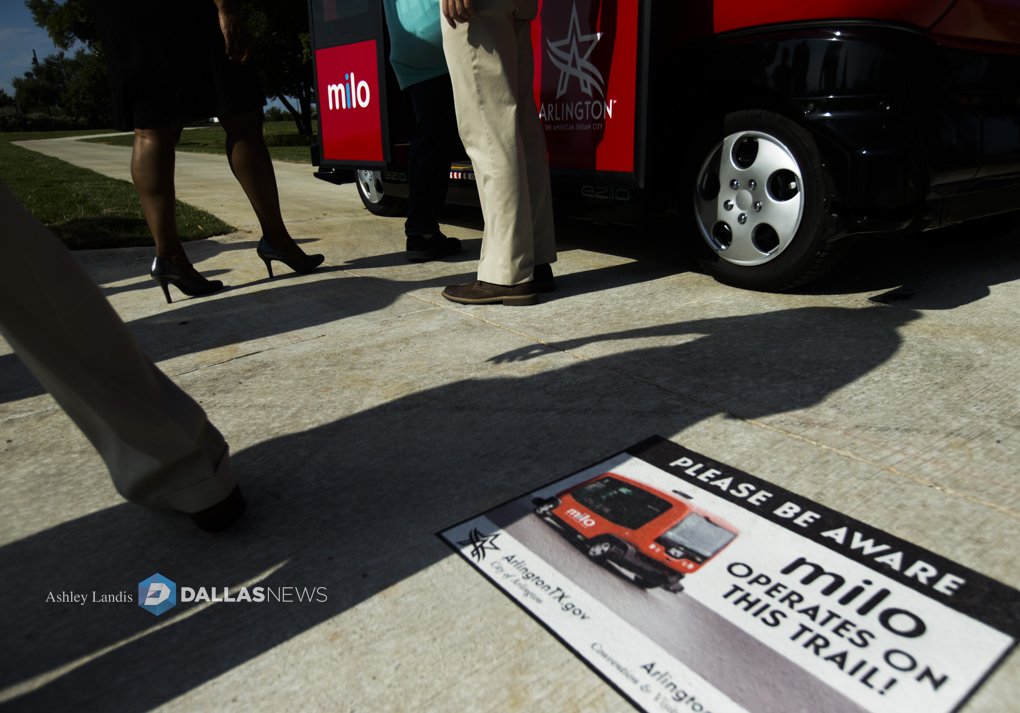
Texas is growing as far as AV pilot programs. There is Arlington, where the Dallas Cowboys and the Texas Rangers play, which has an AV shuttle operating on game days and around other events. But now:

Houston - An AV shuttle will be operating on campus at Texas Southern University (TSU) shuttle. "The small shuttles, called “university circulators,” will be limited to a mile-long campus pathway and will run at average speeds ranging from 8 to 12 miles per hour."

Frisco, a suburb of Dallas - According to a Dallas News article, Drive.ai will be testing and doing a six-month pilot of an AV ridehailing service that is planned to commence in July. "The service is made possible through a unique public-private partnership among California-based Drive.ai, the city of Frisco, the Denton County Transportation Authority and the private developments for Hall Park, The Star and Frisco Station. They are all part of the newly formed Frisco Transportation Management Association."

The Frisco AV shuttle will serve the general public at an office park near where the Arlington, TX, AV shuttle operates.

Commercial interruption


Florida

Two states with strong conservative tendencies have attracted plenty of AV testing, Arizona and now Florida. Florida, which is a little far from California and does not have that dry heat, has also rolled out the red carpet of no regulation for AV testing, pilots, and operations.

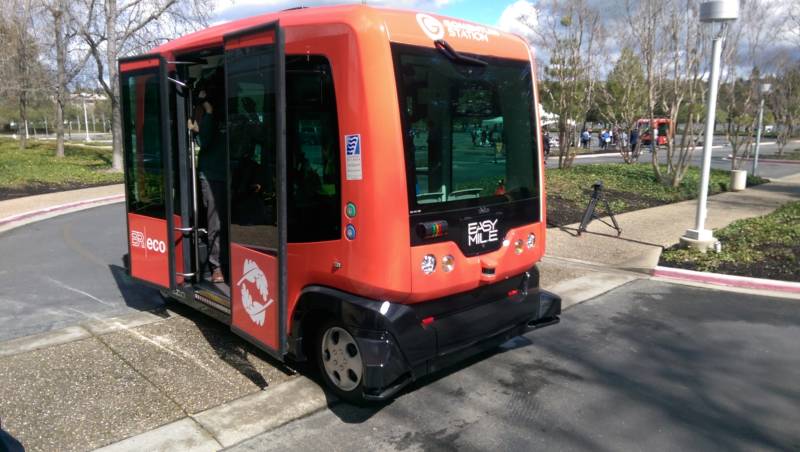
Gainseville, below the Florida Panhandle, but not at all on the water, is getting a cute AV shuttle route for a transit pilot. EasyMile will be supplying four shuttle AVs. Service is expected to begin for regular riders by the fall.

Tampa already has a shuttle and Babcock Ranch, a real estate development creation of a town, has a pilot that is expected to turn public. The town, Babcock Ranch, announced in 2016 as an eco-friendly soon-to-be-developed town the size of Manhattan, is being true to the word of the developers and an AV shuttle is on its streets being tested since January. Some houses are already built.

Viva Las Vegas

Coming this summer to the streets of Vegas to join the cute AV shuttle there will be Lyft AV ridehailing - BUT to run on fixed routes. This partnership of Lyft and Aptiv will build on the January pilot that provided rides during the CES conference in January 2018. Aptiv's Chief Technology Officer says, "Aptiv will work closely with the city to design future mobility solutions, which benefit public transportation and help with urban congestion challenges. The findings in the Las Vegas test run will be deployed in other cities across the world."

While in the Midwest:
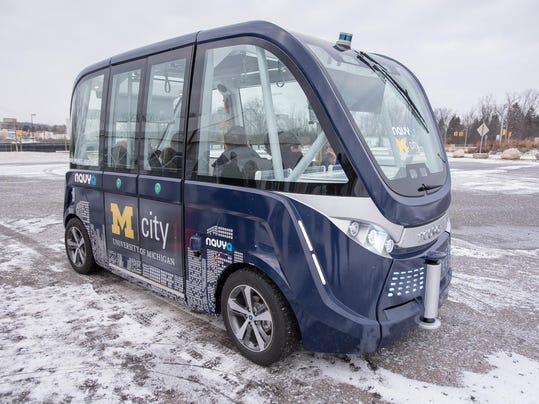
FINALLY the University of Michigan MCity AV shuttle makes its debut, after over a year in the works. Ferrying students on North Campus is a cute shuttle vehicle from  Navya. Students, staff, and eligible guests are invited to ride for free. Hours are limited to daytime and the shuttle ceases service at 3 pm.

Watch the cool video from Ford about enabling people with visual disabilities to "see" or at least to experience the visual landscape.

Over there ... and turn north


When you're in Norway, you are definitely not in the US. While the federal government, over both the Obama and Trump Administrations, has tried to stay more out of the way on AVs and electric vehicles, Norway is taking a wholly different route. AV shuttles are planned and the country is actively encouraging more electric vehicle use.

The long-running AV shuttle operating in Sion, Switzerland is being taught to cross busy streets and communicate with traffic signals. There will also be testing for making its route more complex with roundabouts as well.

Tuesday, October 17, 2017

Michigan: Shift From Motor City to Transit State

Michigan is truly a leader in the development of autonomous vehicles (AVs). Long known as the state where Detroit, the Motor City, is located - a city with a reputation as a transit desert - a reputation that is beginning to turn around, this was the quintessential state devoted to the motor vehicle. Michigan is changing.

The automobile companies stopped singing the tune a few years ago that drivers will never give up the wheel or their personal vehicles, and that AVs would be decades away. Since then big auto has invested billions in AVs and planning for shared-use transportation services. The Hill reports that total AV investment now exceeds $80 billion and that is only a conservative estimate that for the past three years, with investment growing. This news relies on a Brookings Institution report entitled Gauging Investment in Self-Driving Cars. The report is on my to-read list.

Image from Detroit News.
Universities jump on board

But research and development is not the only area where Michigan is a leader. Recently, Michigan has become a leader in AV pilots. First, the University of Michigan added an AV shuttle this academic year on its North Campus. (This blog covered the pilot news in posts during June and August.) The shuttles arrive every 10 minutes.

More Michigan universities are working on AV development. "Lawrence Tech’s vehicle is known as ACTor, or Autonomous Campus Transport/Taxi, and is expected to be functioning on campus by August."

BUT

The Lawrence Tech vehicle, which is homegrown, created at the college, will NOT be an AV. The vehicle will be, at least to start, only partially autonomous. Still, this will add more Michigan competition and it is likely only a matter of time before a true AV shows up shuttling passengers around the Lawrence Tech campus.

Across the Pond in another university town

Image from Business Weekly UK.
Four-passenger autonomous shuttle pods, called PodZero, are operating in Cambridge, England, as part of RDM Group's effort to "deliver the data, information and experience required to get the fleet of larger, 10-seater autonomous buses on the busway a reality sooner rather than later.” England has long been planning and testing AVs. This Cambridge AV PodZero is operating on a guided busway; plans are already in the works to expand to other locations and to larger transit AVs.

Thursday, August 17, 2017

Transit Pulling Ahead

Reading the news on autonomous vehicles (AVs), everyday I am seeing more shared-use, transit, and transit-like AVs. These pilot programs are spreading quickly. Slow, fixed-route - or limited radius - AV shuttles have captured the imagination of places in the United States that are (1) NOT our major cities, meaning places without strong transit unions, and (2) NOT transit rich. Indeed, in at least one spot, AV shuttles will used to ferry people to and from parking lots.

Most of the AV shuttles are manufactured by Navya and EasyMile, though there are other companies in the game and some homegrown, usually university-developed, shuttle vehicles.

Down under, over to Far East, and towards the West

Perth, Australia has an AV transit shuttle service - open to the public - that just turned one year old. The Navya shuttle, called Arma, operates on public roads. The shuttle reads signs and turns right. Unlike human drivers, it regularly improves due to software upgrades. [See photo.]

Singapore will have AV ridehailing in mid-2018 via a partnership with nuTonomy. Unknown is whether a local ride hailing company will be involved. This city-state is already ahead of the curve on AV testing and is currently well in the lead in terms of AV-related urban planning. (Lots more on that topic in a blog post soon.)

Helsinki, Finland has an AV shuttle as a regular service - NOT a pilot project. Finland's pilots have used the EasyMile EZ10 for AV service and that tradition continues with the Helsinki shuttle.

Tallinn, Estonia recently saw the end of a month-long AV transit shuttle pilot that was open to the public. This project also used EasyMile vehicles. There are already plans to bring the AV transit option back to Estonia, but next time to a different city and not until next summer. A leading Estonian transportation official is pushing for Estonia to move forward with AVs generally.

Go west young shuttle

Michigan: Ann Arbor, home of Big Ten school University of Michigan (UM) and the MCity AV testing facility (and not far from the American Center for Mobility testing facility in Ypsilanti, Michagan) is about to host an AV shuttle on a two-mile route between engineering buildings at UM's North Campus. The shuttle vehicles are manufactured by Navya and they carry up to 15 passengers. Rides will be fare free and the AV shuttle will operate during the university's business hours (not intended for late-night studying or as a drunk bus).

Texas 

Texas A&M has a homegrown AV shuttle on campus for Howdy Week. The plan is to have 15 of these shuttles in operation by the end of the spring semester, meaning by May.

Arlington, Texas  has a pilot AV shuttle program that began on Aug. 26 and will continue through mid-2018. The shuttle will provide AV transportation around the Arlington entertainment district and to Texas Rangers and Dallas Cowboys games on game days and when concerts and other events are held. EasyMile shuttle vehicles will be used. Arlington is already considering expanding the use of AV transit shuttles beyond the pilot project. The vehicles hold 12 passengers, according to one enthusiastic report.

California

San Jose Airport is testing an EasyMile shuttle vehicle and hopes to use it for ferrying travelers and workers around the airport. The wish list includes an AV shuttle to transit and a dedicated lane on public roads. A local article about the project does a nice job of explaining the huge quality-of-life implications for people with disabilities and older adults.

San Ramon, CA, home of the Bishop Ranch office campus has an AV shuttle pilot program that is designed for ferrying office workers.  The AV shuttle became a local celebrity when it was featured as the grand marshal of the Concord, CA, July 4th paradeEasyMile shuttle vehicles are being used.

Apple is floating the idea of an AV shuttle for employees. No word on timing or which company will be supplying the shuttles.

Colorado: Denver's transit system is planning for cute AV shuttles for first and last mile connection to transit. RTD, the transit agency, was testing the EasyMile EZ10 in a giant parking lot. If you watch the video, just note that the snarky New Yorker reaction is that unless this vehicle has a dedicated lane or a built-in "oh no you don't" feature, in a busy city pedestrians will eating this adorable vehicle for lunch. You cannot combine a courteous, safe vehicle with a nasty, walking Brooklynite.

MaaS on the menu - tea leaf of expected profitable service

None other than Ernst & Young (really called EY), a large multinational accounting firm, has developed a Blockchain platform, called Tesseract, for managing fleets of AVs. The firm sees mobility as a service - or MaaS - somewhere on the expected horizon. From what I understand, which is little, about Blockchain, also used for bitcoin transactions, it is nearly unhackable and it is instantaneous. Evidently, EY sees money in this and has confidence that MaaS will emerge with sharing of different types of AVs, and differently-owned vehicles.

People with disabilities: AV transportation equity

Australia, like the US, a country of long distances, has a company about to pilot AV pods for older adults. Called Pod Zero, and manufactured by UK-based company RDM Autonomous, the pilot will only offer transportation on local roads within some elder communities owned by IRT, an Australian company. (For you older New Yorkers or subway history buffs, this company appears to have no relation to IRT train lines, such as the 1, 2, 3, 4, 5, and 6.) According to RDM, Pod Zero "is currently built in two variants – four-seater and eight-seater – and offers an operating speed up to 15 mph, multiple battery options up to eight hours or 50 miles, wheelchair accessibility and air conditioning."

Pod Zero will launch in November at an aging and information technology conference.

Autonomous wheelchairs are being tested and plans so far are for use in hospitals and airports. Though this wheelchair comes out of MIT research, the pilots are in Singapore and Japan.

Fare free for a price

Under the category "you get what you pay for," ideas for how businesses will make money off of AV transportation are growing. One idea floating around is that AV service, perhaps shared-use ridehailining trips, will be free - actually "sponsored" - by a local business, maybe a restaurant that wants your patronage. Other ideas revolve around fare free because transportation will be a cheap perk to deliver in exchange for valuable data. Sorry, forgot to get a link for this.

OMG, can't believe someone just said this - try being in a wheelchair for a few days

Below is a quote from a Mother Jones post that shows how people totally do not get the need for accessibility. It's as if the writer and like-minded individuals assume that all people with disabilities have extra cash to pay for personal service and that they don't deserve transportation equity. I agree with the point of the post, to not let the perfect be the enemy of the good, BUT people with mobility challenges - by they mothers with strollers or grandfathers with wheelchairs or cousins with intellectual disabilities, should not have to continue to be second-class transportation citizens. (I include the mother because so many parents develop back problems during the car-seat years. Why can't we have cars in which you can just roll in a stroller?)
No, we don’t need to deal with the problem of seniors and disabled passengers before it becomes an issue. Why would we? The market will almost certainly take care of this. Maybe companies will spring up that maintain human drivers, or that offer to have a human accompany the car to help you load your luggage or get your wheelchair into the trunk. Maybe driverless taxi companies will include this as an option. Or something. This is a no-brainer. [Emphasis added.]
So if you are an affluent person with a disability, no worries. But if you can't afford to pay twice as much for transportation or if you do not want to permanently be stuck at home, sorry. OMG, bad attitude. Maybe it's time to expand the Americans with Disabilities Act to comprehensively include all for-hire and private vehicle transportation. This just gets too hard for anyone marginalized just because he or she uses a wheelchair.

Friday, June 23, 2017

Transit AV Shuttles and Curious Jurisdictions

An ambitious autonomous shuttle pilot program is starting up at the University of Michigan in Ann Arbor. The 15-passenger shuttles are manufactured by Navya and a caretaker will be on board, in case anyone is too freaked out that there's no driver. Okay, that's not the official reason for the human present. The vehicle model is the Arma and it is fast for a pilot shuttle, going up to 35 mph.

The pilot starts with two vehicles and service every 10 minutes on campus, but plans are already being discussed for more. Needless to say, the vehicles are fully electric. MCity, an autonomous vehicle testing facility in Ann Arbor, is part of the partnership making the pilot happen.

Service will begin in the Fall of 2017.

Another cute transit shuttle

First Transit has announced that it will be a partner in the GoMentum autonomous vehicle shuttle pilot that Contra Costa Transit Authority will be conducting at Bishop Ranch, a huge office park in suburban California. EasyMile is supplying the autonomous shuttle vehicles. "First Transit is responsible for providing staffing, maintenance and operational support for the two SAV shuttles during the testing and deployment phases of the program."

Commercial break

Ford showing off its autonomous car at the MCity testing ground in Ann Arbor, Mich. Aren't those uncongested streets cute? And what sweet, undistracted, few pedestrians.

Info-gathering mode for the gun shy

Not every US state and jurisdiction is ready for autonomous vehicles, self-driving tiny houses, and transit to be anywhere and everywhere on its roads. Some would prefer to sit back, have research performed, and read a report before getting feet wet. Portland, Ore., and the small state of Rhode Island fall into this category. Both recently issued RFIs - or requests for information.

Portland is high tech, granola, and transit, bike and artisnal friendly. Its RFI, issued on June 9, seeks "data to assist the City in understanding the availability and diversity of suppliers in the marketplace, as well as approaches and solutions to AV testing, piloting and deployment." (To view the RFI, click on link to file attachment number in the middle of the page.) This specifically includes business models, electric vehicles, maintenance, and communications.

In its open way, Portland invites all players to submit information. "We are open to receiving individual applications from companies that have a single piece of the AV puzzle, or group applications that bring together multiple entities." Listed are traditional car manufacturers, transportation network companies - a/k/a TNCs, such as Uber and Lyft, tech companies, consultants, and community stakeholders, among a few others.

Among the topics Portland seeks input about include, but not limited to, first and last mile for transit, commuter transportation, etc., drone or mobile delivery, campus/private land transportation, connected vehicle and infrastructure technology, data collection, and freight transportation.

The deadline for submissions is Aug. 11, 2017. Though a pilot program might come later, the city emphasizes that a pilot program description is not what it is currently seeking.

The Ocean State

Seems like a weird nickname for Rhode Island because it can apply to so many states. Rhode Island's RFI has a deadline of July 12., mid-day. The state is seeking information about autonomous vehicles and not proposals for pilots or programs. RI is seeking information about autonomous surface transportation in all of its forms, from ordinary cars to  inter-suburban mobility to ride sharing (or ride hailing, I suppose) to intercity rail. The state also wants ideas about public-private partnerships and utilizing the state's well-known academic institutions, including Brown University and RISDI (Rhode Island School of Design), both within walking distance in Providence.

Mentioned in the RI RFI are requests about planning, employment, laws and regulation, operations in various weather conditions, and law enforcement as well as particular cities, corridors, and connectivity to specific campuses.

Self-driving entertainment

... and finally, a video of a potato enabled to travel autonomously shows what happens when a smart, tech-savvy person has too much time on his or her hands. Cute, odd, and entertaining one-minute-plus video. Plus proof that one can be a plant and travel at the same time.

Teaser: We have draft federal legislation!!! Next Tuesday will be a hearing on Capitol Hill, though I will be on a different coast at the time. Maybe I can catch the live stream. The subcommittee hosting the hearing will be the Subcommittee on Digital Commerce and Consumer Protection of the House Committee on Energy and Commerce. The draft legislation is available and I will be examining it ASAP.

Thursday, January 19, 2017

National Driverless Committees - Relevant?

Perhaps I am snarky, DC-based, and cynical, but my general opinion is that the committee discussed below will not accomplish much and the private sector will continue to drive - no pun intended - the future of autonomous transportation. This will be so particularly in the Donald Administration with its crew of pro-business advisors and Cabinet secretaries. Even in the outgoing Administration, I have witnessed this kind of pattern with the ride hailing companies as well. 

Lots of news here about:
  • An excellent report about autonomous vehicles and their potential for people with disabilities, and
  • State legislation and possibilities
Sounds like Eh Cat!

In the world of DC acronyms, here is a new one: ACAT, or the Advisory Committee on Automation in Transportation, a committee created by the US Department of Transportation. It is made up of very high people, such as the CEO of GM, for example. I'm convinced that the reason why the word automation is used instead of autonomous, driverless, or the equivalent is to make sure that only people who know that ACAT exists will find information about it on the  website, a notorious labyrinth of unconnected webpages. But I am paranoid. 

Here is the list of committee members. Lots of CEOs, professors, auto, and tech members. Last I would mention the token representative of the disability community and one labor representative. Oh and Lisa Jackson, ex-EPA Administrator and a representative of Apple, but perhaps that was the Obama Administration's parting DOT gift to the new DOT leadership. It would not look good to either disband ACAT or to throw off Jackson.

Since this is a government-created committee, it must adhere to US open meetings laws. On the positive side, any slob can attend or live stream a meeting, such as the Jan. 17, 2017 ACAT meeting, but on the down side none of the corporate bigwigs ever say anything forthright or unexpected because press is present and any person can live stream and sip their coffee at the same time (assuming the multitudes of transportation nerds are sipping the same beverage I am and prefer to view such events in jeans or pajamas). 

Mayor Garcetti was the only one to push the group forward and offer a plea for real action - a blueprint with measurable, planned goals - and hope that the committee will do something significant. And he was not even in the room; he called in from LA, where it was an early 7-9 a.m. Pacific time.

Some tidbits 
  • The labor representative showed concern, as well he should. Remember the elevator operators once had a union and jobs. 
  • The FAA's committee on airborne drones was cited as a successful example of a government advisory committee. 
  • The guy from Zoox was the only one not to wear a professional uniform; he showed up in a hat and a sweater (and pants, of course).
Potential is the word for people with disabilities

A nice report by Henry Claypool, the sole member of ACAT representing people with disabilities or having one himself, has co-authored a frank report for about the potential scenarios for people with disabilities as ride hailing services progress and driverless transportation looms just over the horizon.The report, entitled Self-Driving Cars: The Impact on People with Disabilities and issued the day after the ACAT meeting, goes beyond cars to look at current ride hailing, paratransit, taxi, street network and transit inequities - more than 25 years after passage of the ADA - and the sunny and gloomy scenarios that are possible when driverless transportation arrives. 

Claypool and his co-authors strongly encourage the formation of an active coalition of groups representing people with disabilities and others to educate political and business leaders about the needs of this transportation-challenged and diverse population and to advocate for universal design solutions for the new vehicles. 

Claypool  and his co-authors rightly declare that the opportunity is now to get it right - meaning equitable - for all travelers instead of standing by and allowing current problems, such as those that the ADA did not solve, to continue. 

This is an excellent and in-depth report about an important aspect of the coming transportation revolution. The Ruderman Family Foundation and SAFE (Securing America's Future Energy, a bipartisan think tank) supported the production of the report.

(FYI: This is high praise. Most reports on autonomous vehicles are basically driverless-for-dummies productions, make completely speculative declarations based on huge assumptions, or both.) 

Smart Belt - some PR person said it's better than Rust Belt

Starting with the self-congratulatory name of the Smart Belt, some previously Rust Belt states are ganging up together for a better chance to obtain federal funds and to lead the way together - well somewhat together - in the race toward driverless. Michigan, Ohio, and Pennsylvania are cooperatively pushing their impressive array of government and academic partners for the testing, research of, and presumably, wide introduction of driverless transportation. Focus areas also include policy, funding and freight issues.

East, then down south and west

Maryland's Motor Vehicle Administration (the DMV equivalent for any New Yorkers) is advocating for its prominent role in driverless regulation, perhaps seeing ahead that it will have much less to do once there are no drivers. The MVA Administrator testified in Annapolis, the state capital, in favor of a bill that would give her agency broad flexibility. She also wants testing of driverless in the state. 

Alabama is worried that without drivers there will be a huge reduction in state funds. There won't be drivers speeding, failing to put on lights, going over lane markings or anything else. When your state coffers depend on driver fees and penalties, it is worrisome to think there will not be any drivers. So Alabama is exploring legislative approaches via its Legislative Committee on Self Driving Vehicles, considering laws dealing with vehicles, insurance, and funding programs. 

Transit-friendly Texas? 

Texas has promoted itself as a business-friendly state and it continues this tradition with the state's efforts to enable driverless testing - in Houston on highways. The auto makers welcome this endeavor, but so do some freight players and Houston's public transit agency, which is also involved. (I admit that as a native New Yorker I do not also associate transit with Texas, but Houston recently did a nice job of rethinking its bus routes in a very inclusive process.)

Friday, November 11, 2016

Japanese Insurance, Israeli Optics, and Michigan Laws

Israeli company Oryx Visionis scaling up on a cheap optical radar system for driverless. It sees better.

Or - spelled in Hebrew - אור - means light. Just check the beginning of Genesis; that is one old word. I'm guessing that's where Oryx comes from. There is no information about that on the website.


In the tea leaves of tech development, NXP Semiconductor, a company that concentrates on driverless technology for trucks, has been acquired by Qualcomm and is bringing advances in driverless computing power.

Deals on driverless insurance

Another insurance company will be providing coverage for self-driving vehicles - in Japan. The company is Tokio Marine. The first company to do so was in Britain and that was quite recent.

Michigan passes bill - forget the steering wheel

Michigan's governor is going all out to ensure that vehicles continue being developed, tested, and manufactured in his state. He signed a package of four bills (good summary article). Here's a previous post with more details and a statement from Gov. Snyder's office.

Friday, November 4, 2016

Self-Driving Lorries Might Come Before Trucks

Trucks are an easy opportunity for driverless due to fleet purchases, labor savings, and non-stop time on the road without having to stop at Flying J or another truck stop to go the bathroom, shower, and eat. And it is not only fleets of large tractor-trailer trucks that will go without human operation, autonomous vans and small trucks will transform deliveries. 

Wording: self-driving lorries may come before trucks

In the UK, concepts of quick-and-easy-to-assemble driverless delivery vans are being presented now. Charge, an automotive technology company, this week unveiled a truck that can be assembled in four hours. Charge plans to sell these vans at prices competitive with conventional, driver-operated, vans. Plus, less power of whatever type will be needed because the various sizes of these small lorries - translation: trucks - will be made of light, composite materials. I will ask the materials scientist in the family for an explanation (though sometimes this person finds it difficult to dumb down on the technical stuff).

The UK is fertile ground with the government declaration of intent to lead the self-driving race and have driverless vehicles on roads in 2020. Planting itself on Britain's fertile self-driving ground, Charge intends to have the vehicles ready for sale next year after driving legislation passes.

Deliveries without humans will mean no tips and no conversation. In my case, no "have a safe night and thank you."

Matching insurance

To go with the new driverless vehicles in the UK will be insurance for driverless vehicles. Adrian Flux is first with insurance policies for sale to the public for autonomous cars. Don't get too excited, the company envisions this product more as a conversation starter than as an immediate money maker.

Turtle-like regulatory environment across the pond

With the regulatory debates and polarized politics in the US, it is probable Americans will wait longer to buy or get shared use driverless as soon as the British, Singaporeans, or even the Japanese. In fact, the recent NHTSA letter prior to the impending sale of the Comma.ai after-market, partially driverless system possibly demonstrates an unwillingness to entertain anything other than sale of an entire car by a car company. NHSTA did not even give Hotz's company wiggle room or a roadmap to demonstrate safety. It's an odd episode because not one Tesla has been ordered off the road.

Michigan is pushing for itself to be in the forefront of driverless development and eventual sales, but to accomplish that, at the very least, the state will need a friendly federal regulatory and legal environment. One thing is for certain, New York will not be the first state to get driverless vehicles on its roads and the question is which will come first for the Empire State, Uber in Upstate New York or autonomous vehicles. The state has not yet passed a law allowing testing or actual driverless travel on its roads.

Well, perhaps driverless vehicles will be late to the US and we will get flying robo-taxis from Airbus instead. The company is shooting for testing to begin in 2017. That would require a whole different set of regulations, presumably, and the involvement of the US Federal Aviation Administration, which oversees air travel and safety.

Thursday, September 22, 2016

Different Places, Different Driverless Laws Proposed

Yes, I will be writing about the NHTSA guidelines VERY soon. But first I have to finish reading the long, long document and I have a whole job and life outside of my obsession with driverless transportation

The design is at fault

The German transport minister is proposing - for semi-autonomous cars a/k/a Tesla - that manufacturers NOT drivers be liable when the driver fails to pay attention, say texting a grocery list instead of watching the road. The implicit argument goes that this situation is completely foreseeable given the monotonous nature of watching the road when the self-driving/autopilot technology is almost completely reliable. 

The German proposal would also place completely driverless operation of vehicles on equal footing with conventional human driving. Driverless would be allowed; just follow applicable laws and regulations.

Other big news in the last few days was the green light a Michigan House panel gave to the driverless bill. If the Michigan Senate's unanimous approval is any indication, the bill is destined for passage. Go here for highlights of the bill.

Hey, driverless; get over here

I'm imagining the hail of a driverless taxi-transit vehicle in my hometown of Brooklyn. Except wait, an idea being floated is not for what I consider the real Brooklyn, but rather for transformed and gentrified neighborhoods (translation: expensive) along the L train. L service will be suspended for quite a while, starting in 2019, and a Daily News opinion piece suggests an expansive driverless pilot program. So the suggestion is to transform the dreaded L-pocalyse into the L-AutonomousMobilility opportunity.

Thursday, September 1, 2016

Michigan Lets Go of Steering Wheel

Go Wolverines 

Proposed state legislation is proceeding quickly in Michigan. A bill that does not require any particular equipment, such as brakes or a steering wheel, and that will not require that a human driver be located in a vehicle could soon become law. The State Senate held a hearing yesterday.

The billSB 995, also provides for connected vehicle platooning and it envisions hassle-free ride hailing services that are completely driverless. The definitions in the bill places its regulation footprint on every vehicle operated on Michigan roads that is partially to totally autonomous.

I'm feeling bad for the Buckeyes in Ohio already and I'm dreaming in blue and yellow. Fingerprints of Ann Arbor's academicians, Detroit's automakers, and visitors from Silicon Valley are all over this bill. Here is tracking information about SB 995.

There is more 

The bill would establish the Michigan Council on Future Mobility. Eleven voting members will be appointed by the governor. Right now that would mean business interests would be well represented, I assume. There would also be representatives of various state departments, including transportation and law enforcement, as well as non-voting members from the state legislature.

The bill also takes a dim view of humans who are driving partially self-driving vehicles - such as the Tesla one-second-the-car-is-in-control,-the-next-second-you-are variety - AND at the same time using any device in one's hand or on one's lap. Perhaps the car companies helped to craft that language to avoid quite distracting and entertaining stuff installed on car dashboards. Does not look like you will be permitted to watch a movie and monitor the vehicle at the same time, at least if you are using your tablet or phone.

And more

SB 996 calls into being "SAVE projects" that only vehicle manufacturers may participate in. In case you are wondering, SB 997 defines a SAVE project as basically a driverless ride hailing operation. The SB 996 summary puts it this way:
The term "SAVE project" would be defined by Senate Bill 997 as an initiative that authorizes eligible motor vehicle manufacturers to make available to the public on-demand automated vehicle networks. "On-demand automated vehicle network" would mean a digital network or software application used to connect passengers to automated motor vehicles, not including commercial motor vehicles, in participating fleets for transportation between points chosen by passengers, for transportation between locations chosen by the passenger when the automated motor vehicle is operated without any control or monitoring by a human operator. [Emphasis added.]
Find the status of SB 996 here

FYI: The Michigan legislature provides online access to the text of each bill, tracking information, and a summary analysis. I will try to confine myself to the tracking page because it links to everything else. This situation is pretty common.

SAVE projects and private roads - that the public has an interest in

Testing of autonomous vehicles at research centers and on private roads are specifically addressed in SB 997. I like looking at the analysis of each Michigan bill because the actual text is not generally user friendly. Still, I imagine, courts would find the actual text of any law passed to be controlling in a dispute that reaches the judiciary.

SB 998 is the usual get-out-of-jail-free-card in driverless legislation for manufacturers of driverless vehicles and the mechanics who repair them according to manufacturer specifications. The reason I find this provision intriguing now is because it does not conceive of a kit, such as Comma.ai or Drive.ai are developing, that would transform a normal car into a driverless one, rather inexpensively and easily. As these could be on the market soon, it seems like a rather large oversight.

An article from Crain's does a nice job of discussing who has been involved with crafting the Michigan legislation. The article discusses a hearing on the bill.

On the West Coast

California seems stuck in the mud compared to Michigan. It took a long time to pass a simple one-off piece of legislation to allow a driverless shuttle pilot to be tested at an office park. This went on for months. The bill is AB 1592. It has passed both houses of the state legislature and will presumably become law. One does not get the sense of shared momentum in California as exists between the Michigan legislators and their home-state vehicle manufacturers.

The office park shuttle will be another cute pilot project and it will be limited to 35 mph, according to the legislation. Here's an article that summarizes the bill and process.