Showing posts with label England. Show all posts

Wednesday, February 20, 2019

State-by-State Conversation by Report

State-level automated vehicle (AV) task forces and their reports vary a great deal, with some examining scenarios of a wholesale transition of the roadway space or the transportation system, while others appear to presume a static, mostly auto-based transportation system, similar to what we have now in most of the US.

Most of these reports, such as Wisconsin's, serve as AV primers for state legislators, government agencies, and others who work on transportation-related issues within a given state. They explain basic AV concepts, levels of automation, and how AVs differ from connected vehicles. Some explain well the traditional federal-state division of responsibilities over regulation and oversight of vehicle manufacturing, driver licensing, insurance, and infrastructure design. The Utah report does a nice job of describing the federal-state division of responsibilities, as well as which federal concerns are monitored by which federal agencies.

Progressive, inclusive, and geographically correct

These reports reflect the culture of each state, especially in terms of the scope of topics explored. Minnesota's report is a good example. This report emphasized equity and accessibility concerns, even describing the inclusiveness of the meetings that the Governor's advisory council in charge of the report conducted to discuss AV issues with people around the state.


The fear of an inequitable lack of balance between urban and rural areas was evident throughout the Minnesota report and, reflecting the concern with public perception, public engagement was a major priority for the advisory council.
Each meeting included remote participation. In addition to the public meetings, individuals could participate online, by survey, or share their feedback directly with the CAV-X office. To ensure transparency for the process, MnDOT placed all materials on its public website, including dates and times for each meeting. MnDOT conducted additional outreach activities for those unable to attend meetings, including individual meetings and calls, public events, presentations at various conferences and events, and a demonstration at the Minnesota State Fair. MnDOT also participated in intergovernmental consultation with tribal governments through the Advocacy Council on Tribal Transportation, the Minnesota Indian Affairs Council, and individual meetings with tribal executives. The final recommendations considered input from all of these outreach efforts.
Unlike most such bodies, the Minnesota advisory council did not include any AV companies or car manufacturers. Instead the advisory council included staff from government, non-profit organizations, labor, the insurance industry, and the energy sector.

Transportation modes besides cars and trucks? What are those?

On the other end of the spectrum is the report from Idaho, which mostly ignores the possibility of shifting transportation modal choices, and explores the usual concerns of cybersecurity, privacy, licensing and insurance. This might be due to the fact that members of the Autonomous and Connected Vehicle Testing and Deployment Committee - that's a mouthful - were auto dealers, representatives of various vehicle associations, and lots of law enforcement staff. Transit was not represented.

Indeed, though none of the recommendations mention transit, walking, or biking, a subcommittee that included transit, biking, and walking advocates managed to include some interesting text in the report - just not in the executive summary or in the recommendations.
The predictable routes, limited number of vehicles, fixed infrastructure in the public right-of-way, and public oversight place public transit in a unique position to pilot AV/CV technology. By piloting AV/CV for transit, the public could become more familiar and comfortable with the technology. Enabling and deploying AV/CV technology for public transit would also provide operational benefits to transit agencies by providing more consistent operations at potentially lower costs.
...      ...      ...
In the future, most vehicles using Idaho’s transportation infrastructure may not be individually owned, as they are today. The Mobility as a Service (MaaS) model predicts that most vehicles would be owned by corporations or collectives, and dispatched to users on demand. This model already exists with services like UBER and Lyft that currently use human drivers. These services have pilot projects testing the use of AVs. 
AV technology is accelerating faster in urban areas than rural areas. If state policies fail to address the needs of rural and local jurisdictions, the state could develop a disconnected network for AV/CV operations. 
Garden State: Not exactly innovative

Photo from Hyundai. https://www.motor1.com/news/300142/hyundai-elevate-concept-revealed/
The New Jersey joint resolution to establish a task force requires the task force to evaluate existing state and federal law, consider whether to pass AV legislation, whether to allow AVs to operate on public roads, whether to enact AV safety standards. Also looking at the other usual topics of licensing, registration, and liability. This is a completely typical state AV task force. It basically allows a state to appear to be doing something while hedging for time, and it also allows various transportation players in a state to come together, learn, and have an AV-focused conversation that will result in a public report.

*[In New Jersey, a joint resolution is defined as "a formal action adopted by both Houses (of the legislature) and approved by the Governor. A joint resolution has the effect of a law and is often used instead of a bill when the purpose is of a temporary nature, or to establish a commission or express an opinion."] As of Feb. 20, 2019, the Governor has not yet approved of this joint resolution.

While across the pond, if it's required for a 16 year old ...
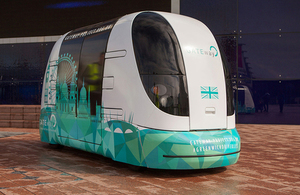
Meanwhile, Britain surges ahead in a much more organized fashion than we are seeing from the US federal government. The UK automotive minister and - love this title - future of mobility minister have announced that passing a stringent test, using the term "rigorous safety assessment," is required before an AV is permitted to be tested on UK roads.

The UK also has an AV report out of its Law Commission (jointly with the Scottish Law Commission) that provides a much more complete assessment of the legal issues surrounding AV laws and regulations. First, it examines the legal rules in other countries; second, it makes a distinction between partially automated vehicles (such as the Tesla autopilot system) and highly automated vehicles; third, it looks at local versus national control and whether new government agencies should be created or not. The report also raises the issue, in tort liability terms, of what a reasonable AV manufacturer or software updating company would do in terms of an obligation to update sensors, cameras, software, and other technology.


Tuesday, January 29, 2019

Warning: Analogies Concerning AV Future

After a brief stop at low-speed shuttles, which are popping up everywhere, a few listed below, and likely more to come with the USDOT AV grants, I shift gears, so to speak, and go off on a tangent. I make an analogy, actually several, that will take time to be revealed as apt or poor.

Like raking leaves under a huge maple tree

Just from this week's newsfeed, showing that I hardly have to scroll down to find announcements related to AV shuttles:

Jacksonville, FL, plans AV network in its downtown and incorporating its Skyway
Denver about to launch AV shuttle by transit and business center.
Tokyo airport testing AV buses in preparation to serve travelers and to meet goal of providing AV transportation during the 2020 Olympics.
Manchester Airport (UK) to test AV airport shuttle that will hold four-six travelers and expected to be called Pods on Demand.
Michigan VA medical center to get AV shuttle to transport veterans and others around campus.

How bikesharing changed biking - at least in DC

Before bikeshare arrived in the Washington, DC area, the speed of biking was high - scary for pedestrians - and bikers routinely violated traffic rules. Both downtown and on the edges of DC, into Maryland, this changed when bikeshare arrived. Almost overnight, the heavy, clunky, bikeshare bikes, ridden often by people in business clothes (who did not want to get dirty or wet en route) significantly slowed the speed of biking generally and had a similar calming affect that reduced traffic-rule-violating behavior.

In those years between DC bikeshare's start and when Citibike appeared in NYC, I would be shocked when I returned to the city to see that the bike culture there was as unruly, as Wild West, as biking had been in DC prior to bikeshare. Friends and relations were afraid of those speedy bikers because they would appear out of nowhere and skirt extremely close to pedestrians. It feels like there has been a change in NYC since Citibike, but, due to the massive changes in pedestrian and bike infrastructure in the city, it is less possible to attribute any shifts there to bikesharing.

Actual topic of post - analogy warning - Will AV shuttles be like bikeshare? 

Here is where I veer off into an analogy, which is dangerous territory because my analogies do not always work for other people. Apparently some, maybe most, brains work differently from mine.

AVs are being promoted in large part due to safety. AV technology will mean robotic/machine operation according to the rules of the road. No speeding, no stop sign running, no drunk or otherwise intoxicated driving, etc. will save lives and prevent crashes and near misses. Those near misses cause anxiety at the very least. 
Off topic for a second - Hint: If we add safer road design and road design that promotes safe walking, biking, and scooter - or whatever - use, we can improve both safety and public health. Sitting in a vehicle as the only transportation option is not healthy.
If we have, I am presuming, slower-moving AVs, even as 10 percent of traffic at first, whether these are shared-use ridehailing, transit, or whatever, is it unreasonable that AVs will have a calming - law-and-order - effect on the rest of traffic, the human-driven vehicles?

Jury still out

With the AV story du jour being human attacks on robots, drones, and AVs, it is possible that AVs will not calm down any drivers. I suspect that is wrong, just as I suspect that most people will not be getting drunk all the time in AVs or having sex constantly in them. Mostly we will play mindless video games or watch poor-quality entertainment (at least from the perspective of someone whose junk TV and movie watching tends to romantic comedies or Masterpiece Theatre-type fare. Can't wait to get into the current season of Schitt's Creek.)

It is possible that if AVs are relatively slow, but traffic proceeds more smoothly, that the human drivers will become accustomed to them and slow down around them.

Warning: another analogy. After all, in my area of work and residence, drivers have become accustomed in the last 10 years to bikers sharing the road. I still hear complaints, but they are fewer, and, even with the complaints, those drivers have adjusted.
Again off-topic: Even as habits are changing, not everyone is a convert. I must admit that I gave a friend a lecture recently when he complained about his local bike lanes and traffic-calming infrastructure. Incredible how many people do not consider that speeding is unsafe and contributes greatly to very bad outcomes. This friend would not intentionally hurt a fly, but he thinks nothing of speeding and violating other traffic laws. This was not the first driving-related lecture. 
The proof will be in the pudding. We can study, we can speculate, but we will not know for a long time. I am hopeful. I'll go completely out on a limb on other unrelated topics. Not many foresaw the changes that smartphone have brought. Add to that the Amazon business model. Who in 1965 would predict the sharp reductions in smoking with education in schools and public service ads? Behavior change is possible.

Where I would differ from many - as I go way more off-topic - is that we cannot expect change to happen just because it has happened elsewhere or that it will happen because it makes sense. We can't just say something is bad, for example, operating one's own car every single day; citing public health and safety statistics whatever they might be to dissuade people. No, we have to show that something else is good, available, even fun. Look at how Uber attracted rides. I have lots to say about Uber, but people did not have to be convinced to use it. It gives them a viable, reliable option. Let's do that with AVs. 

That's it. I'm ranting here. Hope it's been food for thought and that the analogies were not awful.

Friday, January 11, 2019

Lots of AV Reports, But Little on Accessibility

Automated vehicle (AV) development is not just about the technology that would allow for driver-free operation. AVs are partly advancing under the assumption that they will be electronic - EVs - and connected - CVs or CAVs. On the other hand, most of the legal studies and policy development is mode neutral and either gives lip service to, or ignores, people with disabilities. Accessibility embedded in the interfaces and the vehicles - whether for the benefit of people with disabilities, people with strollers, or people with luggage and grocery carts - is left out of the equation.

Considering that the touting of AVs highlights how wonderful they would be for current transportation-challenged populations, little ink or anything else has been spilled, so to speak, to guarantee that this promise will be fulfilled.

What do we mean by accessibility?


I will defer to the Consortium for Citizens with Disabilities (CCD) about their standard for accessibility in the context of AVs, taken from the CCD Task Force Autonomous Vehicle Principles.
AVs have the potential to drastically improve access for people with disabilities, including members of the blind and low vision, Deaf and hard of hearing, intellectual, developmental and cognitive disability communities, people with physical disabilities, including wheelchair users, and people with neurological conditions including epilepsy and seizure disorders. However, the promise and safety of AVs will only be realized if the vehicles and the surrounding infrastructure are fully accessible, and the safety elements consider the needs of people with disabilities
The CCD recommendations that particularly pertain to people with disabilities include:
  • Accessibility of human-machine interfaces,
  • AVs with lifts, ramps, and wheelchair securements,
  • No requirement of an operator on board who is licensed,
  • AV transit and pedestrian infrastructure that complies with the "Americans with Disabilities Act (ADA) accessibility requirements must be strictly adhered to in order for cities and states to work towards meeting goals of zero traffic deaths and serious injuries,"
  • An ADA or expansion that mandates "full accessibility for all types of common and public use AVs,"
  • "[L]egislation requiring that, as a matter of civil rights, all new technology incorporate the needs of people with disabilities at the earliest possible point, and 
  • "Congress should require that people with disabilities are part of the design and testing of new technologies in order to ensure the accessibility and usability of the technology." 
There is more, but you get the picture. Unfortunately, little or no mention of this sizable sector of the population and their needs is mentioned in reports about AVs. These reports, whatever they examine, are focused elsewhere.

Statements without supporting details


Two recent reports mention or refer vaguely to people with disabilities, but offer nothing more. These are the Human Factors and Ergonomics Society (HFES) Policy Statement on Autonomous and Semiautonomous Vehicles (Approved Sept. 30, 2018) and the Transportation Research Board (TRB) Forum on Preparing for Automated Vehicles and Shared Mobility (Sept. 2018). The HFES policy statement says: "Fully autonomous vehicles should accomodate people with disabilities." The document, while brief at five pages, mostly looks at safety; accessibility is not one of its main concerns. The TRB forum speaks globally about research needs that go from data to safety to business models for AV deployment, but it never uses the word accessibility. It mentions a research need addressing equity and another addressing "[h]ow best to serve those with special needs."

The Idaho 2018 Report to the Governor (Nov. 2018) from the Autonomous and Connected Vehicle Testing and Deployment Committee, like the Wisconsin Report of theGovernor’s Steering CommitteeonAutonomous and Connected VehicleTesting and Deployment, never uses any version of the word accessibility. The Wisconsin report does mention "underserved populations" and both address all users of the roadway, specifically including bicyclists and pedestrians. The Washington State Transportation Commission Autonomous Vehicle Work Group, like its counterparts in other states, is looking at AV developments from such a mode-neutral perspective that there is no weighing or consideration of how to steer AVs to serve everyone better and how to include people with disabilities in the next iteration of our transportation system.

State and other AV-related task forces typically examine insurance, licensing, registration, definitions, liability, and responsibility for maintenance. Maybe they consider policing and roadway management.

A whole different approach comes from the Scottish Law Commission, which produced a comprehensive paper - Automated Vehicles: A joint preliminary consultation paper (Nov. 8, 2018). It discusses both fully and partially AVs in terms of operations, reaching minimal risk condition, and liability. It explores different ways transportation is and could be delivered, including Mobility as a Service (MaaS). BUT, in terms of accessibility and providing an equitable transportation system to people with disabilities, nothing in the report goes beyond bare statements. We are talking lip service.

And the private sector?


The private sector is not rushing to provide accessibility - with the exception of Local Motors and others that aim to provide transit shuttle vehicles. And that would be current ADA accessibility that is not self-enforcing (as many lawsuits to enforce it demonstrate). But for taxi-like ridehailing service, no one is jumping up with any promises. Take Uber; in its report, A Principle Approach to Safety (Nov. 2, 2018), the only words related to transportation-challenged populations were these.
More equitable than existing transportation options 
Shared, automated mobility can work to extend the reach of public transit and bridge the first/last mile gap in areas typically underserved by transit systems, and for certain populations like people with disabilities, youth, and seniors. 
Aspirational, yes, but, as my mother used to say, that and (now) $2.75 will get you on the subway. $3 if you buy a single ride ticket. Referring, of course, to NYC, my mother's sole frame of reference.

Anxiety, of course, because lip service is not enough


My worry, and certainly the fear of the disability community (and some in the older adult community), is that lack of a mandate and/or concerted effort to embed accessibility now - during development of AVs and infrastructure (virtual and real) to support them - will put us in the same situation we were in, and in some respects continue to inhabit, which is attempting to retrofit a very inaccessible transportation system for people who are not the norm. The Americans with Disabilities Act (ADA) was a good first step almost 30 years ago, but, in any place without fabulous transit and even there (think elevators to subways in New York City and San Fransisco), people with disabilities continue to be second-class transportation citizens.

With the current House, Senate, and Administration, no one is pushing for ADA 2.0. If anything, there is fear of accessibility retrenchment. At three weeks into a government shutdown, one begins to wonder whether the dream of bipartisan action on infrastructure and transportation can even happen. Any progress is happening in large cities, such as Boston and New York, which are taking to heart transit accessibility concerns and commitments. (Sorry for the lack of links here.)

From the Navy Yard - possible home run hit right before the shutdown


The USDOT building in Washington, DC, is barely a walk away from the DC major league baseball stadium. That US agency building, which spans two large city blocks, was, hours before the government closed up, the site of a hopeful development that AVs will serve everyone. I imagine a government employee, in the dark, hovering over his or her computer in a rush to click "upload" before the shutdown announcement to step away from the building and all government-funded devices.

The Notice of Funding Opportunity - or NOFO, in acronym land - issued from the US Department of Transportation just a few hours before the government shutdown, expresses a commitment to transportation-challenged populations in general and to people with disabilities and older adults in particular. One of the prime goals of the USDOT project - entitled Automated Driving System (ADS) Demonstration Grants - is to "fund projects that test applications with the greatest potential to service transportation-challenged populations, including older adults and individuals with disabilities.” Additionally, "Each demonstration must include input/output user interfaces on the ADS [automated driving system] and related applications that are accessible and allow users with varied abilities to input a new destination or communicate route information and to access information generated by the ADS.”

The deadline for proposed demonstration projects is Mar. 21, 2019 - assuming that the federal government is back to work by then.

Thursday, November 29, 2018

Announcements of AVs Coming - Popping Up Like Weeds

Companies and cities, sometimes countries, are announcing that AVs, whether shuttles or conventional passenger cars, are coming and they will arrive by a date certain. Those dates differ, but still, such certainty makes one wonder whether the technology is essentially ready or whether engineers are being encouraged to improve the technology fast enough to lend credence to the hype.

Tough, but sweet, outdoor cat taking a break from mouse patrol.
A snarky person like me could wonder whether these bold declarations might encourage companies to suppress, a la Lion Air and Uber (with Herzberg killing), any safety concerns. Perhaps an AV "drivers test" and/or continuous performance monitoring might be in order. After all, auto companies will be combining the driver with the vehicle, and recalls show that those vehicles have sometimes been far from perfectly safe.

UK OK with AVs

London, England, UK - AV testing will begin this month in the London borough of Hounslow. The software is from Oxbotica. Addison Lee, a taxi and limousine fleet management company, will be providing the taxis to be outfitted with AV technology. Nominet, the UK's domain name registrar, will be in charge of data transfer and the protection of data from hacking.

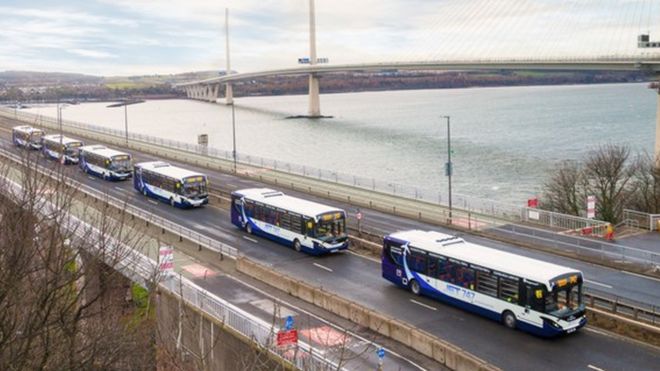
Scotland buses on bridge. Photo from BBC post.
Edinburgh, Scotland - AV full-size transit buses will be piloted on a 14-mile route between a commuter parking lot in Fife and a commuter train station . The buses will use the "the dedicated public transportation corridor across the Forth Road Bridge that also allows buses and taxis."

Across a landmass and over water

Japan - Though Japanese automaker Toyota has been relatively quiet about its AV activities, the plan declared a few years ago, and which continues to be repeated, is that AV service will be available for the 2020 Olympics. So where are we?

Toyota is saying it will shuttle athletes around the Olympic village in its e-Palette AV configured for human shared rides. The e-Palette is basically a shell that can be configured for different uses, such as deliveries, pop-up cafes, offices, mini-hotel rooms, or crowded mini-buses. That's my translation of reports on corporate statements.

Plans are also moving ahead for AV robotaxis to ferry visitors around in Tokyo during the Olympics. Reports from the summer stated that AV vans were being tested as a step toward service during the Olympics. Partners are a Japanese taxi company and a Japanese AV tech company. Toyota is also an investor.

In contrast to bravado or openness?

Miami, Florida - Ford has invited journalists to ride along on trips in its AVs in the traffic mess of Miami (though what US city is not a traffic mess?). These rides are taking place on actual busy streets with bikers and pedestrians and other drivers, all who arbitrarily violate the law and otherwise act in unexpected ways on  a regular basis. Ford is basically using the city traffic as a test bed, though with careful backup drivers. The carmaker has a clear goal - AV ridehailing service on the street in Miami and Dade County in 2021.

Thursday, November 1, 2018

Taxi-Like and Microtransit AV Pilots

US sees on-demand AV expansion with taxi- and transit-like pilots

Big news! California has granted Waymo permission to operate AVs without a safety driver, but, for now, only in the Palo Alto area and only for free. Waymo must request permission to charge a fare for AV service in California. This permit will not only enable Waymo to go truly backup-driverless in California, but it will also boost Waymo's credibility if the company wants to expand elsewhere. In fact, Waymo is also about to begin experimenting with charging fares for AV ridehailing in Arizona. Waymo continues testing in California, Arizona, Washington, Michigan, Texas, and Georgia.

Meanwhile, free AV shuttle service is going well in the entertainment district of Arlington, TX, in the Dallas-Fort Worth area. This service is used to shuttle people on game days for the Dallas Cowboys and Texas Rangers, and other events. The North Texas Council of Governments (NTCOG) will be spending "$1.5 million for its cities to have planning assistance ahead of autonomous vehicle deployment. Total funding up to $10 million for the actual programs would follow." The Dallas-Fort Worth Regional Transportation Council, a part of the NTCOG, is also involved, with its own AV 2.0 plan. This AV 2.0 is not yet posted on either the NTCOG website or on the RTC webpages.

International on-demand, small AV taxi-bots 

Tel Aviv AV ridehailing service announced for 2019. New Mobility will be VW cars using Mobileye technology. If AVs can operate on roads with crazy Israeli drivers, which means all Israeli drivers, then they are ready for anywhere. Though the service is self-described to include Mobility as a Service (MaaS), there is nothing to indicate an actual MaaS platform such as FlexDenmark or Whim, which operates in Finland. [MaaS is generally thought to be of as a coordinated technology platform for delivering transportation choices across all modes. This can be done on a per ride, monthly, or even an annual basis.]

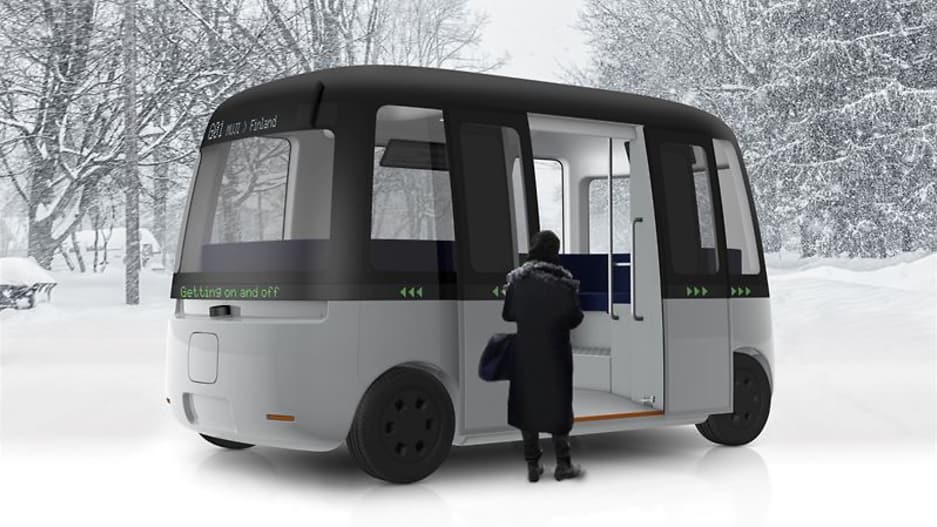
In Finland, in March 2019, an AV shuttle will be piloted with passengers in Helsinki. The shuttle bus is touted to be an all-weather vehicle that can handle snow.


First-mile/last-mile solutions to retrofit for sprawl may use AV transit or shared-use private transportation pods that seat up to four passengers. The video shows a pilot in Milton Keynes, a UK city in England, of AV pods available on demand via an app. The company manufacturing the AV pods is Aurrigo. FYI: The pilot just ended after a successful seven months.
Up to 15 pods – capable of travelling up to 15 miles per hour and lasting up to 60 miles from one charge – have been operating in the city centre from Central Railway Station. There are plans for the pods to continue to operate in the city, with a service being offered to residents in the near future.
Advertised in the video above is the independence-enhancing aspect of the mobility-on-demand AV pods for some people with disabilities. Showcased is an individual who is blind. What goes unmentioned is that the vehicle appears not to be accessible to people with wheelchairs and other mobility-related disabilities.


Tuesday, August 14, 2018

UK's AV Insurance Law in a Nutshell

For anyone with time and interest, I am linking the UK autonomous vehicles (AV) insurance law, officially named the Automated and Electric Vehicles Act 2018. Please be aware that I am not a licensed barrister or solicitor in the UK and I have never received any legal training in that country. I will summarize the law anyway.

The law requires the UK government's secretary of state to compile a list of fully AVs that are permitted on UK roads. This list must be published and updated, though nothing in the law states how frequently the list must be revised.

No required insurance compensation under law if the AV owner/policy holder -
  • makes his/her own software update that is prohibited under the insurance policy (which, of course, it would be), or
  • fails to "install safety-critical software updates that an insured person knew, or ought reasonably to have known, were safety-critical."
Nice definition of a vehicle "driving itself," which would be level 4 or 5, where human monitoring and backup are not necessary.

I am merely glancing at the electric vehicle (EV) provisions of the law. Looks to me as if regulations can be promulgated that will compel gas station chains to have EV charging stations. That would, however, require a request by the mayor of a jurisdiction. A list is provided in the law of information  that must be "made available" at EV "refueling" stations - why can't they say recharging? - for the public. An interesting provision is the list of data that might be required to be collected at recharging stations.

Wednesday, August 8, 2018

Bunch of links: Pilots, UK law, SAE announcement

Pilots

Truly awful of me to send out a post that is a list with links. Too busy this week to do otherwise and this post is more personal filing of information than entertaining or informative writing for an audience. My apologies.

Australia - Regional pilot locations announced in New South Wales.

Phoenix, Arizona area - Waymo and Phoenix's public transit, AND Waymo and Walmart partner up for rides to the store, AND Waymo test families include a teenager with the coolest driver - as in none.

Austin, TX - Cap Metro, the transit agency, is testing AVs prior to year-long pilot with EasyMile shuttles. More local coverage.

Dallas/Fort Worth, TX, area - AV service within geofenced area by Drive.ai with bright orange Nissan vans.

Regulation and insurance

Pennsylvania - Stronger "voluntary" regulations, I mean "guidelines," demand more of AV testing companies.

New insurance law in England, mostly concerned with partial vehicle automation.

SAE

SAE to develop standards for AV safety. First draft due by end of 2018.

New SAE J3016 levels of automation came out in June and a new graphic was released in July. Still clumping together the very different and distinguishable partial automation level 3 with full automation levels 4 and 5.


Monday, April 30, 2018

Pilots, Pods, and AV Shuttle Sales

Texas: Houston's public transit agency, METRO, announced that its board has approved an AV pilot with one of those cute AV shuttle companies for the Texas Southern University campus. A METRO employee will be on board the AV shuttle, but the shuttle will NOT operate on a public road and will not be on a road with any vehicles, only with pedestrians and bikers. "METRO hopes a successful test of the technology could lead to customers using the autonomous vans as a connection to major transit locations."

Texas Southern University is a historically black college with approximately 10,000 students. It is a major Texas provider of higher education for African Americans and latinos. Considering how underrepresented minorities are in the tech world generally and in AV development in particular, this is a good step. It also is nice to see a transit system actively participating in the first steps and planning for AVs as part of a city's mobility network. This is the exception rather than the rule.

UK: As part of the Leeds Digital Festival, a demo is going on in Leeds of four-seater AV pods; these cute little vehicles will be part of a trial in Leeds to begin sometime in the next few months. The Lake District (isn't that one of those places that Jane Austen's characters visit?) is the site of an ongoing pilot at a national park. I do not believe, however, that Colin Firth will be appearing near or taking a ride on the AV shuttle.

[For Jane Austen fans: Yes, indeed, Elizabeth Bennet, in Pride and Prejudice, visits the Lake District, where she tours Darcy's enormous home. She is in the company of her aunt and uncle.]

New Zealand and Korea: A New Zealand AV shuttle company has a buyer in South Korea for a bunch of its cute shuttles. The Korean buyer is a company developing a smart city. It is selling 150 of its 20-person shuttles, with capacity to extend to 40 riders. The company, Ohmio Automation, a subsidiary of HMI Technologies, has already begun testing and regular service is planned at Christchurch Airport; that's in New Zealand.

Monday, March 19, 2018

AV Developments Look Good for Drinking and Transit - but maybe not both at the same time

Buses, drinking, and sleek accessible vehicles are all around in autonomous vehicles (AVs) news these days. Maybe if I can't keep up, I can share in the alcohol industry's euphoria about the prospects of ditching the designated driver and the inebriated driver for guilt-free evenings of fine wine, craft beers, and/or drunkenness.

Why not have another glass of wine or four beers?

Both the alcohol industry and those who fight against drunk driving are advocating in favor of AVs. According to a Washington Post article:
Without the need to drive home after a night at the bar, drinkers could also consume far more. And that will boost alcohol sales, one analysis predicts, by as much as $250 billion. 
“It makes a lot of sense that the industry is interested,” said Jim Watson, a senior beverage analyst at Rabobank, a multinational finance firm. “It’s a win-win for them: Self-driving cars could boost alcohol sales and simultaneously reduce drunk driving.”
Apparently, alcohol retailers also make significantly more money if you purchase drinks, beer, or wine at a restaurant or a bar than if you buy at a store.

Or take the bus - driverless - to or at the airport

The UK and Australia are both considering airport-related AV bus services. Gatwick Airport, near London, will pilot the AV equivalent of an airport shuttle. The summer of 2018 will see the beginning of a six-month trial.

Australia has a much more ambitious AV project under discussion - an AV bus rapid transit (BRT) route to an airport with a dedicated lane - so that travelers will not be slowed down by auto traffic. This plan is so cool because it would integrate BRT with AV technology and combine them in a scheme that would be much cheaper than a rail train-to-the-plane project. Look at the post because there is a neat video that envisions the ambitious plan for Liverpool, a city in Australia, to the soon-to-be-built Western Sydney Airport.

Down in the heart of Texas 

As I have said before, it is outside the major cities that AVs are progressing in terms of excitement and concrete plans. A Texas city illustrates the point that while New York City has no public document about AV strategy or large-scale AV service, smaller communities are planning publicly-available transportation for the AV age.

Frisco, TX, a suburb in the Dallas-Fort Worth area, will have an autonomous bus this year. The AV bus was mentioned at a town hall meeting. An official announcement is expected soon.

Thursday, October 19, 2017

AV Designs - California and England

Sacramento wants autonomous vehicle (AV) demonstrations routes to include the entire city, but there is no concrete plan in place. The owner of the Sacramento Kings professional basketball team had made attempts to ferry attendees of the first home game of the NBA season in AVs, but the arrangement fell through.

The chief innovation officer, an increasingly common business title around the US, for Sacramento says that "plans are still in place however to bring autonomous technology to the area for testing and implementation." This is a priority for the mayor and the city is in discussions with lots of AV companies, though only car companies and others testing AV cars are listed in the Capital Public Radio news piece.

Maybe AVs will help the Kings. Their record so far this season, only one game in, is zero wins and one loss, to the Houston Rockets.

Sleek design

Image from dezeen.com
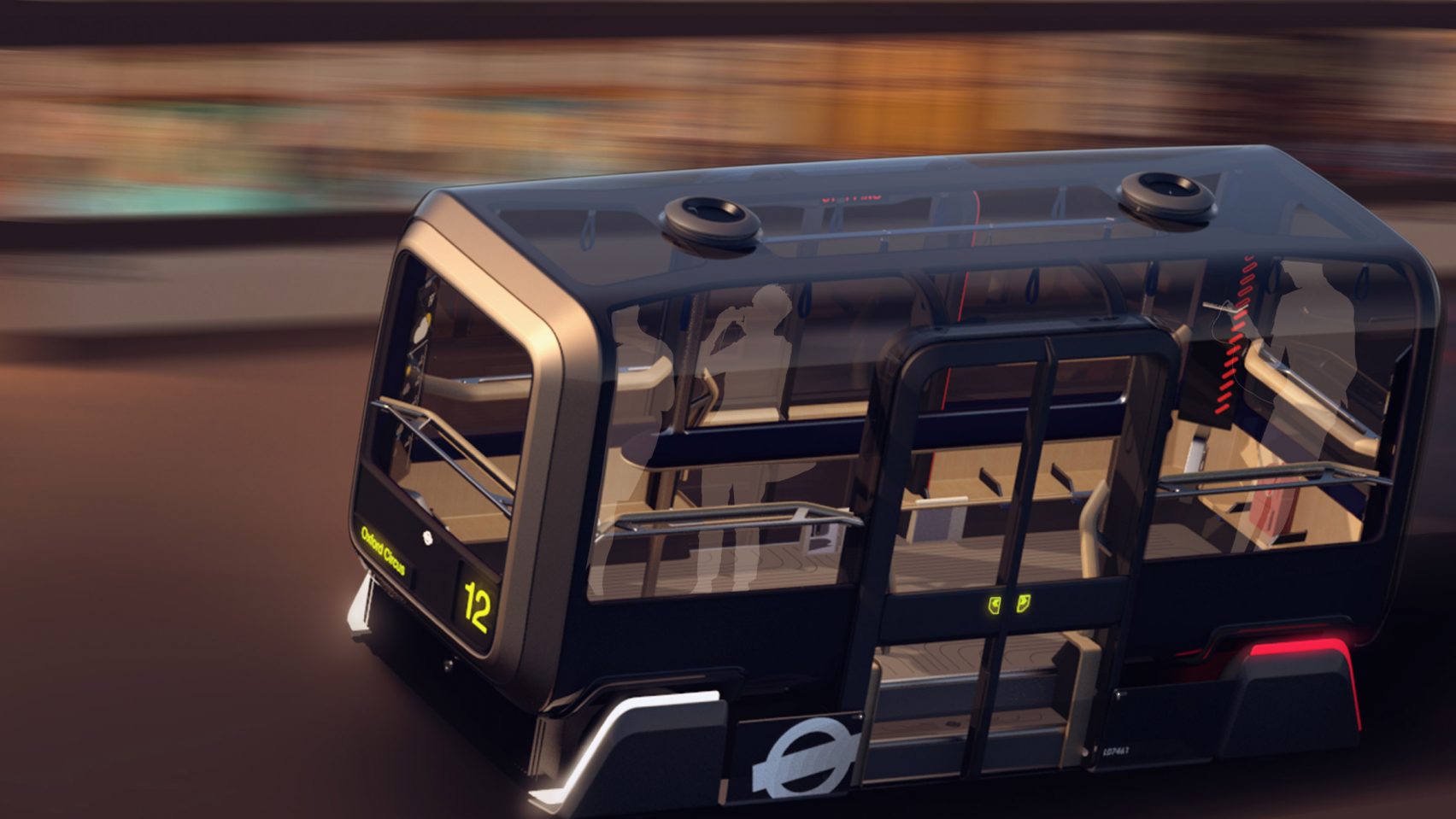
In AV transit news, a polished design, full of windows, comes from the United Kingdom, well England. Transit designer Jonny Culkin imagines a world with views of city surroundings. "Described by Culkin as 'technology with a friendly face," the conceptual vehicle is designed to offer a more attractive alternative to London's Tube, as well as the city's bus networks.' " Notice the sleek, minimalist interior.

No word on whether this design will be adopted or whether Transport for London or any other UK transit agency is planning on supplementing big red buses - AV or otherwise - with small shuttle vehicles.

Tuesday, October 17, 2017

Michigan: Shift From Motor City to Transit State

Michigan is truly a leader in the development of autonomous vehicles (AVs). Long known as the state where Detroit, the Motor City, is located - a city with a reputation as a transit desert - a reputation that is beginning to turn around, this was the quintessential state devoted to the motor vehicle. Michigan is changing.

The automobile companies stopped singing the tune a few years ago that drivers will never give up the wheel or their personal vehicles, and that AVs would be decades away. Since then big auto has invested billions in AVs and planning for shared-use transportation services. The Hill reports that total AV investment now exceeds $80 billion and that is only a conservative estimate that for the past three years, with investment growing. This news relies on a Brookings Institution report entitled Gauging Investment in Self-Driving Cars. The report is on my to-read list.

Image from Detroit News.
Universities jump on board

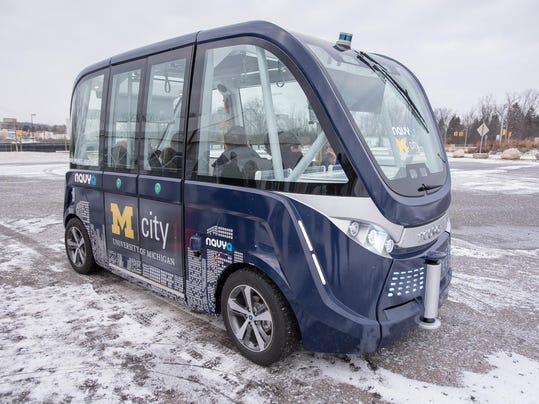
But research and development is not the only area where Michigan is a leader. Recently, Michigan has become a leader in AV pilots. First, the University of Michigan added an AV shuttle this academic year on its North Campus. (This blog covered the pilot news in posts during June and August.) The shuttles arrive every 10 minutes.

More Michigan universities are working on AV development. "Lawrence Tech’s vehicle is known as ACTor, or Autonomous Campus Transport/Taxi, and is expected to be functioning on campus by August."

BUT

The Lawrence Tech vehicle, which is homegrown, created at the college, will NOT be an AV. The vehicle will be, at least to start, only partially autonomous. Still, this will add more Michigan competition and it is likely only a matter of time before a true AV shows up shuttling passengers around the Lawrence Tech campus.

Across the Pond in another university town

Image from Business Weekly UK.
Four-passenger autonomous shuttle pods, called PodZero, are operating in Cambridge, England, as part of RDM Group's effort to "deliver the data, information and experience required to get the fleet of larger, 10-seater autonomous buses on the busway a reality sooner rather than later.” England has long been planning and testing AVs. This Cambridge AV PodZero is operating on a guided busway; plans are already in the works to expand to other locations and to larger transit AVs.

Friday, October 6, 2017

Shared Ride Roundup


Love this: Artist renderings that are much closer to my imaginings of rethinking vehicle design for AVs than we are seeing from the auto companies. Definitely take a look at those! Image #6 is my personal favorite. Images posted here are all from those renderings.

Shared ride options for all getting closer

GM in California - more than doubles fleet of Cruise Automation vehicles. Now at 100 AVs.

Lyft partnerships with car companies to open up AV ridesourcing services.

Waymo full-scale AV ridesourcing operations to start in Phoenix area by early 2018.

AV ridesourcing for affluent older adults happening now in California. Voyage, a startup, is using Ford cars, to do just that in a gated senior community. Lots of opportunities in this market. More on the Voyage pilot.

Public shared-ride AV pilots

Publicly-funded A-Taxi, an AV shuttle ridesourcing pilot, is being planned for Greenville, SC (isn't that a state that does not believe in taxes?) with FHWA funds. The intent is to use these shuttles for commuter transportation for "to improve access to transportation for disadvantaged and mobility-impaired residents." That's why the public dollars. How progressive for South Carolina. Impressive. [Image source: muxxi]

Another publicly-funded experiment with AV shared-ride service will take place in Britain in Greenwich, with Ford and Transport for London (TfL) among a broader partnership. However, this project will only be planning a business model, with the assumption being that one-third of London trips in 2025 will be by AV.

Stuff you can do, but maybe shouldn't, in an AV - if allowed

If you own your AV, you will have more leeway, but if you are a shared-use or transit AV person in the future, I imagine rules against:
  • Drinking too much alcohol - or any - while on board
  • Being obnoxiously drunk on a shared vehicle
  • Sex or even making out (tacky, though fun at the time)
  • Eating
  • Drinking anything but water (our rule in the station wagon when the kids were young)
  • Vomiting - try not to and use a bag
  • Watching or listening to anything without earphones or earbuds
  • Screaming
  • Singing, unless there is a 0-5 year old involved (in which case, I recommend singing Wheels on the Bus)
Stuff that should be allowed to roll right onto AVs when they are universally designed
  • Wheelchairs and other mobility devices
  • Strollers, even double ones
  • Personal shopping carts
  • Luggage
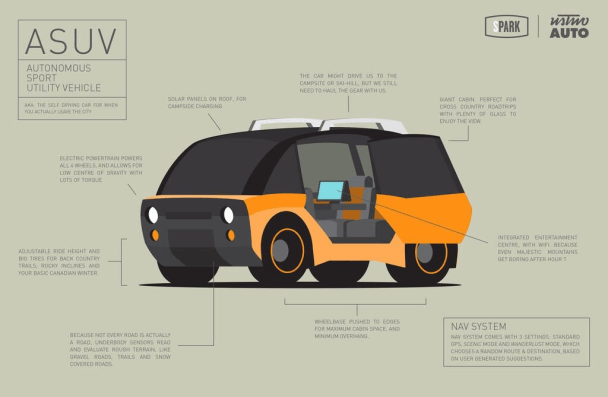
I make this list with the assumption that only the wealthy will have personal attendants and that the rest of us will be in the same sorry position we are in as airline passengers, forced to deal with and lift heavy items instead of receiving personal service. [Image source: Ustwo]

Personal dream

AV tiny house to cruise across the country in style. 💚

Tuesday, September 12, 2017

Autonomous Shuttles: High-Tech Equivalent of Hay Ride

One really cannot be a busy person who pays attention on the side to autonomous vehicles (AVs). Today, I'm waiting for the new NHTSA guidelines to be released and tomorrow is a Senate hearing on autonomous trucks and "other large vehicles." Ooh! The guidelines were released four minutes ago. (Four minutes after I wrote that sentence, that is.)

A must read for all AV nerds and insomniacs. Okay, lots of reading ahead, but first this post.

Warning: Analogy, then London

If you've ever been apple picking at a big farm or at a large state fair, you have likely enjoyed a hay ride. The Ohio State Fair uses them as parking shuttles. Kids love them. AV shuttle pilots are providing the same thrill throughout the world, while, I hope, inculcating a positive outlook on AV shared use and transit modes.

Some quite recent examples:

London is having a 19-day pilot in its Olympic Park. Don't ask me why the random 19-day duration. The shuttle will be slow and it will be quite careful of pedestrians.
The Navya autonomous pod is limited to 5mph in the park but has a claimed top speed of nearly 30mph on the open road. It cost “in the hundreds of thousands of pounds” and was brought to London by Euston-based firm Keolis UK following trials on the Las Vegas Strip.
The UK government (apology for the "England" label on this blog) has been actively supporting investment in AVs and in realizing that pilots have a significant role in delighting and educating the public about the transportation transformation to come.

I see a Super Bowl ad coming

I hope that we get a good Superbowl ad out of the AV shuttle at the 2018 game. Super Bowl LII (52 for those of you who missed Roman numeral day in the third grade), will be held in Minneapolis in a domed stadium. The AV shuttle routes will ferry visitors between hotels and events. No report that the shuttles will operate all during game week, but I am making that assumption.
The Minnesota Department of Transportation (MNDOT) selected EasyMile, a French company that makes self-driving technology, to supply buses for testing the technology’s capabilities in the state’s snow and ice in February 2018. The first tests will be in a closed facility. The second testing phase would dispatch the buses as shuttles along pre-programmed routes on public streets, closed to other vehicular traffic— just as thousands of people pour into the Twin Cities for Super Bowl LII.
This MNDOT pilot hinges on a NHTSA waiver from Federal Motor Vehicle Saffety Standards (FMVSS) for the state and for EasyMile. MNDOT is seeking permission for the waiver to cover a bigger road show throughout Minnesota to give people across the state a glance, a local news report, or perhaps a ride to spark thoughts about AV shuttle possibilities.

I confess that I did not realize that Super Bowl (SB) was two words - this after many years of hosting a SB party and hoping that the Giants win if they are in the game so that household is not gloomy for days thereafter. I actually hail from more of a Jets community, but I have to keep that quiet at home. Plus I have zero interest in the game.

Rural approach to AV

Most AV pilots - one could say dog and pony shows - have been happening in large cities. Japan, quite smartly, is exploring the connection between transportation access in rural areas with depopulation and aging populations. These same trends are also taking place in the US rural communities, so, I hope, other Americans in transportation are paying attention to the Japanese work on this issue.

In the US, fewer available drivers for rural senior transportation services is a big problem and it is coupled with the challenge of expensive, long-distance rides to medical care and even shopping, not to mention a lack of transportation for everyday socializing or employment. Isolation for many older adults who live in rural areas is the sad result.

Japan is experimenting with AV transit shuttles "in rural communities such as Nishikata, 115 km (71 miles) north of the capital, Tokyo, where elderly residents struggle with fewer bus and taxi services as the population ages and shrinks. ... Japan could launch self-driving services for remote communities by 2020, if the trials begun this month prove successful."

Gets better

Wait, Japan's well-coordinated approach has one more feature - one meant, I am guessing, to cut costs. Instead of each older person in his or her own podcar, Japan is planning to use existing highway rest stops as feeder points to take people to "to medical, retail and banking services."

Tuesday, July 4, 2017

What Do a New Connecticut Law and London Grocery Delivery Have in Common?

You guessed it - both involve autonomous vehicles.

Right now, only residents in a particular gated community in London may receive groceries - only nonperishable food and other products - via a bot-like, adorable autonomous vehicle. A driver must be present, for now, due to current UK law. From a New York City supermarket and even an Italian grocer in Brooklyn, you can get any fruit or vegetable delivered too. But those bots will soon be bringing blueberries and peaches.

The Constitution State

Only one of several state nicknames for Connecticut, with one of the others being the nutmeg state, the Constitution State was chosen as a nickname even though Connecticut was not the first state to ratify the United States Constitution. Lawmakers decided on the nickname in 1959 because they believed that the federal Constitution derived from an early set of Connecticut laws.
On January 14, 1639 (in the old Julian calendar), the residents of three Connecticut towns approved a list of rules for running local government called the Fundamental Orders. Most historians agree the Fundamental Orders are significant, but the state of Connecticut decided in 1959 to call itself the Constitution State based on the premise that the Fundamental Orders were the first constitution in North America.
Though the nature of the these laws as a constitution is debatable, according to one of the websites I looked at, they do constitute a charter and bear a close resemblance to a constitution in terms of establishing a local democratically-controlled, republic of a jurisdiction.


No longer making news

It may be that Connecticut's governance structure and democracy was out in front during the winter of 1639, but its foray into regulation and encouragement of autonomous vehicle operations with Public Act 17-69 is quite timid and oh so bureaucratic.

Up to four municipalities will be permitted to have pilots conducted on their streets.
Municipalities shall apply to the Secretary of the Office of Policy Management in the manner and form directed by the secretary for inclusion in the pilot program. The secretary shall select at least one municipality with a population of at least one hundred twenty thousand, but not more than one hundred twenty-four thousand, and one municipality with a population of at least one hundred thousand, as enumerated in the 2010 federal decennial census.
It gets worse. Lest there be a runaway botcar, everything about location, routes, hours of operations and what the testing human present will be eating - just joking on the last one - must be noted in an agreement between the municipality and the company testing its vehicles.

Human in a human seat

Ah Connecticut lawmakers, how quaint you are to include language like "driver's seat." Here are the requirements for human operators of testing vehicles.
(1) The operator is: (A) Seated in the driver's seat of the fully autonomous vehicle; (B) monitoring the operation of such fully autonomous vehicle; (C) capable of taking immediate manual control of such fully autonomous vehicle; (D) an employee, independent contractor or other person designated and trained by the autonomous vehicle tester concerning the capabilities and limitations of such fully autonomous vehicle; and (E) a holder of an operator's license;
Connecticut has banned autonomous vehicles from its highways. And, in the fashion of states that really do not wish to be in the forefront:

Hear, hear a study must be done

The state of Connecticut wants an interim study by New Year's Day 2018 and a final report by July 1, 2018. Really? With all of the information and studies already available, why not get something this month? OMG.

The study will examine state and federal laws and regulations and testing programs. It will offer recommendations for how Connecticut should proceed. By then, we will have a national law with direction for federal regulation. Really not sure why Connecticut even bothered.

Monday, April 24, 2017

Autonomous Transit Overseas, While in Virginia ...

Competition is getting fierce to demonstrate driverless vehicles manufacturers are welcome. Strategies differ by pilot program, big plans, and the absence of legal restrictions.

Transit in the Desert

Recent news shows Dubai continuing to make a strong commitment to driverless transportation, specifically transit shuttles. Lots of testing via pilots and consideration of expansion to "metro stations, malls and tourist attractions." Consideration is serious here on the first-mile/last mile piece as well. Dubai is also crafting regulations for the not-too-distant ordinary operation of autonomous transit.

Where the Underground is Polite - Mind the Gap

A pilot project to take place in South London in 2019 will show off the UK government's investment in a consortium pushing ahead with autonomous vehicle technology. The 2019 pilot will be Uber-esque ride hailing designed to replace automobile commuter trips. "FiveAI, a Cambridge-based artificial intelligence firm, is developing the trial with Direct Line, the University of Oxford, Transport for London and the Transport Research Laboratory."

American translation: Competition is serious with autonomous-related AI technology. Think the huge GM investment in Cruise Automation. Plus, smartly, the UK is making sure transit - see Transport for London - is a partner.

I love "mind the gap." We need that British voice on American subways and the level of service of London subways too, please.

Across the Potomac

Meanwhile, American states are practically in a mob fistfight to advance in the driverless race, except for California, which is confident that Silicon Valley firms and brains are not moving out anytime soon. This time it is the governor of the Commonwealth of Virginia who is laying out the red carpet. Terry McAuliffe, the governor and good friend of the Clinton family, declares that his state's motor vehicle laws and regulations currently allow for driverless vehicles to be tested and operated on Virginia's roads. No law is good law goes Virginia's thinking on attracting autonomous vehicle manufacturers and tech companies.

Wednesday, April 5, 2017

Legislation Bonanza: Out to Colorado

SB 17-213, as amended, is the Colorado bill. Even in beautiful Colorado, where everyone is fit and either biking in spandex or skiing, there is a state legislature. Okay, some people are hiking there. (I actually like Moxie Bread Company, a nice little whole grain bakery with great coffee in Louisville, outside of Boulder.)

The Colorado legislation opens with (1) a summary of the carnage on the nation's roads - and Colorado roads, specifically - due to deaths and injuries caused by vehicular crashes; and (2) the usefulness of driverless vehicles for first-mile/last-mile connections to transit and the mobility of people with disabilities and older adults. Amazing is that this introduction also mentions pedestrians and people who are poor. Go Colorado! Thinking multi-modal and socioeconomically.

Short bill, broad coverage

In a few pages, and those pages have a large font, the bill places its trust in a driverless future. Forget a focus on testing, the Colorado legislation would:

* Preempt local governments from regulating driverless vehicles. 
* Authorize operation of driverless vehicles as long as vehicles comply with state and federal laws.  
* Allow for testing of vehicles that are not in compliance with state and federal laws, with permission from the Colorado State Patrol and the DOT (Department of Transportation).
* And for the we-must-make paperwork department: The state DOT is required to submit a report each September about driverless testing in Colorado.

Colorado wisely leaves questions of liability, in the case of malfunction or crash, with existing judicial precedent, laws, and regulations. A new legal judicial structure for a new technology is not being established. Those physically fit (I'm assuming) state legislators read my mind.

AV eye candy from London

A glimpse into the future Colorado sees is already beginning to materialize in a very different landscape. See what the public transport agency in London will be trying out.


Click here for the video source.

Friday, November 4, 2016

Self-Driving Lorries Might Come Before Trucks

Trucks are an easy opportunity for driverless due to fleet purchases, labor savings, and non-stop time on the road without having to stop at Flying J or another truck stop to go the bathroom, shower, and eat. And it is not only fleets of large tractor-trailer trucks that will go without human operation, autonomous vans and small trucks will transform deliveries. 

Wording: self-driving lorries may come before trucks

In the UK, concepts of quick-and-easy-to-assemble driverless delivery vans are being presented now. Charge, an automotive technology company, this week unveiled a truck that can be assembled in four hours. Charge plans to sell these vans at prices competitive with conventional, driver-operated, vans. Plus, less power of whatever type will be needed because the various sizes of these small lorries - translation: trucks - will be made of light, composite materials. I will ask the materials scientist in the family for an explanation (though sometimes this person finds it difficult to dumb down on the technical stuff).

The UK is fertile ground with the government declaration of intent to lead the self-driving race and have driverless vehicles on roads in 2020. Planting itself on Britain's fertile self-driving ground, Charge intends to have the vehicles ready for sale next year after driving legislation passes.

Deliveries without humans will mean no tips and no conversation. In my case, no "have a safe night and thank you."

Matching insurance

To go with the new driverless vehicles in the UK will be insurance for driverless vehicles. Adrian Flux is first with insurance policies for sale to the public for autonomous cars. Don't get too excited, the company envisions this product more as a conversation starter than as an immediate money maker.

Turtle-like regulatory environment across the pond

With the regulatory debates and polarized politics in the US, it is probable Americans will wait longer to buy or get shared use driverless as soon as the British, Singaporeans, or even the Japanese. In fact, the recent NHTSA letter prior to the impending sale of the Comma.ai after-market, partially driverless system possibly demonstrates an unwillingness to entertain anything other than sale of an entire car by a car company. NHSTA did not even give Hotz's company wiggle room or a roadmap to demonstrate safety. It's an odd episode because not one Tesla has been ordered off the road.

Michigan is pushing for itself to be in the forefront of driverless development and eventual sales, but to accomplish that, at the very least, the state will need a friendly federal regulatory and legal environment. One thing is for certain, New York will not be the first state to get driverless vehicles on its roads and the question is which will come first for the Empire State, Uber in Upstate New York or autonomous vehicles. The state has not yet passed a law allowing testing or actual driverless travel on its roads.

Well, perhaps driverless vehicles will be late to the US and we will get flying robo-taxis from Airbus instead. The company is shooting for testing to begin in 2017. That would require a whole different set of regulations, presumably, and the involvement of the US Federal Aviation Administration, which oversees air travel and safety.

Friday, October 14, 2016

No Break From Driverless Developments

A few days off to enjoy real-life family and events. A little less attention paid to driverless while immersed in much home baking of holiday and rye breads for friends and family. (Everyone needs a source of good bread, but truly here's nothing like homemade. Not that I am the best baker, but a fresh homemade bread has amazing taste and is pure comfort food. Plus, naturally leavened bread is far healthier than breads made with commercial yeast. Rant over.)

The result? I fell woefully behind - for just a few days - on driverless news. Really, driverless news should not come out if I am not paying attention.

Acquisitions and money flowing

German-based Infineon acquires Innoluce BV, a Dutch producer of miniature, and potentially a very cheap, lidar technology. Infineon us a chip manufacturer. Here's a Business Insider article about the acquisition, which also explains well the differences in production costs.

A French driverless shuttle startup, Navya, is receiving a funding boost from, among others, Keolis, a large international transportation and transit company. The boost is to the tune of $34 million, with a $224 million valuation that demonstrates the current groupthink about Navya.

MIT-spawned Optimus Ride is also receiving an infusion of about $5 million. No specifics on the emerging technology that Optimus is incubating, but there is deep autonomous vehicle experience on the staff of the Boston startup.

Technology advance

The University of California at Riverside (UC Riverside) has created a new type of navigation technology. The technology does not rely on GPS, which does not work well in certain settings (such as mountain valleys), and instead relies on existing signals, such as cellular networks and wifi.

Finally on the street

After announcements and plans, finally, finally, driverless cars have appeared on the streets of Milton Keynes, a city in England. They are slow - at 5 mph - and cute and there. Australia, site of the current ITS World Congress conference, has hosted an actual driverless car on its roads as well. Bosch is the producer of the driverless system used on that car.

Tuesday, September 20, 2016

Before I Write About NHTSA

Yes, yes, yes, I'm reading the long NHTSA guidelines document. It will take a few days to digest, or at least a day. This is called reading beyond the executive summary. And there is actually other news.

UK insurers are handling driverless stuff behind the scenes and dealing calmly with the driving - or partially self-driving - public by stating that all normal car insurance policies will cover human-operated vehicles and self-driving vehicles. And coverage will extend to whatever insurance usually covers inside and outside of the vehicle.

Lots in England

Oxford-spawned Oxbotica, over in England, is busy designing driverless software and hardware for many types of vehicles. The hardware is lasers and cameras. This is for cars, of course, but also for forklifts, mining trucks, and a NASA Mars rover (I guess the Buy America requirements do not apply).

By a lovely canal

In Amsterdam, you might soon see and be able to ride on a driverless - or should I say captainless - boat. It is called, no joke, Roboat. This is the product of a partnership among MIT, which is a US university, and two Dutch universities. To be ready for testing next year, the Roboat will be able to carry people or packages. Since it is basically a flat raft, a succession of Roboats lined up can operate as a walkway or a bridge.

For fun, meet the Rolls Royce moving fancy TV den 

Without steering wheel and brakes, but with "Eleanor," your personal artificial intelligence assistant, the Rolls Royce driverless concept design is neat, but totally impractical. Bright beige carpeting means you will not be bringing kids, coffee, wine, or pizza. There is a very large screen and a loveseat. Fancy, in a futuristic way.


Tuesday, July 19, 2016

Another Day, A New Crew of AI Startups

I do indeed feel like Lucy and Ethel on the chocolate wrapping factory assembly line. The news is speeding up with driverless in terms of old and new players. Bright minds see dollar, yen, euro and other signs on the horizon and they are forming startups to capitalize on and realize the driverless reality.

Unlike Lucy and Ethel, I don't have a factory uniform where I can stuff all those candies that are coming too fast to wrap. It is one of the top five I Love Lucy episodes (not that I am at all an expert here).


Actual news - knowledgable maps

Reports are all around about the startup funding and partnerships of Civil Maps. The company has raised over $6 million. Its mapping service combines AI with 3D location-based mapping. Civil Maps is hiring and located in Berkeley, California. Capital is coming from Ford, a Yahoo founder, and venture capital firms. 

Civil Maps has one approach to minimizing the potentially incredible amounts of data that LIDAR produces as a driverless vehicle rides down the road with lots of stuff to see, interpret, or ignore. 

Across the pond

Oxbotica, a startup out of Oxford University, looks like it has adopted the Comma.AI model of creating a driverless tech package that can be used on existing, conventional vehicles. Better than Comma.AI, however, Oxbotica can work beyond highways - vehicle-only environments - and on regular streets where there are people and other moving stuff. Basically, Oxbotica has the capability to "learn" from its human driver. As long as the human driver is good and experienced, that's a positive.

The company says "Oxbotica is the nominated provider of the autonomous control system for two of the UK’s three Driverless Car Challenges taking place over the next few years in Milton Keynes, Coventry, Greenwich and Bristol." This information is available on the Oxbotica website.  

There's four in the bed and the little one said - roll over, roll over

So there's Comma.AI, Cruise Automation, Civil Maps, nuTononomy, ... 

Seems like a nice bubble for these AI start ups. Get rich quick with a good AI or other high-tech addition to driverless technology. The car companies, especially, are investing in these competitors. By investing, these companies are essentially seeding their own fields and racing around the bend to get to the driverless starting gate.