Showing posts with label Intel. Show all posts

Friday, December 1, 2017

Small Cities, Suburbs Race Toward Next Transportation Age

Sorry, sorry for posting delay. Work is a bear; my Metro station is closed for two weeks, meaning my usual simple commute is transformed into the nightmare of most normal people. Uch. At least I can include a nice walk instead of the shuttle bus to hell. [Image source: Daily Mail.]


Bold announcement

GM-owned Cruise Automation will be avoiding pilot projects and going straight for full-scale deployment. The exact date is yet to be determined, but 2019 will be the year. "The goal of the service, ultimately, is to maximize its impact, ... and create something that truly affects people’s lives in a big, significant way. To do that, you need to launch first in big cities where ride hailing and electric vehicles available on-demand in significant numbers will make a serious dent not only in reducing traffic fatalities, but also in ecological footprint thanks to reduced emissions."

Autonomous neighborhoods to come

Silicon Prairie, otherwise known as Lincoln, NE, is doing more than union-entrenched cities to plan for autonomous vehicles. Not that the city is doing much; it has merely hired a consultant, but it perceives the need to get going. A city like New York, on the other hand, is so avoiding offending its unions that it is lagging behind. It's New York, so it will be fine. [Image source: Honda.]
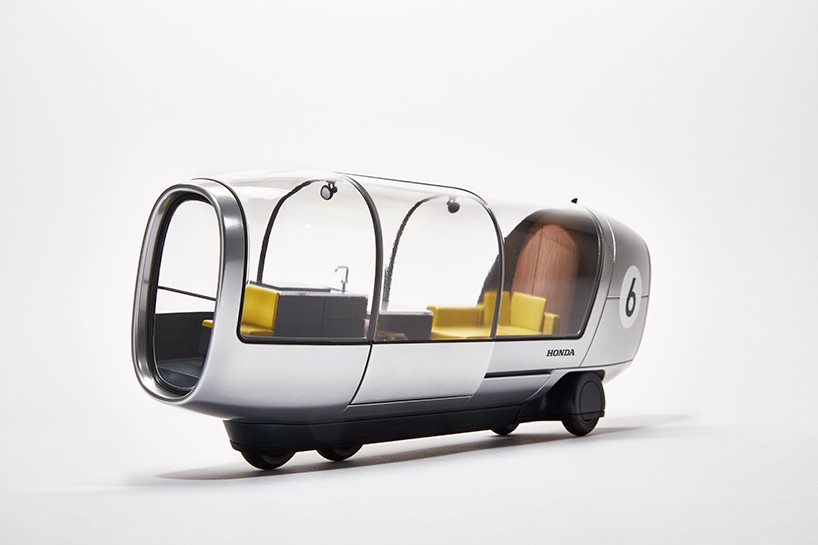
As I have said before, if you are a professional driver, it is time to put together plan B.

Outside of Boston, like in Florida at the town of Babcock Ranch, a new neighborhood is being developed for driverless transportation from the start. This is a "1,550-acre urban development located 12 miles south of Boston." The development is a partnership between:
Optimus Ride, a MIT spinoff company developing self-driving vehicle technology ... [and] renowned real estate developer LStar Ventures to provide Union Point's residents with access to self-driving vehicles. This agreement represents the world's first revenue generating autonomous vehicle pilot program.
Revenue generating = NOT fare free.

Connected and wealthy

Bellevue, WA, is putting its money where its mouth is and investing heavily to speed toward AVs and a network of ACES (actually called the ACES network), which stands for autonomous, connected, electric, and shared. There are government and industry players actively involved. Whether this turns out to be an expensive venture that will later become off-the-shelf and cheaper remains to be seen. There's always someone or some community that is willing to pay big bucks just to be first or near the top, whether or not the additional investment makes financial sense in the long term. [Image source: vox.com.]

Don't ruin my nap time

Please, please, please do not force me to watch sponsored content when I ride in an AV. Okay, yes, I will if that movie, TV show, or article is only available for free with the commercial. But leave me alone if all I want to do is nap. Creeps me out to constantly read headlines - basically all the same article - about the Intel-Time Warner deal to provide entertainment inside AVs.

Thursday, October 12, 2017

Ads and Private Roads

Appealing to  people with money, autonomous vehicle (AV) businesses are showing the expectation of massive wealth generation to come. First, the LeBron James ad. A major sports figure who has garnered three professional basketball championships, James does not come cheap; he is popular and credible.

The sponsor of the advertisement is Intel, reports the New York Post.

Way different

On the other hand, the Waymo video takes the slick, but friendly, corporate-speak ad approach. Both ads seek the same result: A message of friendliness, safety, attractiveness, and reliability - without reference to cost, equity, and related aspects of a multimodal transportation network.


Already serving private roads

The AV transportation revolution is happening, but not in the usual places. Not San Francisco, New York, Seattle, London, or elsewhere. Private roads in gated communities and campuses are the new frontier.

I covered the Village last week. In that California gated senior community, app-based, on-demand, shared-use AVs are ferrying older adults around. That news got lots of press attention. Called the Voyage, the two AV sedans operate on private roads within the community.

In the other sunshine state

Across the country, Babcock Ranch, a development I wrote about last year (scroll down), has gone beyond plans, and has AV shuttle service on its private roads. This is a transit-like vehicle and is probably the first of a network of AV options. The development is billed as allowing for a car-free and walk-and-bike-friendly existence for 50,000 people. Transdev is planning a Mobility as a Service (MaaS) network of AV transportation services. The new development is also solar powered.

Don't confuse Babcock Ranch with Bishop Ranch, which is an office park in California that also has an AV shuttle.

Public planning

Not to be outdone, affluent small towns are beginning to plan. Aspen, CO, wants to establish a Mobility Lab. This will mean a transportation demand management (TDM), or mobility management, approach to transportation transformation.

And public streets in California may soon boast AVs being tested without humans on board for that matter. Proposed regulations await the current notice-and-comment period. 

Thursday, November 17, 2016

World Beyond US Going Fast for Driverless

Forget schlepping packages home

Norway now has driverless grocery deliver. Actually no human travel required because it is an online supermarket that is offering this service. This is a pilot project; regulatory changes will be needed to go beyond a pilot phase. The Norwegians are not setting their hopes only on the convenience of driverless grocery delivery, but on similar services for delivering restaurant food and picking up reycling. A guy is actually quoted as saying this will halve his family's food bill; does no one cook anymore?

In Brooklyn, there is driverless delivery, but that is with bikes and carts.

Driverless 2.0

South Korea will be testing what it calls second-generation driverless starting in early 2017. The vehicle is designed to operate on city streets as well as on other public roads. The pilot comes out of testing at a university in Seoul. 

Another piece of news that can be grouped under the heading of second-generation driverless is the advance of cheap LIDAR that has been developed in Germany. This new LIDAR package has no moving parts and costs less than $50. Test kits will be available in 2017 and production is supposed to start in 2018. The range of the LIDAR sensors is over 600 feet, so that approximately nine to 11 seconds of highway driving will be within the range of its "eyesight."

While in the US ...

While technology in the US is advancing thanks to innovation in Silicon Valley, Boston, Michigan, and elsewhere, the state of regulation and a legal framework for driverless is another matter. At this point, the situation is state versus state, and state versus federal government. The Washington Post reports that the NHTSA Administrator (for the Obama Administration), Mark Rosekind, has been criticizing California because its proposed driverless regulations would create the kind of fractured map of different state regulations that could severely hamper a national approach to regulation of driverless operations. 

The proposed framework in California includes mandatory reporting of driverless vehicle information requested in the proposed national guidelines. It seems to be the mandatory part that most bothers the NHTSA Administrator because the proposed NHTSA automated driving guidelines would be, if left unchanged, voluntary. Plus, being national in scope, one would not have to wonder if license for driverless operation will cease at a state border.

Our free press is also reporting everywhere on Intel's quest for companies to release data, which Intel products can store - for a price, of course - all in the interest of promoting faster driverless technology.

Wednesday, July 6, 2016

The Russians, Chinese Are Coming in Driverless Buses, Pods

Russia plans to introduce a driverless bus. So far, it has been tested, presumably at low speeds, on private roads, such as campuses. The bus is low floor, and therefore accessible (I presume), and runs on electricity. No confirmation if the bus will be launched during the 2018 soccer World Cup games. Warning: Even insomniacs will fall asleep to this video.


Toronto wants driverless buses, or at least little shuttles

Though driverless vehicles - sans drivers - are not yet legal in Ontario, Toronto council members are hatching a plan for driverless transit. They will meet in mid-July to consider a report to plan driverless transit. Toronto was one of the first cities to designate a staff person to begin to look at the transformation that driverless transportation will bring.

Intel + MobilEye + BMW = ?

The three companies: a chipmaker, driverless player, and a traditional high-end car company, are teaming up. The question is whether the deal will push BMW ahead in the driverless car race. Bloomberg did a nice summary. More speculation and details are provided by Android Headlines (AH). I have not seen anything yet that would make me believe this is a game changer. 

Baidu chooses Chinese town as third of 10

Baidu has chosen an ancient Chinese town, a tourist magnet, for a driverless project with a route system. The company, known as the Chinese Google, is planning to introduce driverless vehicles to 10 cities. The ancient town of Wuzhen is the third to be announced. There is no date set for the launch of the demonstration projects.

Tesla fatal crash

To all of us who did not know the victim, the Tesla crash heard round the world is a piece of information, something to be fixed. To me, personally, the fatal crash demonstrates the dangerous and disingenuous game that the partially driverless vehicle plays. Human drivers, such as the victim, himself a big fan of his beloved Tesla autopilot, get lulled into complacency with each day's safe trip. One day, when daydreaming, watching a movie - as the "driver" was reportedly doing - or just staring out the window, but hardly paying attention to the road, the human is not driving or thinking about driving, when an instant you-must-pay-attention-right-now situation presents itself. We humans are not generally good at the split second jolt to action. The crash occurs before the driver knows what is happening, in that split second when he or she is processing information, before action is taken.

While Mobileye and Tesla hash out who was responsible in the press, presumably continuing into the courts unless the victim's family is placated with lots of money first, I hope that NHTSA, which will investigate, will take the opportunity to impose a black box requirement for driverless vehicles and also consider the great risks of the combination of the partially driverless vehicle and the human who is supposedly ready to drive.  

My condolences go out to the family of Joshua Brown. His death is a great sorrow to his family and friends. May they be comforted by memories of him.

Friday, May 27, 2016

From Sea to Shining Sea - Everyone Is Interested

At a session I put on yesterday at a national community transportation conference, there were attendees from rural and small city areas across the United States and Canada. Everyone is interested in driverless and many in community transportation are afraid. They are afraid that their passengers who are elderly or disabled will not have a friendly driver on board - whether a car, a van, or a bus - to give assistance. They are afraid of interfaces that do not work for people with cognitive disabilities. Some are excited about the opportunities driverless transportation will bring, while others would prefer to hold on to the present, despite its inefficiencies and inequities. 

This is an exciting time; possibilities are not set in stone. Now is the time and it is the role now for advocates and educators - national associations and others - to make sure that manufacturers, tech companies, and elected officials understand the importance of equity, not only in large cities, but in rural areas, suburbs, and small urban areas. Transit and community transportation in many places is often the only link that enables older adults, people with disabilities, and people with low incomes to remain independent, to work, and to travel. Rural areas present a unique challenge, with long distances and low population densities. If such places and such people are not to be left in the rear view mirror, then solutions must be developed and voices heard by the powers that be.

Congestion is not the problem in many places; less dense cities and regions have significant equity issues that the Americans with Disabilities Act (ADA) has just touched the surface of. Driverless has the potential for vast improvements on this score.

That's my rant for the week.

Scant update

I have hardly paid attention to driverless news in the past week, so here is a summary, just so I jot down what I think is important. For anyone out there who concentrates on this stuff, much is this will be old news to you.

Follow the money

Ford putting its money where its mouth is, both working on and investing in the shared-use driverless business model. The venture capital firm founded by Bill Ford, Jr. has put real money into nuTonomy, the company doing the robo-taxis in Singapore. 

Intel buying up start-up companies so that it can go full speed ahead in the driverless race. The latest buzz focuses on Intel's purchase of Itseez, a San Francisco company. One could think that hanging out at SF coffee places is the way to get get intelligence on start-ups to invest in or purchase for driverless and other tech races.

Everybody's making sausages

Nice state legislation update, especially regarding New York and Michigan. New York wants to clear a path for sale of driverless vehicles and shared-use driverless transportation. The legislation will also trash the requirement that a driver have a hand on the steering wheel at all times - because there might not be a steering wheel.

UK government talking legislation that will make manufacturers of driverless vehicles and technology liable in case of crashes and other incidents.

Hints of Tesla going from partially autonomous vehicles to fully autonomous? Reports that updates could be coming before late 2017.

On the roads now and soon in ...

Driverless vehicles soon to be tested on roads in Australia.

Japan unveils robo-taxi for G7 summit.

Have recent tests in Europe of driverless - or almost driverless - connected vehicle (CV) convoys of trucks inspired the hungry state of Michigan? Hungry, that is, for keeping all things vehicular manufacturing and development in the Motor State. Michigan roads will soon see CV convoys. Right now,  these will be convoys operating for testing purposes only. Interesting - it will be the US Army doing the testing.