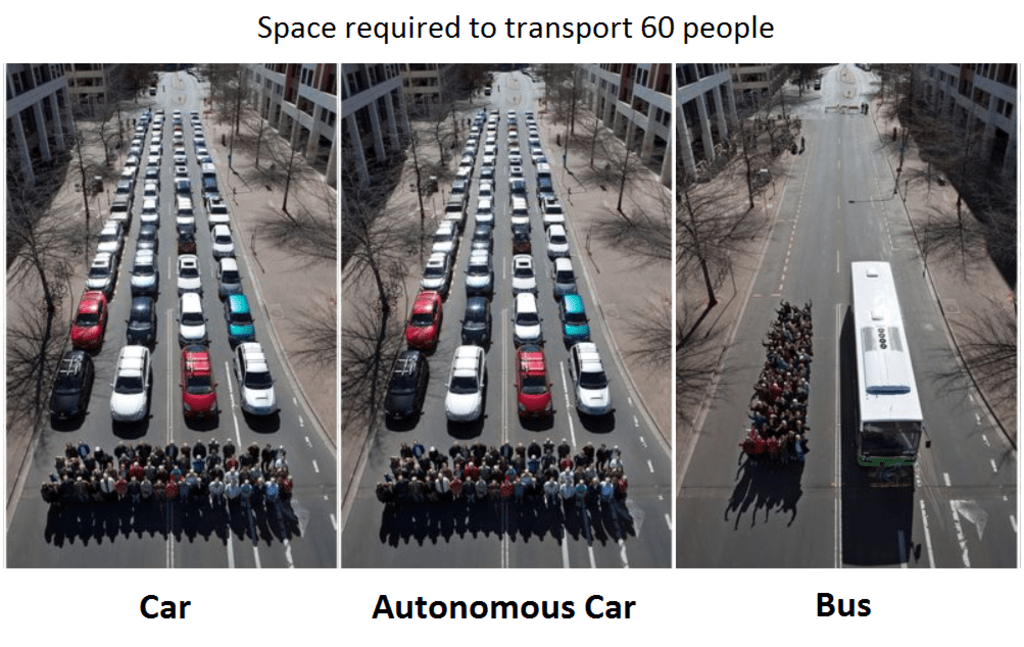
For a recap from my last post - While comments submitted in response to an advance notice of proposed rulemaking (ANPRM) are public, they do not tend to receive much media coverage. Because the current NHTSA ANPRM about autonomous vehicles (AVs) is important, I will be summarizing the comments one-by-one in this blog.
This legislation would allow automakers to deploy autonomous vehicles without first properly addressing the major safety, technological, and ethical implications. NSPE is working to ensure that these issues, particularly the need for independent certifications, recognition of the limits of the current technologies, and the ethical considerations in deploying such vehicles, are incorporated into legislation and regulations and considered as part of the next federal review of the guidelines.
What the submitted comment does and does not do
In response to the current ANPRM, NSPE is not calling for development or use of particular technology. We are not talking about LIDAR versus cameras or a combination thereof. Rather NPSE is advocating for ensuring AV safety through diligent implementation of a thorough and ethical process. NPSE's comment directs the reader to its recommendation of uniform AV testing and development procedures and standards that address risk assessment, standards development and implementation, transparency, accountability, and third party verification.
My translation: If one considers how Tesla has proceeded with its automation software, NPSE seems to be recommending the opposite.
One piece of wisdom: According to one of my close family engineers (and there's a bunch), who works in aerospace, when you study the history of crashes and explosions it is always the same story - a decision to not heed warnings gleaned from routine following of procedures designed to ensure safe operations.
What NHTSA is requesting - and will the agency receive that?
The ANPRM that NHTSA released is a detailed request for comments, which specifically lists 25 questions. NPSE did not provide a similarly detailed response, but chose to respond with comments about a framework - or really a philosophy - for a solid regulatory process and continued assessment of data as AV technology develops.
I want to first thank the National Highway Transportation Safety Administration (NHTSA) for requesting public input as it takes initial steps to regulate autonomous vehicle (AV) safety. I appreciate the difficulty inherent in the details of creating, promoting, and, in the future, enforcing regulation to ensure AV safety. Not to mention the fact that no matter how we encourage or regulate to make AV transportation as safe as possible, there is no mode, no vehicle, and no set of circumstances that will guarantee complete safety. No matter how safe - just as with elevators and airplanes - there will be risks. What we're talking about is significantly reducing those risks, not eliminating them.
I'm not an engineer and that lack of knowledge renders me ill equipped to offer useful comments about software, logarithms, sensors or cameras. I know this because, in addition to their specialized knowledge, the brain of an engineer works differently from mine. I have a family full of them and, trust me, they think in more detail and more logically than I do. But as someone with a law degree and years of experience working as a lawyer, I believe that process and regulation matter to ensure that safety is considered, even if we somewhat slow down full scale adoption of new technologies.
Federal Motor Vehicle Law
The National Traffic and Motor Vehicle Safety Act of 1966 (Vehicle Safety Act) - This is the US law that first required the development of federal motor vehicle safety standards (FMVSS) and it predates the US Department of Transportation (USDOT), though only by about a month. The National Traffic Safety Agency was created within the US Department of Commerce, but, barely a month later, in the legislation establishing the USDOT, a new agency within the nascent USDOT was created to carry out the dictates of the Vehicle Safety Act. This would be the National Traffic Safety Bureau, the precursor to today's National Highway Transportation Safety Administration (NHTSA). Nothing in the 1966 Act limits its jurisdiction to the governance of human-driven machines.
The text of the Act is quite broad, leaving the work of research and setting standards to the brand new National Traffic Safety Agency. The passage of this legislation followed the public outcry over the thousands of deaths attributed to vehicle crashes and the actions of the car companies in elevating profits and style over safety, Congress demanded in the Act that the initial FMVSS be ready in a year and indeed they were drafted within that time frame. Though Ralph Nader's book, Unsafe at Any Speed, published in 1965, catapulted the issue of escalating death and carnage on the nation's roads to a matter of immediate public concern and spurred that initial legislative activity, roadway safety has not remained anywhere near the top of voters' or the public's concerns. In the US alone, we continue to witness 30-40,000 fatalities per year. (By the way, despite giving birth to the auto safety movement that survives today, the book Unsafe at Any Speed was not without criticism from an engineering perspective.)
In the next post, I will explore the comments that NHTSA has received in response to an advance notice of proposed rulemaking (ANPRM). Though the comments are public, they do not tend to receive much media coverage. Because this NHTSA ANPRM is important, I will be summarizing the comments one-by-one in this blog.
I can supply quote after quote about how autonomous vehicles (AVs) promise to usher in an age of liberation for people with disabilities and older adults who do not drive. The Secretary of Transportation herself, Elaine Chao, introduced AV 3.0 by saying in part:
Automation has the potential to improve
our quality of life and enhance the mobility
and independence of millions of Americans,
especially older Americans and people
with disabilities.
AV technology will also increase mobility for those who are currently
unable or unwilling to drive. Level 4 AV technology, when the vehicle does not require a human driver, would enable transportation for
the blind, disabled, or those too young to drive. The benefits for these
groups would include independence, reduction in social isolation, and
access to essential services. Some of these services are currently provided by mass transit or paratransit agencies, but each of these alternatives has significant disadvantages. Mass transit generally requires fixed
routes that may not serve people where they live and work. Paratransit
services are expensive because they require a trained, salaried, human
driver. Since these costs are generally borne by taxpayers, substituting
less expensive AVs for paratransit services has the potential to improve
social welfare.
But, thus far, except for public transit and its partnerships, which comprehensively serve a few very large cities and some university towns, the future appears grim for anyone who needs accessible vehicles and longs for the same quality of transportation as others enjoy.
There's the rub. We underinvest in transit and there's no end in sight to that reality. Because of the costs, communities provide bare bones transit and paratransit. Hence, there is no equivalency for those who depend on transit or paratransit because the service is far from the comprehensive and immediate access to transportation that the average person take for granted with the private vehicle.
Since the private vehicle is not accessible, some persons with disabilities are unable to take an offered ride, or carpool, or use certain volunteer transportation in which people drive their own vehicles. What the lack of accessibility means is that many people with disabilities and older adults become socially isolated. We now all have experienced how that feels with COVID19 and no one wants to extend this grim period.
Not to worry, this post will find its way back to autonomous vehicles, but through more of this somewhat roundabout rant.
Transportation Was Just One Problem in a Basketful
A history of the Americans with Disabilities Act (ADA) contains no mention of car companies; it was such a big lift to even require that public transportation and accommodations be made accessible for people with disabilities. The History of the Americans with Disabilities Act: A Movement Perspective, Arlene Mayerson (Disabilities Rights Education and Defense Fund 1992). It appears that no one raised the lack of accessibility of the primary mode of US passenger transportation - the car. Histories of the disabilities rights movement often end with the passage of the ADA and there is nothing in these histories about the lack of accessible taxis or cars. See A History of the Disabilities Rights Movement, Individual Abilities in Motion (2014); Disability rights movement, Wikipedia (2020) (also discussing post-ADA advocacy on behalf of people with particular disabilities, such as mental illness and autism).
Access to jobs, housing, education, even restaurants and movie theaters, were all in the basketful of needs expressed during the fights preceding and leading up to the ADA.
Thirty years ago, the ADA constituted a good first step for ensuring some accessible transportation, but it certainly has never been a complete solution. But just like women needed more than the vote to achieve equality and formerly enslaved people needed more than emancipation, people with disabilities deserve more than the ADA.
Partial solutions show separate is not equal
I am reading a lovely, well done report by the Eno Center for Transportation entitled Toward Universal Access: A Case Study in the Los Angeles and Puget Sound Regions (Eno Center for Transportation (2020)). Lots of text about efforts in LA and the Puget Sound area to make microtransit pilots accessible and all I can think is that the problem is not how to expend - and have the money for - ever more effort to supplement transportation with accessible options; rather the problem is that we have established a separate-but-equal system under the Americans with Disabilities Act (ADA) that does not work.
We have a transportation system that, certainly prior to the ADA, was designed by men in their prime. There was no accessibility for baby carriages and strollers, let alone wheelchairs, or technology and design to assist people with visual and auditory disabilities. Even today, when your sweet infant is asleep, you cannot wheel that infant in the stroller right onto your car, SUV, or minivan (not without expensive aftermarket changes). You cannot wheel your shopping cart or luggage onto your vehicle. Just as in 1910, when you had to load and unload those groceries or sports gear into a car, over one hundred years later there is no improvement. Apparently, adding cup holders has been a priority, but expanding access and saving the backs of the American public has not been on the radar of vehicle manufacturers.
Due to the ADA, however, you can wheel a wheelchair onto a public bus and use the wheels of your walker onto a low-floor bus to get on more easily, but forget any strides at expanding access to the car or SUV because there are none - and not because the know how doesn't exist. Some people with disabilities buy vehicles and pay for expensive aftermarket changes that can run into the tens of thousands of dollars. That's not equity either, however. That's a tax for being a person with a disability who wishes to get around on an equal basis in most of America outside of the five boroughs.
Congress is afraid of car companies and their employees
Can we expect Congress to act? On the one side are powerful car companies and the unions that represent the many men and women who work for them and their suppliers. On the other side is an American public, and people with disabilities in particular, who could be much better served. But why change a successful product design unless one sees multimillions of dollars in profits? And those dollars contribute to political campaigns. Obviously, with AVs, these companies see lots of dollars, a veritable pot of gold, that makes their AV research and testing costs seem worthwhile.
None of these companies see profits in accessibility, but I beg to differ with corporate giants. I think that an accessible AV - with accessible interfaces - would be a highly profitable product. Think of every traveler who would not need a driver or concierge because one can roll one's luggage right onto the vehicle. Think of the happy stroller parents. And think of the growing numbers of people with disabilities who either do not drive or who drive less than they would like.
Hello 👋 - big markets mean big money
All of those people and the ones who are unable to drive - and they are roughly 20 percent of the US population alone - will want accessible AVs. That is a big market. However, the current reality is that Congress is not going to act and the car companies see no reason to produce a different type of vehicle. It's like watching IBM turn down the personal computer or Blockbuster turning down the Netflix plan to go from mailing movie DVDs to streaming. And where is Blockbuster now? Bankrupt. And IBM? It certainly never saw on the horizon the profits of Apple or Microsoft, though it has managed to survive.
The question arises then of how these vague promises of AV liberation for seniors and people with disabilities is ever supposed to happen? I will tackle that question in part 3 of this rant. A good rant should go on for a while.
During this centennial year of the 19th Amendment to the Constitution, which granted women the right to vote, I have been reading and listening to podcasts about the many decades and twists of the women's suffrage movement that finally - and on the turn of a single state legislator's vote in Tennessee - resulted in ratification of the amendment. Basically, due to Jim Crow and other voter suppression as well as terrorism perpetuated against black communities, it was really only white women whose political power increased.
The disability rights movement was born of a different era and concentrated less on legalisms and more on the reality of results. People were being denied educations, physical access to transit and public accommodations, and jobs. The movie Crip Camp: A Disability Revolution does an excellent job of showing the rising consciousness among young people with disabilities and their increasing willingness in the 1960s and 70s to engage in peaceful protests and advocacy.
While no one would call the Americans with Disabilities Act (ADA) perfect, it created its own revolution in consciousness among the American public that accessibility could be provided, that it could be beautifully done, and that its benefits go way beyond those with disabilities.
BUT
But considering and mulling over the commitment of the disability community's fight and the fight for women's suffrage, I am struck by how little people with disabilities are afforded now, especially in terms of transportation, as if the ADA were a finish and not a start.
If one harbors the assumption that in order for people to have equal rights they must have equal access to transportation, then leading a full life generally means getting out of the house.
And AV development is where accessibility matters most of all because the lack of need for a human driver can potentially liberate anyone who does not or cannot drive.
Beyond the ADA to Universal - Accessible - Design
Whilst the public sector does what it can with the little is has, sometimes going beyond the requirements of the ADA to improve sidewalks and public transit, the fact is that private sector sale and private ownership of cars, SUVs, minivans, and light trucks provide the overwhelming bulk of transportation. As long as we fail to mass produce accessible versions of these vehicles or - if necessary - fail to require their production, people with disabilities will remain second class citizens. See Toward Universal Access: A Case Study in the Los Angeles and Puget Sound Regions, Eno Center for Transportation (2020).
This gets into deeper problems, which I will explore - actually, rant about - in a few future posts. Such inequity deserves some good rants. Perhaps when I am done with those, I will begin taking action and writing about that, because it appears that without bold advocacy we will not create legal requirements to provide accessible vehicles or our future AV transportation network.
This past February - remember 2020 just before our lives were turned upside down? - I was too busy to write about the formal approval of a model AV statute for US states. The drafting and approval process took a few years and, for disclosure purposes, I participated in committee discussions, although only representatives of states were permitted to vote. Also participating, but not voting, were staff from the insurance industry, Uber, Waymo, and others.
If you please, skip past the digressions to the main point below. Actually, I am in a wordy writing mood and I don't feel like editing, so there's some digressions even once we arrive at the main discussion.
Digression #1: Where I was in February
At the time, I was the AV guru, not an official title, at the Community Transportation Association of America (CTAA), which effectively serves all of those places and populations that the large companies ignore; places with a low density of humans, low-income tending populations of older adults and people with disabilities, and those vast stretches of the US with not much, if any, public transportation.
Note to New Yorkers, who barely enjoy the quality of public transit available in other large international cities: CTAA focuses on communities and regions where catching a taxi, an Uber, or a bus, let alone a subway ride, would be fraught with difficulty, if possible at all. I would not count on much walkability either. You might also be hours from an airport or a hospital.
Digression #2: A little civics lesson before explaining what is a uniform law and who ever heard of the Uniform Law Commission?
To understand why uniform state laws are a positive, it's good to have some knowledge here about US history and the US Constitution, so I will give a totally unofficial and incomplete lesson for those unfamiliar with why progress can be so difficult to achieve across the US. Our Constitution is a document that, even with its amendments, sets up a government structure very unlike any centralized national system.
First, the Constitution, when it was drafted, was a nice piece of political philosophy, but it could not become the law of the land until enough states ratified it, which was by no means a done deal. Both proper advocacy - in the form of wonderful speeches, newspaper articles, and letters - as well as somewhat shady political wheeling and dealing, miraculously combined in favor of ratification in the early states to convene their own conventions, until ratification became a fait accompli. But this did not happen until a general agreement was reached that there would soon be 10 amendments included, known as the Bill of Rights. Most of these rights - to a jury trial, against unreasonable search and seizure, etc. - protect the individual against the government.
The Founding Fathers were quite paranoid about government overreach, sometimes more than about actually ensuring that the national government could accomplish what it needed to. The Bill of Rights and the limited powers given to Congress and the President are a testament to that skepticism of a strong national government. Many topics were basically left to the states.
On top of the suspicion of centralized power, there was fear of rule by urban majorities, sometimes known as mobs. Democracy was not the Founders' favorite form of government; they instead established a republic. There was also slavery and those seeking to protect that hideous practice. This is the time of compromises where rural states got equal power in the Senate and enslaved persons would be counted as 3/5 of a person, although they had zero votes and the votes of many of their descendants continue to be suppressed to this day.
Digression #3: The whole states vs. national government thing gets even more complicated - and not in a good way.
To add to the mess of a a national government working alongside however many state governments, currently counting in at 50, each state operates differently from its peers. Some states place more power in the governor, some in the legislature, some in the legislative leadership, some in the counties, some in the cities, some in bizarre commissions where some unelected person somehow develops outsized influence and keeps it for a long time. Some states have a government structure that works and there is collaboration and problem solving. Others do not. Passing over a state line can make all of the difference or it might not. Then there is DC and US territories, all adding a bit more variety to the mix. We won't digress further to go down that particular rabbit hole.
In terms of transportation, for the past 70 or so years there has been an understanding that the motor vehicle is the king among modes, that its dangerousness in terms of crashes and public health will be topics mostly avoided (except for the blip of the early NHTSA years), and that, in terms of funding, other modes will receive the crumbs. No national leader of either party has significantly deviated from this understanding because most voters and campaign donors have cars and mainly drive to get around. Or they are connected to the auto industry, which works hard to keep the understanding firmly in place.
So, enough already - get to the point
Arriving at the point - The Uniform Law Commission AV Model State Law
One path to a national law is Congress, but another is passage of separate state laws that all say the same thing, or nearly the same thing. That is where the Uniform Law Commission (ULC) comes in. I have explained its role before. It is quite unlikely that a uniform state law will end up being the way we regulate AVs or make any major changes to this realm of interstate commerce. For one thing, the car companies are comfortable working with Congress and that is the partner they would prefer to keep dancing with.
On the other hand, it is expected that registration, ownership, licensing, insuring, and perhaps setting standards for inspecting and maintaining AVs will be controlled at the state level. If nothing else, even if a uniform law never gets passed in the legislatures of the 50 states, DC, and assorted territories, the background consensus reached by the ULC drafters of the AV model law is a good read.
The UAOVA only focuses on full automation where there is zero human operation of the vehicle. However, the UAOVA or its comments acknowledge vehicles that have all of the following capabilities:
Complete automation;
Driver assist capability;
Remote operation; and
On-board switch to select or toggle between complete automation or human driver operation.
As for a vehicle that allows for either human or fully automated operation, the UAOVA would only govern full automation capability or time periods when the vehicle is actually in fully automated operation. The UAOVA does conceive that a vehicle without automation could become an AV and that the AV would then be required to be registered as such.
The What the ULC AV model legislation does not cover:
AV testing or pilots
Remote operation of AVs
Automated driver assistance systems
AV planning
Any human driver equipment or operation on board the vehicle
The UAOVA model legislation is more of an addition to a state motor vehicle code. By being agnostic as to modes and roadway design and speeds, it basically avoids and, therefore, perpetuates our current modal split and the inconvenient conundrum of road safety. One step at a time.
Slight digression: Inconsistent definitions
The UAOVA uses the term "automated vehicle" instead of "autonomous vehicle," which is unfortunate because the USDOT refers to "automated vehicle" as one that has any level of automation, even a low level, whereas the UAOVA uses the same term to mean a vehicle fully capable of driving itself without human assistance.
USDOT's definitions regarding AVs can be found in AV 3.0. AV 4.0 does not provide a glossary.
Automation: Use of electronic or mechanical devices to operate one or
more functions of a vehicle without direct human input. Generally applies
to all modes.
Automated Driving System (ADS): The hardware and software that are
collectively capable of performing the entire Dynamic Driving Task on a
sustained basis, regardless of whether it is limited to a specific operational
design domain. This term is used specifically to describe a Level 3, 4, or 5
driving automation system. (SAE J3016)
Automated Vehicle: Any vehicle equipped with driving automation
technologies (as defined in SAE J3016). This term can refer to a vehicle
fitted with any form of driving automation. (SAE Level 1–5)
It is critical to be clear on the definitions because people who are well versed in this whole AV rabbit hole just may be using the same terms to mean entirely different things.
Who is driving?
What the UAOVA (sounds like a gynecological procedure, no?) answers the question of who/what is the responsible party when the software and hardware combination is driving rather than the human.
Under the act, a qualified entity declares to the state that it will be the legal driver for certain
automated vehicles. Provided that it meets certain qualifications, this “automated driving
provider” might be an automated driving system developer, a vehicle manufacturer, a component
supplier, a data provider, a fleet operator, an insurer, an affiliated firm, or another kind of market
participant that has yet to emerge. The automated driving provider is primarily defined not by a
specific role in the stream of commerce but, rather, by a willingness to self-identify and an
ability to meet the technical and legal requirements specified in the act.
... ... ...
The act uses the motor vehicle registration framework that already exists in states—and that
already applies to both conventional and automated vehicles—to encourage automated driving
providers to self-identify. Existing law generally requires the registration of a motor vehicle that
is operated on a public road, and the vehicle’s owner or lessee typically obtains this registration.
Under this act, however, an owner or lessee may register an automated vehicle only if an
automated driving provider has designated that vehicle as an associated automated vehicle. If the
automated vehicle is not “associated” in this way with an automated driving provider, then it
may not be registered and therefore may not be operated on public roads. [Emphasis added.]
Associated?
To be clear, the AV registrant might not be the automated driving provider. The AV might be owned by an individual, but it's software updates and operation will be controlled by the entity that is recognized as the automated driving provider, an entity that must be "has designated that vehicle as an associated automated vehicle. If the
automated vehicle is not “associated” in this way with an automated driving provider, then it
may not be registered and therefore may not be operated on public roads."
Is this workable? 💁 It's confusing. I need a break.
Musical Intermission: A performance of Don Juan from Smokey Joe's Cafe. The song provides a very weak analogy about the availability of a technology tied to wealth. It's a good intro to the next section of this entirely too long blog post.
Humans - No license necessary
People with disabilities for whom driving is difficult or impossible, irresponsible teenagers out and about, older adults who don't want to or feel uncomfortable driving, parents who prefer to spend quality time with kids rather than focusing on the road, and people who would prefer to nap rather than drive will no longer be inconvenienced by the requirement to have a license or to have a licensed human behind the wheel - if there is even a steering wheel. The UAOVA does away with the requirement that a licensed human driver be present and ready to operate the vehicle. An AV would be permitted to be operated without human intervention.
Warning: Let's not confuse legal permission to ride in an AV without a licensed driver, which the UAOVA grants, and actual affordable, accessible, or available AVs. You now have the right to purchase or rent that pretty private jet and and the legal authority to hire a pilot, but that does not mean that you have either the money to do so or an airport or airfield nearby.
Not so familiar way to get to Delaware?
The UAOVA seeks to build upon a familiar legal framework of registration. The question arises then of which state would a company prefer to be registered by? Will we have a Delaware equivalent for AVs, where the state with the most corporate-friendly standards registers the vast majority of AVs?
The UAOVA does suggest in its comments that "[i]ndividually or in concert, states may also wish to develop a system to
track and sanction automated driving providers that is comparable to the one for human drivers." (Please note that in the US commercial vehicles are a whole different ball of wax and are regulated differently than car, taxi, or ridehailing vehicles.)
Why wouldn't a company choose one state with lax standards rather than registering in up to 50 separate state regimes and standards, not to mention DC and US territories, all with different standards? I am pretty sure that at least one state would volunteer to be the lax state; perhaps Nevada, Arizona, Texas, or Florida. Maybe Michigan.
Registration as an Enforcement Mechanism
Vehicle registration and inspection laws require that vehicles be in some minimal operable condition. There are also emission regulations that mandate performance standards. This could be a potent weapon for safety. Under the UAOVA, a state would have the authority to:
decline, suspend, revoke, or decline to renew the registration of an automated vehicle that is not:
(1) an associated automated vehicle;
(2) associated with an automated-driving provider recognized by [the relevant
state agency];
(3) properly maintained;
(4) lawfully insured;
(5) compliant with a registration requirement; or
(6) fit to be operated.
Who can be an automated-driving provider?
Three types of businesses are permitted to register vehicles as automated-driving providers:
Traditional car companies;
Companies that "have submitted to the United States National Highway Traffic Safety
Administration a safety self-assessment or equivalent report for the automated-driving system as
required or permitted by the United States National Highway Traffic Safety Administration;" or
Companies that have "participated in a substantial manner in the development of an automated driving system."
No. 2 could become a gaping loophole, especially under the current NHTSA hands-off regime where voluntariness is the order of the day and companies submit glossy, ad-like self-assessments. Don't get me wrong, the provisions relating to automated-driving providers could have real teeth, but the type of tech-informed serious enforcement we are talking about is generally done at the federal level, with few exceptions. One has to ask whether a state such as California or New York would step up? Another question is whether the type of enforcement possible here to regulate automated-driving providers is better accomplished at the federal level?
I am not answering these questions because we have seen the last few years that Attorneys General of states can do a fabulous job of protecting ordinary citizens around the country. The idea that the responsibility and authority should only be vested in the executive branch of the federal government is putting all of one's eggs into one basket.
Associated vehicle of the automated-driving provider
Now we have an automated-driving provider, who effectively claims the "associated vehicle." "For the owner of an automated vehicle to register the vehicle, an
automated driving provider must have designated that vehicle as an associated automated
vehicle." In effect, the legal entity that must be approved to "drive" is the automated-driving provider. A comment within the UAOVA explains:
In other words: A human driver must obtain a license, whereas an automated driving provider
must make a declaration. A human becomes a driver by driving a vehicle, whereas an automated
driving provider becomes a driver by designating an associated automated vehicle that is then
used under automated operation. Both conventional and automated vehicles are typically
registered by their owners. The owner (or lessee) of a conventional vehicle may or may not be its
driver, and the owner (or lessee) of an automated vehicle may or may not be its automated
driving provider.
When the equipment is the driver and why that relates at all to the Citizens United Supreme Court decision
The UAOVA mandates the usual insofar as requiring equipment to be in operating condition, but for a conventional vehicle the driver is separate from the equipment - there is a human operator and a machine that he or she operates. Now the mandate of proper maintenance means that the elf inside the AV (like the elves inside my laptop) will not possibly fall asleep as the AV rides down the road. With current technology, that could mean a computerized "inspection" that occurs whenever the AV is turned on rather than an annual physical inspection. Could be does not mean will be.
Indeed the last section of the UAOVA provides that the automated driving provider "is responsible for a violation of [the state’s rules of the
road] during automated operation of an associated automated vehicle." The state would have the express authority to fine an automated driving provider for violations, but the real enforcement mechanism - presuming that contracts retain these rights for passengers and even individual AV owners - could be lawsuits filed against automated driving providers following any crashes.
Don't count on that.
Minor digression (not an apology): Corporations in our current lobbying and campaign contribution system have outsized power. Individuals do not read through long contracts that divest them of their legal rights. You can be sure that automated driving providers will draft contracts that screw the rider, the owner, the lessee, or whatever other individual pays for or uses the AV. Unless we pass a constitutional amendment that reverses the Supreme Court decision in Citizens United and gets money either out of or reduces its role in politics, AV contracts will not protect the regular person.
This is not that corporations or their leaders are evil, it is that they are rational beings acting in a legal manner to reduce their liability and legal costs. In my opinion, as is pretty obvious, corporations are not people and they should not have the right to control the political system by donating tons of cash. The video is Senator Jon Tester's one-minute explanation of the issue.
We don't know
No one knows how AV regulation will play out or what will happen along the way to influence legislation at either the federal or state levels.
In the UAOVA comments, the drafters acknowledge that the Act could be used as a sharp enforcement mechanism or not.
[T]he automated driving provider is the legal
driver ... and is therefore subject to corresponding sanctions under the state’s vehicle code. In other words, the automated driving provider should receive the speeding ticket
when an associated automated vehicle under automated operation is caught speeding. At the
same time, this section does not address the appropriate level of enforcement. It is expected that
federal, state, and local authorities will continue to evaluate the role of various forms of
automated enforcement (including self-reporting obligations) in improving road traffic safety.
Since the Uniform Law Commission's approval of the UAOVA in February no state has adopted it. IF you have read the entirety of this enormously long blog post, you either have insomnia or you remained interested. Congratulations and good luck with the sleeping thing.
For the first time in 2020, a US state has passed an AV-related law, but the newly enacted Hawaii law does not exactly grant permission for wide scale AV operations on public roads. Indeed, although more than half of US states have passed legislation that in some way touches upon autonomous or partially automated vehicles, only California has anywhere near a comprehensive regulatory system in place. California can get away with that because a major portion of the AV engineering workforce wants to live in and around San Francisco/Silicon Valley. That is a unique situation that many companies have chosen to accept.
Toes in the Water
Hawaii joins the ranks of those states that wish to appear as if they are doing something, the equivalent of dipping ones toes in the water, without really accomplishing anything. That is fine; the legislators had a conversation. Some state representatives probably examined the issues closely. Nothing to be ashamed of.
I Digress to an Unrelated and False Impression of Hawaii
Now I've never been to Hawaii and my first introduction to that state was from watching reruns on afternoon television of Gidget Goes Hawaiian. No doubt it was a completely accurate depiction of the surfer life. Carl Reiner plays her dad. According to Wikipedia, the movie was filmed on location at the Royal Hawaiian Hotel, but a stand-in for the actress who played Gidget did the actual surfing.
I've known people who have lived in Hawaii or spent considerable time there, but Gidget and her boyfriend Moondoggie (played by James Darren), alas, created a lasting false impression. This Gidget actress was not as good in the role as either Sandra Dee, the first Gidget, or Sally Field, who played Gidget in the TV show, before she went on to Flying Nun fame. Enough for 60s television and my elementary school years doing homework while sitting in front of the TV.
Back to Hawaii's Legislation
Hawaii's law creates an "autonomous vehicle testing program" within the state's department of transportation, without mention of funding or other details. The one pertinent point that the state legislators made when writing the law was to make sure that the citizens of Hawaii and its visitors would not feel or be threatened by a Batman-like AV. (I could not help myself after delving into ancient TV references.) Although AVs are expressly permitted to be tested on public roads, "a conventional human driver shall remain physically present in the vehicle at all times" just in case human intervention is needed.
Now before your mind goes where mine did, straight to humorous definitions of who or who might not be considered conventional, the law defines "conventional human driver" as a person who manually operates a vehicle. Fun fact: The law does not, I repeat NOT, require that the "conventional human driver" be licensed to drive in Hawaii or anywhere else. So, to appear as a conventional human, wear a polo shirt with a collar, look like you are headed to a golf course, but don't worry about passing the driving test.
Like many state laws before it, the Hawaii statute requires that a report be written. The deadline is about three weeks before the legislature convenes in 2023. This year, they convened in mid-January.
I am back to blogging again after a very busy couple of years of work. I haven't even changed my LinkedIn profile or anything else that needs editing. Indeed, I should be sending my new phone number out to friends and relatives or else I will soon be receiving emails along the spectrum from concerned to panicked. I am writing and, for the moment, it just feels calming not to proceed from morning until evening, and sometimes when wakening in the wee hours of the night, with my triage list churning in my brain.
This election matters to the survival of democracy; it matters very much to public health. But there is not much in the way of conversation about transportation per se, how we fund it, what we fund, or what exactly are our goals on issues related to transportation. Why? I believe that most people view transportation as local rather than national, that they have no idea how transportation funding decisions are made, and that the inertia and legal-favoring of personal vehicle use is simply a presumption in most US communities.
Imagine you redo the bathroom
Transportation is like grout. When you redo the kitchen or the bathroom, you spend lots of time and focus on the tile and two minutes on the grout. But tile is nowhere without the grout. People do not usually move to or remain in a place because of the transportation choices, but education, work, healthcare, gathering with friends and family, or simply a walk in the neighborhood or to the grocery store, are nowhere without the transportation connection to them, whether that's a bike lane, a sidewalk, a bus, or a car - and the roadway and traffic signals maintained to support them.
To change modal and systemic priorities, such that transit and other low-cost shared-use modes - including sidewalks and safe pedestrian crossings - get a bigger piece of the pie requires lots of advocacy, public relations, persistence, and luck that the times are ripe for the message. With Covid-19, with relatively new modal offerings, with incredible possibilities that technology brings, with a greater share of society finding it more and more difficult to pay the price of owning and maintaining vehicles, and with a seismic shift in transportation patterns, perhaps the time is almost ripe.
My thoughts on autonomous vehicles assume that we have an opportunity with this upcoming major change to make other changes. That doesn't mean that we will take advantage of that opportunity.