Tuesday, March 12, 2019

AV State Laws Passed From 2018 to Present

I was wondering recently what has been the trajectory in terms of state laws passed in the post-2016-17 heyday of perfectly safe AVs will soon be here! The killing - yes, killing - of Elaine Herzberg on Mar. 18, 2018, with a combination of unsafe pedestrian infrastructure and Uber's hubris was a major dump of cold water on a free pass for lenient AV legislation. Ms Herzberg did not die in vain; state legislatures slowed down considerably.

This slowdown did not mean inaction. In the last year, two types of state laws have become popular: those mandating AV studies and those allowing for truck platooning. Please note that the source for most the provisions discussed below is the set of links from the National Conference of State Legislatures (NCSL) webpage that houses a list of enacted state laws dealing with autonomous vehicles, and some independent research.

I have no idea how much trucking trade associations and companies are paying for lobbying at the federal level, but they have quietly infiltrated state legislatures and, without fanfare, accomplished the passage of platooning bills in many states.

There are a few exceptions in terms of topics among the 2018 and 2019 statutes, which are explained below.

Another reason for a slowdown and look around among state legislators is the anticipation that the US Congress will act and that it needs to act. There is limited authority to among states to regulate vehicles anyway. What I find most interesting in the passage of recent state laws is the diversity among the "Let's study this" laws as to what is actually being pondered and examined.

Study and report

Maine requires state government agency participation related to aging and people with disabilities,  and participation of a non-profit transit provider.

New York requires that its second annual AV report, in 2019, be from the Commissioner of Motor Vehicles.

Oregon's task force is mandated to include representatives from transit, the taxi industry, and transportation unions, as well as the usual AV, cybersecurity, and insurance industry representation, among others. The study topics go beyond those routinely mentioned in such legislation, with land use, transit, and infrastructure design among the specified long-term topics.

Pennsylvania requires transit participation and either pedestrian or biking participation on its advisory committee.

Washington State has created a work group that is tasked with reporting annually and which is set to expire in 2023. The work group is made up solely of state officials and legislators. The net that the work group is required to cast is broad in that it includes examination of AV social impacts, among other topics, and the task force is legislatively mandated to engage stakeholders and the public.

Washington, District of Columbia (DC) has an impossible legislative search system, so I did a Google search for the name of the legislation. The legislative text (link gives you a Word document) authorizes an expansive AV study, but it does not restrict or discuss who specifically (or their designees) will serve on any committee to research and consider AV laws, regulations, and possible impacts. The District Department of Transportation (DDOT) is required to produce a study that will be made publicly available by July 1, 2019. The DDOT study must consider many of the usual AV study topics, as well as public space and public health, safety of pedestrians and bicyclists, various transportation modes - "including mass transit, shared-use vehicles, and public and private vehicles-for-hire" - and the "impact on the District's disability community."


Platooning

Alabama allows for truck platooning, offers a definition, and authorizes its state Department of Transportation to regulate. Alabama does not appear on the studies list because it passed a "thou shalt study and prepare a report" law in 2016.

Indiana platooning law is not limited to trucks.

Kentucky requires that a proposed plan be submitted to the state Department of Vehicle Regulation, which must approve before platooning is permitted; notification is required to be made to the state police.

Louisiana platooning is not permitted on two-lane roads.

Mississippi does not allow platooning on two-lane roads. Platooning must be also expressly approved by both the state department of transportation and the department of public safety after a "plan for approval of general platoon operations" is submitted.

Oregon does not use the term "platooning," instead calling it "connected automated braking system" and this term conceivably applies to any type of vehicle, not merely commercial vehicles or trucks, that is equipped with the appropriate technology.

Pennsylvania allows for platooning with military, bus, or motor carrier vehicles. Platooning vehicles must bear a visual mark. Platoons are limited to a maximum of three vehicles and each must have a driver on board. There's more, which means that platooning takes a considerable amount of lead time.

Utah has passed a platooning law. It is not limited to any particular type of vehicle. This is in addition to Utah's general AV law discussed below.

Wisconsin passed a simple platooning law. It is not limited to specific classes of vehicles.


Other

California statute allows law enforcement officers to remove an AV from a road if the vehicle does not possess a permit to operate as an AV on public roads within the state.

Another California law allows the City of San Francisco to impose a fee for every AV ridehailing or shared ride provided for a fare.

Nebraska general AV law: Requires that an AV be able to achieve on its own a minimal risk condition, but does not require proof or testing of such capability. Also explicitly allows for ridehailing, other shared-use AV commercial passenger transportation, and public transit. Preempts local regulation or taxes related to AVs.

New York specifies the coordination with the state police required prior to AV testing demonstrations in the Empire State. This is an update to a pretty restrictive AV statute passed in 2017. The 2018 law requires that a "law enforcement interaction plan shall be included as part of the demonstration and test application that includes information for law enforcement and first responders regarding how to interact with such a vehicle in emergency and traffic enforcement situations." The law also calls for a report to be written; see above for details about that.

Pennsylvania allows for automated work zone vehicles as part of its Turnpike Commission's road projects.

Utah's legislature just passed an AV law, awaiting the governor's signature, that:
  • Governs and allows for AV ridehailing 
  • AV registration requirement
  • Fully allows, for level 3 automation, whether with driver on board or a remote driver 
  • No license required for AV systems
  • Preemption of local government regulation of AVs 
  • Low speed vehicles have different rules. Defined as four passengers, including the driver or fallback operation, or less. BUT that human driver is permitted to be a remote operator. These vehicles have a maximum speed permitted of 25 mph.
It should be noted that Utah was an early state that studied AVs. Perhaps the state is a bellwether for others that are or have studied AVs and will then consider AV legislation.

Monday, February 25, 2019

Will We Have an AV Delaware?

Delaware is the First State, meaning the first state to adopt the United States Constitution, and, I'll add, at a time when that document's seminal place in our history was not assured. Delaware is also known as the state of incorporation for many large corporations that have no connection with the state - no factories, no headquarters, and no staff - due to the corporate friendly laws that have created an onshore equivalent of an offshore tax haven. This saves corporations millions of dollars and starves those states where these companies actually operate from collecting the tax revenues that any reasonable person would consider their due.

Think business models

A little context: Right now, we have a transportation system in which most people own the vehicles in which they ride each day. Ownership and vehicle operation are thus located in the same state.

But this may change IF we transition to a shared-use fleet model of transportation, whether it is today's car companies, ridehailing companies, tech companies, rental car companies, transit agencies, or who knows what kind of public or private entities actually own the AVs on our roads. Will there be one national company with a virtual monopoly, a few companies that pretty much divide major markets (similar to air travel), many different kinds of business models, or a public-private mix that leaves transportation-vulnerable riders to poor service of inadequately-subsidized agencies? And what will the role of public sector and non-profit transportation be?

No one knows.

No one knows if the average person will be better or worse off than today in terms of their transportation options. No one knows whether older adults and people with disabilities will be better served than they are today. And almost no one has even thought about what to do about rural areas, where it is unlikely that anyone will make a profit from transit or shared-use transportation or what we can do to avoid leaving rural communities behind when the AV transition happens in big cities and their suburbs.

So what the heck does this have to do with AVs?

I'm writing this post imagining the assumption, albeit an assumption that could prove false, that we will have a passenger transportation system of primarily shared-use AV fleets.

What is to prevent one state - an AV Delaware, if you will - from being THE main state for vehicle registrations?

Presumably, this would be a state with lenient requirements for registration, maybe technology licensing (if that becomes the norm or required), and insurance. We would still have 50 state standards, but, for large companies, there would, for all intents and purposes, there would be that one sweet state. What about a state inspection system with lax standards?

And where would this leave transit? Looking at the history of car companies lobbying Congress and having cushy relationships with key federal agencies, it doesn't take much to imagine transit retaining its lowly, poor service, except in certain cities.

What can prevent this scenario from emerging?


I hate to go to the source, but it would really help to limit campaign contributions - meaning get rid of Citizens United v. Federal Election Commission - which would take a constitutional amendment. Just a monumental feat, but it would limit the influence of big money.

What else could prevent this? Federal leadership. This is certainly doable and Congress is likely, in my opinion, to take the lead at some point. This aspect of AV regulation might not happen, however, until we see AVs en masse on our roads. After all, we did not see vehicle safety regulation at all for decades after automobiles appeared on our streets and roadways. We have a different mindset now, so I do not expect decades to pass.

The question is whether such legislation and regulation would favor the companies providing the transportation or whether it would be oriented toward the actual people using the shared AV fleets and transit services. I don't mean to be a downer, but the latter is not what we in the US have seen when it comes to either accessibility for people with disabilities or transportation equity for low-income communities, whether in urban or in rural areas.

Wednesday, February 20, 2019

State-by-State Conversation by Report

State-level automated vehicle (AV) task forces and their reports vary a great deal, with some examining scenarios of a wholesale transition of the roadway space or the transportation system, while others appear to presume a static, mostly auto-based transportation system, similar to what we have now in most of the US.

Most of these reports, such as Wisconsin's, serve as AV primers for state legislators, government agencies, and others who work on transportation-related issues within a given state. They explain basic AV concepts, levels of automation, and how AVs differ from connected vehicles. Some explain well the traditional federal-state division of responsibilities over regulation and oversight of vehicle manufacturing, driver licensing, insurance, and infrastructure design. The Utah report does a nice job of describing the federal-state division of responsibilities, as well as which federal concerns are monitored by which federal agencies.

Progressive, inclusive, and geographically correct

These reports reflect the culture of each state, especially in terms of the scope of topics explored. Minnesota's report is a good example. This report emphasized equity and accessibility concerns, even describing the inclusiveness of the meetings that the Governor's advisory council in charge of the report conducted to discuss AV issues with people around the state.


The fear of an inequitable lack of balance between urban and rural areas was evident throughout the Minnesota report and, reflecting the concern with public perception, public engagement was a major priority for the advisory council.
Each meeting included remote participation. In addition to the public meetings, individuals could participate online, by survey, or share their feedback directly with the CAV-X office. To ensure transparency for the process, MnDOT placed all materials on its public website, including dates and times for each meeting. MnDOT conducted additional outreach activities for those unable to attend meetings, including individual meetings and calls, public events, presentations at various conferences and events, and a demonstration at the Minnesota State Fair. MnDOT also participated in intergovernmental consultation with tribal governments through the Advocacy Council on Tribal Transportation, the Minnesota Indian Affairs Council, and individual meetings with tribal executives. The final recommendations considered input from all of these outreach efforts.
Unlike most such bodies, the Minnesota advisory council did not include any AV companies or car manufacturers. Instead the advisory council included staff from government, non-profit organizations, labor, the insurance industry, and the energy sector.

Transportation modes besides cars and trucks? What are those?

On the other end of the spectrum is the report from Idaho, which mostly ignores the possibility of shifting transportation modal choices, and explores the usual concerns of cybersecurity, privacy, licensing and insurance. This might be due to the fact that members of the Autonomous and Connected Vehicle Testing and Deployment Committee - that's a mouthful - were auto dealers, representatives of various vehicle associations, and lots of law enforcement staff. Transit was not represented.

Indeed, though none of the recommendations mention transit, walking, or biking, a subcommittee that included transit, biking, and walking advocates managed to include some interesting text in the report - just not in the executive summary or in the recommendations.
The predictable routes, limited number of vehicles, fixed infrastructure in the public right-of-way, and public oversight place public transit in a unique position to pilot AV/CV technology. By piloting AV/CV for transit, the public could become more familiar and comfortable with the technology. Enabling and deploying AV/CV technology for public transit would also provide operational benefits to transit agencies by providing more consistent operations at potentially lower costs.
...      ...      ...
In the future, most vehicles using Idaho’s transportation infrastructure may not be individually owned, as they are today. The Mobility as a Service (MaaS) model predicts that most vehicles would be owned by corporations or collectives, and dispatched to users on demand. This model already exists with services like UBER and Lyft that currently use human drivers. These services have pilot projects testing the use of AVs. 
AV technology is accelerating faster in urban areas than rural areas. If state policies fail to address the needs of rural and local jurisdictions, the state could develop a disconnected network for AV/CV operations. 
Garden State: Not exactly innovative

Photo from Hyundai. https://www.motor1.com/news/300142/hyundai-elevate-concept-revealed/
The New Jersey joint resolution to establish a task force requires the task force to evaluate existing state and federal law, consider whether to pass AV legislation, whether to allow AVs to operate on public roads, whether to enact AV safety standards. Also looking at the other usual topics of licensing, registration, and liability. This is a completely typical state AV task force. It basically allows a state to appear to be doing something while hedging for time, and it also allows various transportation players in a state to come together, learn, and have an AV-focused conversation that will result in a public report.

*[In New Jersey, a joint resolution is defined as "a formal action adopted by both Houses (of the legislature) and approved by the Governor. A joint resolution has the effect of a law and is often used instead of a bill when the purpose is of a temporary nature, or to establish a commission or express an opinion."] As of Feb. 20, 2019, the Governor has not yet approved of this joint resolution.

While across the pond, if it's required for a 16 year old ...

Meanwhile, Britain surges ahead in a much more organized fashion than we are seeing from the US federal government. The UK automotive minister and - love this title - future of mobility minister have announced that passing a stringent test, using the term "rigorous safety assessment," is required before an AV is permitted to be tested on UK roads.

The UK also has an AV report out of its Law Commission (jointly with the Scottish Law Commission) that provides a much more complete assessment of the legal issues surrounding AV laws and regulations. First, it examines the legal rules in other countries; second, it makes a distinction between partially automated vehicles (such as the Tesla autopilot system) and highly automated vehicles; third, it looks at local versus national control and whether new government agencies should be created or not. The report also raises the issue, in tort liability terms, of what a reasonable AV manufacturer or software updating company would do in terms of an obligation to update sensors, cameras, software, and other technology.


Tuesday, January 29, 2019

Warning: Analogies Concerning AV Future

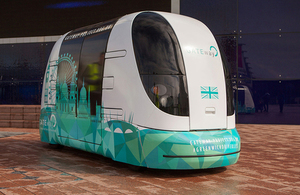
After a brief stop at low-speed shuttles, which are popping up everywhere, a few listed below, and likely more to come with the USDOT AV grants, I shift gears, so to speak, and go off on a tangent. I make an analogy, actually several, that will take time to be revealed as apt or poor.

Like raking leaves under a huge maple tree

Just from this week's newsfeed, showing that I hardly have to scroll down to find announcements related to AV shuttles:

Jacksonville, FL, plans AV network in its downtown and incorporating its Skyway
Denver about to launch AV shuttle by transit and business center.
Tokyo airport testing AV buses in preparation to serve travelers and to meet goal of providing AV transportation during the 2020 Olympics.
Manchester Airport (UK) to test AV airport shuttle that will hold four-six travelers and expected to be called Pods on Demand.
Michigan VA medical center to get AV shuttle to transport veterans and others around campus.

How bikesharing changed biking - at least in DC

Before bikeshare arrived in the Washington, DC area, the speed of biking was high - scary for pedestrians - and bikers routinely violated traffic rules. Both downtown and on the edges of DC, into Maryland, this changed when bikeshare arrived. Almost overnight, the heavy, clunky, bikeshare bikes, ridden often by people in business clothes (who did not want to get dirty or wet en route) significantly slowed the speed of biking generally and had a similar calming affect that reduced traffic-rule-violating behavior.

In those years between DC bikeshare's start and when Citibike appeared in NYC, I would be shocked when I returned to the city to see that the bike culture there was as unruly, as Wild West, as biking had been in DC prior to bikeshare. Friends and relations were afraid of those speedy bikers because they would appear out of nowhere and skirt extremely close to pedestrians. It feels like there has been a change in NYC since Citibike, but, due to the massive changes in pedestrian and bike infrastructure in the city, it is less possible to attribute any shifts there to bikesharing.

Actual topic of post - analogy warning - Will AV shuttles be like bikeshare? 

Here is where I veer off into an analogy, which is dangerous territory because my analogies do not always work for other people. Apparently some, maybe most, brains work differently from mine.

AVs are being promoted in large part due to safety. AV technology will mean robotic/machine operation according to the rules of the road. No speeding, no stop sign running, no drunk or otherwise intoxicated driving, etc. will save lives and prevent crashes and near misses. Those near misses cause anxiety at the very least. 
Off topic for a second - Hint: If we add safer road design and road design that promotes safe walking, biking, and scooter - or whatever - use, we can improve both safety and public health. Sitting in a vehicle as the only transportation option is not healthy.
If we have, I am presuming, slower-moving AVs, even as 10 percent of traffic at first, whether these are shared-use ridehailing, transit, or whatever, is it unreasonable that AVs will have a calming - law-and-order - effect on the rest of traffic, the human-driven vehicles?

Jury still out

With the AV story du jour being human attacks on robots, drones, and AVs, it is possible that AVs will not calm down any drivers. I suspect that is wrong, just as I suspect that most people will not be getting drunk all the time in AVs or having sex constantly in them. Mostly we will play mindless video games or watch poor-quality entertainment (at least from the perspective of someone whose junk TV and movie watching tends to romantic comedies or Masterpiece Theatre-type fare. Can't wait to get into the current season of Schitt's Creek.)

It is possible that if AVs are relatively slow, but traffic proceeds more smoothly, that the human drivers will become accustomed to them and slow down around them.

Warning: another analogy. After all, in my area of work and residence, drivers have become accustomed in the last 10 years to bikers sharing the road. I still hear complaints, but they are fewer, and, even with the complaints, those drivers have adjusted.
Again off-topic: Even as habits are changing, not everyone is a convert. I must admit that I gave a friend a lecture recently when he complained about his local bike lanes and traffic-calming infrastructure. Incredible how many people do not consider that speeding is unsafe and contributes greatly to very bad outcomes. This friend would not intentionally hurt a fly, but he thinks nothing of speeding and violating other traffic laws. This was not the first driving-related lecture. 
The proof will be in the pudding. We can study, we can speculate, but we will not know for a long time. I am hopeful. I'll go completely out on a limb on other unrelated topics. Not many foresaw the changes that smartphone have brought. Add to that the Amazon business model. Who in 1965 would predict the sharp reductions in smoking with education in schools and public service ads? Behavior change is possible.

Where I would differ from many - as I go way more off-topic - is that we cannot expect change to happen just because it has happened elsewhere or that it will happen because it makes sense. We can't just say something is bad, for example, operating one's own car every single day; citing public health and safety statistics whatever they might be to dissuade people. No, we have to show that something else is good, available, even fun. Look at how Uber attracted rides. I have lots to say about Uber, but people did not have to be convinced to use it. It gives them a viable, reliable option. Let's do that with AVs. 

That's it. I'm ranting here. Hope it's been food for thought and that the analogies were not awful.

Friday, January 11, 2019

Lots of AV Reports, But Little on Accessibility

Automated vehicle (AV) development is not just about the technology that would allow for driver-free operation. AVs are partly advancing under the assumption that they will be electronic - EVs - and connected - CVs or CAVs. On the other hand, most of the legal studies and policy development is mode neutral and either gives lip service to, or ignores, people with disabilities. Accessibility embedded in the interfaces and the vehicles - whether for the benefit of people with disabilities, people with strollers, or people with luggage and grocery carts - is left out of the equation.

Considering that the touting of AVs highlights how wonderful they would be for current transportation-challenged populations, little ink or anything else has been spilled, so to speak, to guarantee that this promise will be fulfilled.

What do we mean by accessibility?


I will defer to the Consortium for Citizens with Disabilities (CCD) about their standard for accessibility in the context of AVs, taken from the CCD Task Force Autonomous Vehicle Principles.
AVs have the potential to drastically improve access for people with disabilities, including members of the blind and low vision, Deaf and hard of hearing, intellectual, developmental and cognitive disability communities, people with physical disabilities, including wheelchair users, and people with neurological conditions including epilepsy and seizure disorders. However, the promise and safety of AVs will only be realized if the vehicles and the surrounding infrastructure are fully accessible, and the safety elements consider the needs of people with disabilities
The CCD recommendations that particularly pertain to people with disabilities include:
  • Accessibility of human-machine interfaces,
  • AVs with lifts, ramps, and wheelchair securements,
  • No requirement of an operator on board who is licensed,
  • AV transit and pedestrian infrastructure that complies with the "Americans with Disabilities Act (ADA) accessibility requirements must be strictly adhered to in order for cities and states to work towards meeting goals of zero traffic deaths and serious injuries,"
  • An ADA or expansion that mandates "full accessibility for all types of common and public use AVs,"
  • "[L]egislation requiring that, as a matter of civil rights, all new technology incorporate the needs of people with disabilities at the earliest possible point, and 
  • "Congress should require that people with disabilities are part of the design and testing of new technologies in order to ensure the accessibility and usability of the technology." 
There is more, but you get the picture. Unfortunately, little or no mention of this sizable sector of the population and their needs is mentioned in reports about AVs. These reports, whatever they examine, are focused elsewhere.

Statements without supporting details


Two recent reports mention or refer vaguely to people with disabilities, but offer nothing more. These are the Human Factors and Ergonomics Society (HFES) Policy Statement on Autonomous and Semiautonomous Vehicles (Approved Sept. 30, 2018) and the Transportation Research Board (TRB) Forum on Preparing for Automated Vehicles and Shared Mobility (Sept. 2018). The HFES policy statement says: "Fully autonomous vehicles should accomodate people with disabilities." The document, while brief at five pages, mostly looks at safety; accessibility is not one of its main concerns. The TRB forum speaks globally about research needs that go from data to safety to business models for AV deployment, but it never uses the word accessibility. It mentions a research need addressing equity and another addressing "[h]ow best to serve those with special needs."

The Idaho 2018 Report to the Governor (Nov. 2018) from the Autonomous and Connected Vehicle Testing and Deployment Committee, like the Wisconsin Report of theGovernor’s Steering CommitteeonAutonomous and Connected VehicleTesting and Deployment, never uses any version of the word accessibility. The Wisconsin report does mention "underserved populations" and both address all users of the roadway, specifically including bicyclists and pedestrians. The Washington State Transportation Commission Autonomous Vehicle Work Group, like its counterparts in other states, is looking at AV developments from such a mode-neutral perspective that there is no weighing or consideration of how to steer AVs to serve everyone better and how to include people with disabilities in the next iteration of our transportation system.

State and other AV-related task forces typically examine insurance, licensing, registration, definitions, liability, and responsibility for maintenance. Maybe they consider policing and roadway management.

A whole different approach comes from the Scottish Law Commission, which produced a comprehensive paper - Automated Vehicles: A joint preliminary consultation paper (Nov. 8, 2018). It discusses both fully and partially AVs in terms of operations, reaching minimal risk condition, and liability. It explores different ways transportation is and could be delivered, including Mobility as a Service (MaaS). BUT, in terms of accessibility and providing an equitable transportation system to people with disabilities, nothing in the report goes beyond bare statements. We are talking lip service.

And the private sector?


The private sector is not rushing to provide accessibility - with the exception of Local Motors and others that aim to provide transit shuttle vehicles. And that would be current ADA accessibility that is not self-enforcing (as many lawsuits to enforce it demonstrate). But for taxi-like ridehailing service, no one is jumping up with any promises. Take Uber; in its report, A Principle Approach to Safety (Nov. 2, 2018), the only words related to transportation-challenged populations were these.
More equitable than existing transportation options 
Shared, automated mobility can work to extend the reach of public transit and bridge the first/last mile gap in areas typically underserved by transit systems, and for certain populations like people with disabilities, youth, and seniors. 
Aspirational, yes, but, as my mother used to say, that and (now) $2.75 will get you on the subway. $3 if you buy a single ride ticket. Referring, of course, to NYC, my mother's sole frame of reference.

Anxiety, of course, because lip service is not enough


My worry, and certainly the fear of the disability community (and some in the older adult community), is that lack of a mandate and/or concerted effort to embed accessibility now - during development of AVs and infrastructure (virtual and real) to support them - will put us in the same situation we were in, and in some respects continue to inhabit, which is attempting to retrofit a very inaccessible transportation system for people who are not the norm. The Americans with Disabilities Act (ADA) was a good first step almost 30 years ago, but, in any place without fabulous transit and even there (think elevators to subways in New York City and San Fransisco), people with disabilities continue to be second-class transportation citizens.

With the current House, Senate, and Administration, no one is pushing for ADA 2.0. If anything, there is fear of accessibility retrenchment. At three weeks into a government shutdown, one begins to wonder whether the dream of bipartisan action on infrastructure and transportation can even happen. Any progress is happening in large cities, such as Boston and New York, which are taking to heart transit accessibility concerns and commitments. (Sorry for the lack of links here.)

From the Navy Yard - possible home run hit right before the shutdown


The USDOT building in Washington, DC, is barely a walk away from the DC major league baseball stadium. That US agency building, which spans two large city blocks, was, hours before the government closed up, the site of a hopeful development that AVs will serve everyone. I imagine a government employee, in the dark, hovering over his or her computer in a rush to click "upload" before the shutdown announcement to step away from the building and all government-funded devices.

The Notice of Funding Opportunity - or NOFO, in acronym land - issued from the US Department of Transportation just a few hours before the government shutdown, expresses a commitment to transportation-challenged populations in general and to people with disabilities and older adults in particular. One of the prime goals of the USDOT project - entitled Automated Driving System (ADS) Demonstration Grants - is to "fund projects that test applications with the greatest potential to service transportation-challenged populations, including older adults and individuals with disabilities.” Additionally, "Each demonstration must include input/output user interfaces on the ADS [automated driving system] and related applications that are accessible and allow users with varied abilities to input a new destination or communicate route information and to access information generated by the ADS.”

The deadline for proposed demonstration projects is Mar. 21, 2019 - assuming that the federal government is back to work by then.

Friday, January 4, 2019

AV States, Cities, and the Feds


Cities, states, and the federal government are all moving ahead to provide a governing framework, to thoughtfully consider, and/or to plan for automated vehicles (AVs). Although there is broad bipartisan agreement in Congress, safety and preemption concerns raised in 2019 prevented the passage of national legislation. 

This is not necessarily a negative development because we are witnessing what US Supreme Court Justice Brandeis once called a laboratory of democracy with various state law approaches to AVs. (New State Ice Co. v. Liebmann, 285 U.S. 262, at 311, Brandeis, J., dissenting (1932)). The Brandeis quote exactly describes the value of what states are engaging in today to learn about and plan for AVs.

There must be power in the States and the nation to remould, through experimentation, our economic practices and institutions to meet changing social and economic needs. … To stay experimentation in things social and economic is a grave responsibility. Denial of the right to experiment may be fraught with serious consequences to the nation. It is one of the happy incidents of the federal system that a single courageous State may, if its citizens choose, serve as a laboratory; and try novel social and economic experiments without risk to the rest of the country.
(Quoting 285 U.S. 311.)

More than half of US states are looking at AVs. Many aspects of US law that we take for granted began with state law experimentation, including the 2008 healthcare law, the Affordable Care Act, which was modeled on a program in Massachusetts; and workers’ compensation, first adopted in New York State. Cities throughout the country are also actively planning for AVs, some in concert with their state transportation agencies. The federal government, through the US Department of Transportation (USDOT), is also proceeding and consulting with stakeholders.

State Law Approaches - The Petri Dishes in the Laboratory of Democracy


While 42 states have in place some AV-related legal rule – be it executive order, regulation, and/or law – this number is somewhat misleading. A majority of states do not have any rule governing actual AVs driving down public roads in normal traffic. What states have mostly put in place are legal provisions:

·       Establishing an advisory committee or mandating a study of particular AV operational, business, insurance, and/or passenger transportation issues; 
·       Allowing for testing and/or pilots in limited situations and requiring collaboration with specific state agencies and/or cities where testing is requested; and/or
·       Enabling a specific, significant change to motor vehicle regulations – one which has garnered practically zero attention in the media – the permission for platooning on high-speed roads.

Platooning is generally a priority for the freight industry and platooning authorization in state laws would allow trucks with certain technology to follow a lead vehicle – whether with a human driver or an AV – at a much closer distance than is permitted for conventional vehicles.

Testing and pilots of AV ridehailing and microtransit shuttles are mostly happening in states with very little regulation and AV-friendly weather, such as Texas, Florida, Arizona, and Georgia. The exceptions are states with a substantial tech or auto industry presence. These include:
·       California, with Silicon Valley and San Francisco as the nation’s most important tech region;
·       Pennsylvania, specifically the City of Pittsburgh, due to the activities of Carnegie Melon University and the companies using technology that have grown out of CMU activities or from CMU professors or graduates; and
·       Michigan, the state with headquarters of the most prominent US auto companies.

Cities Take the Spotlight

In just the last couple of years, cities large and small have gone from ignoring the prospect of AVs to embracing and planning for them. The best examples are in states where there are good city-state partnerships, such as Massachusetts and Connecticut. Texas is also an interesting case because suburban municipalities are embracing AV and microtransit pilots, while the state has removed any roadblocks to AV pilots, including transporting people on public roads. The situation in Arizona is similar, but in that state testing and pilots have been limited to conventional cars or minivans outfitted with AV technology.

A recent report from the National League of Cities (NLC) provides a quick summary of AV developments from the perspective of cities and states. Autonomous Vehicle Pilots Across America examines the ways that states are creating frameworks for AV operations, pilots, and further study. City strategies that use whatever state frameworks have been established provide an interesting read about the spectrum of approaches and partnerships with states, with the private sector, and with universities.

State and local agency counterparts will participate in the roll out of AVs as they are being tested, piloted, and as they begin regular operations. Additional agency actors in AV-related legal rules and operations include planning departments, departments of public works, and departments of motor vehicles.

Federal Regulatory Players 

The USDOT and its surface transportation modal and safety agencies – FTA, FHWA, and NHTSA – all have a role to play in AV regulation and implementation, but so do some federal, state, and local agencies outside of the USDOT. On the national level, these include the Federal Trade Commission (FTC), the Federal Communications Commission (FCC), the Department of Homeland Security (DHS), the Department of Justice (DOJ), and the Department of Labor (DOL). These agencies work in the spheres of privacy, business regulation, consumer protection, cybersecurity, labor, and law enforcement.

Federal action is expected from NHTSA and the Federal Motor Carrier Safety Administration (FMCSA), which are planning to publish proposals for in 2019 regarding AV safety, testing, and deployment. These two USDOT modal administrations were mentioned in the Introduction to the Unified Agenda of Federal Regulatory and Deregulatory Actions – Fall 2018, 83 Fed. Reg. 57803, Nov. 16, 2018. NHTSA is seeking to reduce regulatory barriers and coordinate efforts relating to technology and innovative vehicle design. Ibid. at 57913-14. FMCSA, which regulates aspects of some transit systems that operate interstate (as well as traditional private bus service) will “continue to coordinate efforts on the development of autonomous vehicle technologies and review existing regulations to identify changes that might be needed.” Ibid. at 57913.

Otherwise for 2019?

Any more crashes involving auto-assist technology - especially any with serious injury or worse to individuals outside of the auto-assist vehicle - will prompt investigative reporting, videos, and news coverage that will sway federal legislators. Federal legislation is fertile ground and there is a good possibility for a negotiated compromise for legislation that covers AV and auto-assist regulation.

That's it. I could be wrong.